
Loading, please wait...
LOT 0972
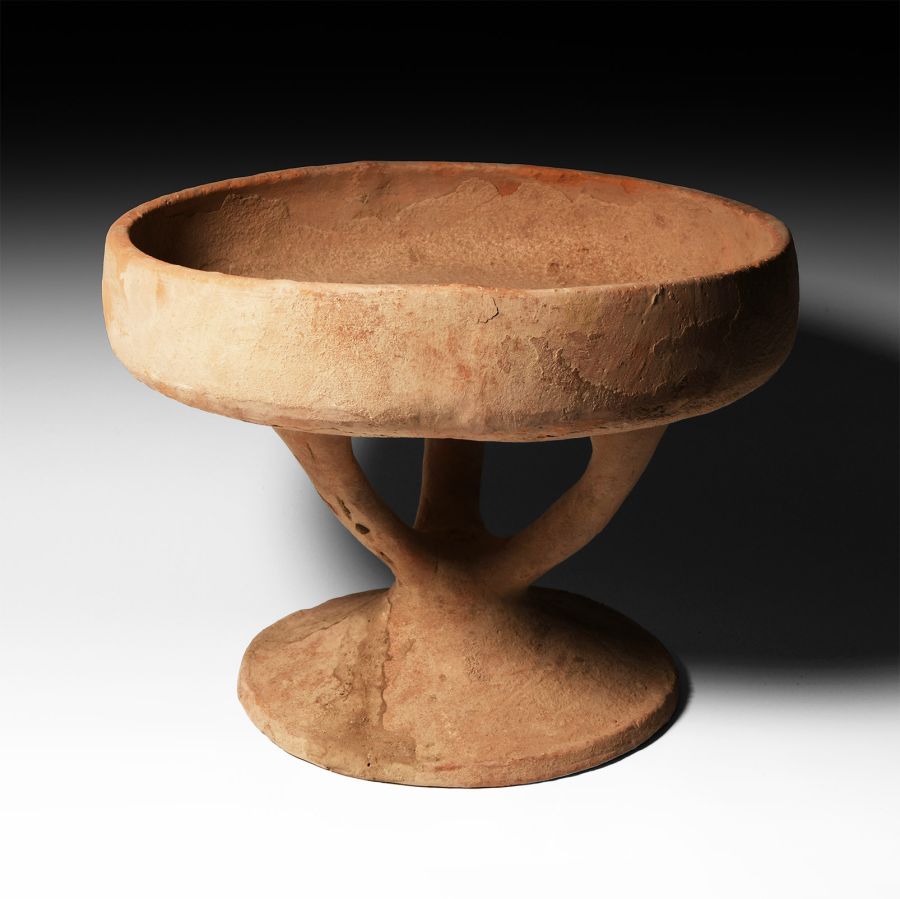
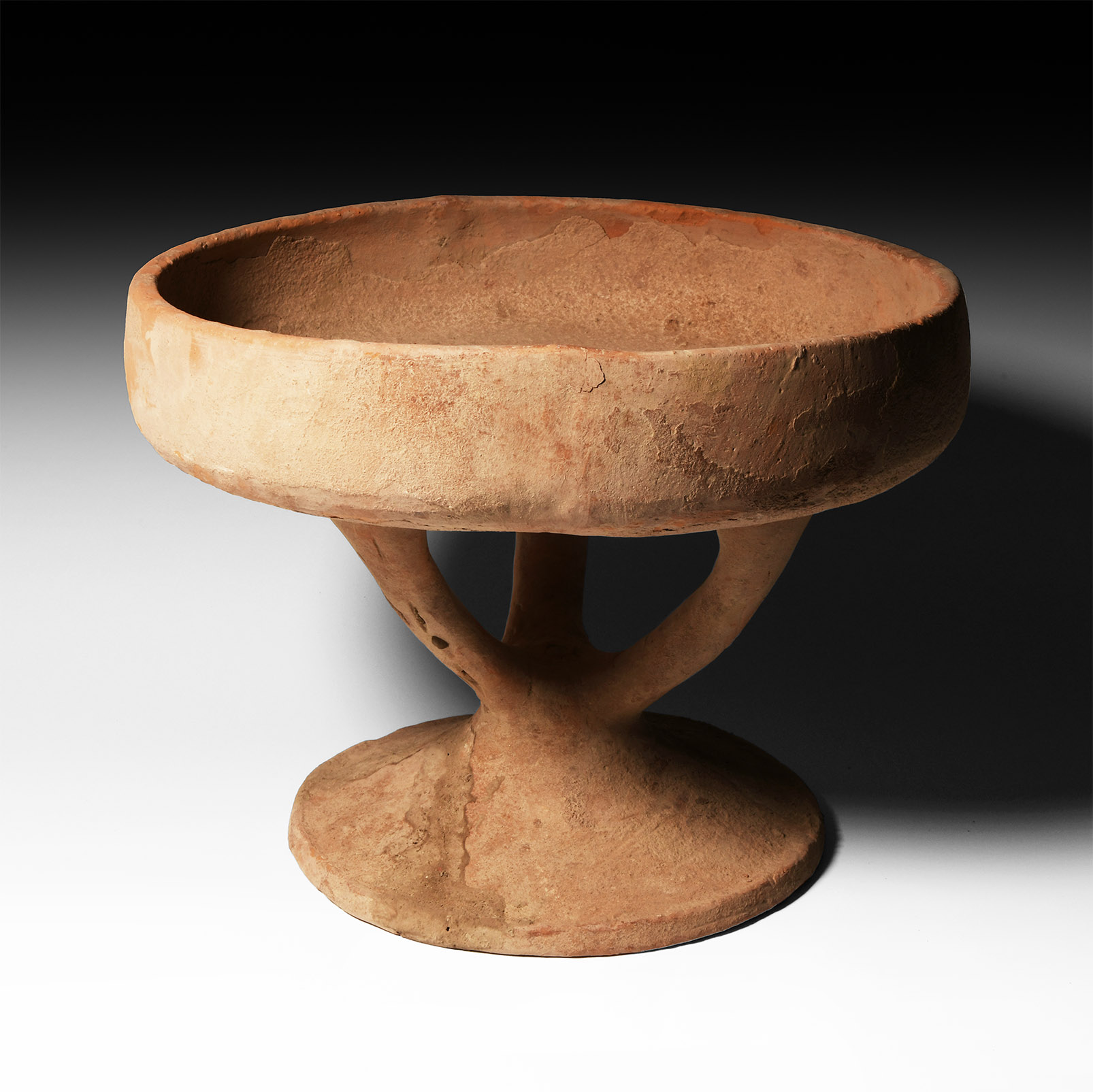
Western Asiatic Large Terracotta Chalice
1ST MILLENNIUM B.C.
10 1/2 in. (1.8 kg, 26.5 cm wide).
A large terracotta chalice comprising a broad shallow bowl supported by three short arms on a conical base.
ProvenanceAcquired 1980-2015.
Ex Abelita family collection.
TimeLine Auctions follows a vetting process to ensure the authenticity and legality of all items, reinforcing our commitment to integrity and responsible trading. Each antiquity, antique, and coin lot undergoes thorough examination by a vetting committee of at least ten external specialists, professional trade association members, scientists, and archaeologists: Our Vetting Process
AUCTIONS:
TimeLine is a leading auction house specialising in antiquities, ancient art, collectables, natural history, coins, medals, and books. Our auctions offer museums, collectors, historians, and enthusiasts the opportunity to acquire unique and historically significant pieces.
-
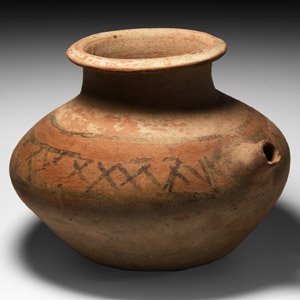
Western Asiatic Painted Spouted Vessel
2nd-1st millennium B.C.Sold for (Inc. bp): £46
A ceramic vessel with rounded underside, biconvex body, trumpet-shaped mouth with raised internal rim; spout to the shoulder; painted band of decoration to the shoulder. 724 grams, 21 cm wide
Acquired 1980-2015. Ex Abelita family collection. -
.jpg)
Akkadian Cylinder Seal with Combat Scene
24th-22nd century B.C.Estimate: £600 - 800 (+bp*)
Opening Bid: £300
A marble cylinder seal with frieze; accompanied by an old scholarly note, typed and signed by W.G. Lambert, late Professor of Assyriology, University of Birmingham, 1970-1993, which states: 'Cylinder seal of white marble, 28 x 20 mm. Design : a standing hero with spikey hair is defending two horned animals being attacked by two lions. A second such hero is grappling with a monster with long plait. Akkadian, c.2400-2200 B.C. Condition very good save for chipped edges.' 16.1 grams, 29 mm
From an important family collection. Examined by Professor Wilfrid George Lambert FBA (1926-2011), historian, archaeologist, and specialist in Assyriology and Near Eastern archaeology, in the late 1980s and early 1990s. -
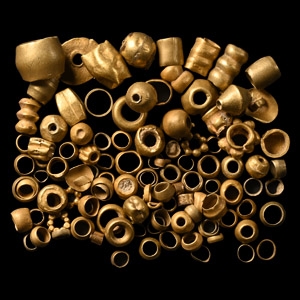
Western Asiatic Gold Bead Collection
1st millennium B.C.Sold for (Inc. bp): £683
A group of 100 gold beads of various types, including wheel, ribbed, spherical, granulated and other types. 6.49 grams total, 1-5 mm
Acquired 1970-2010. Collection of a late Japanese gentleman.
