
Loading, please wait...
LOT 1398
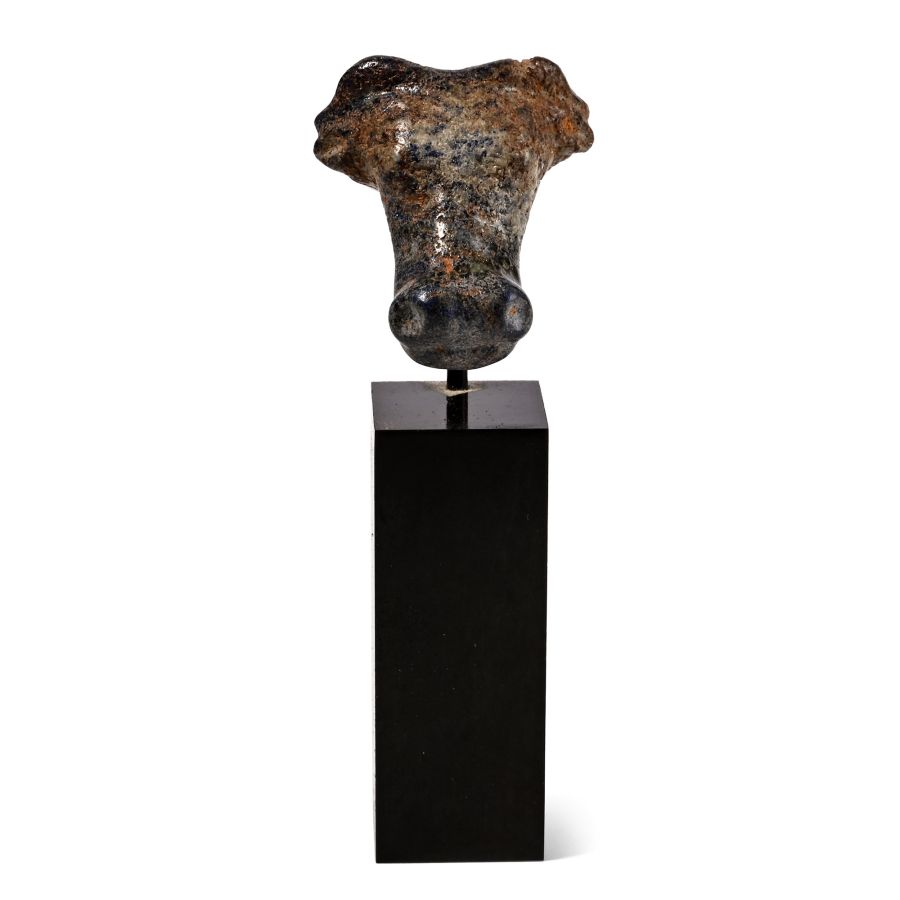
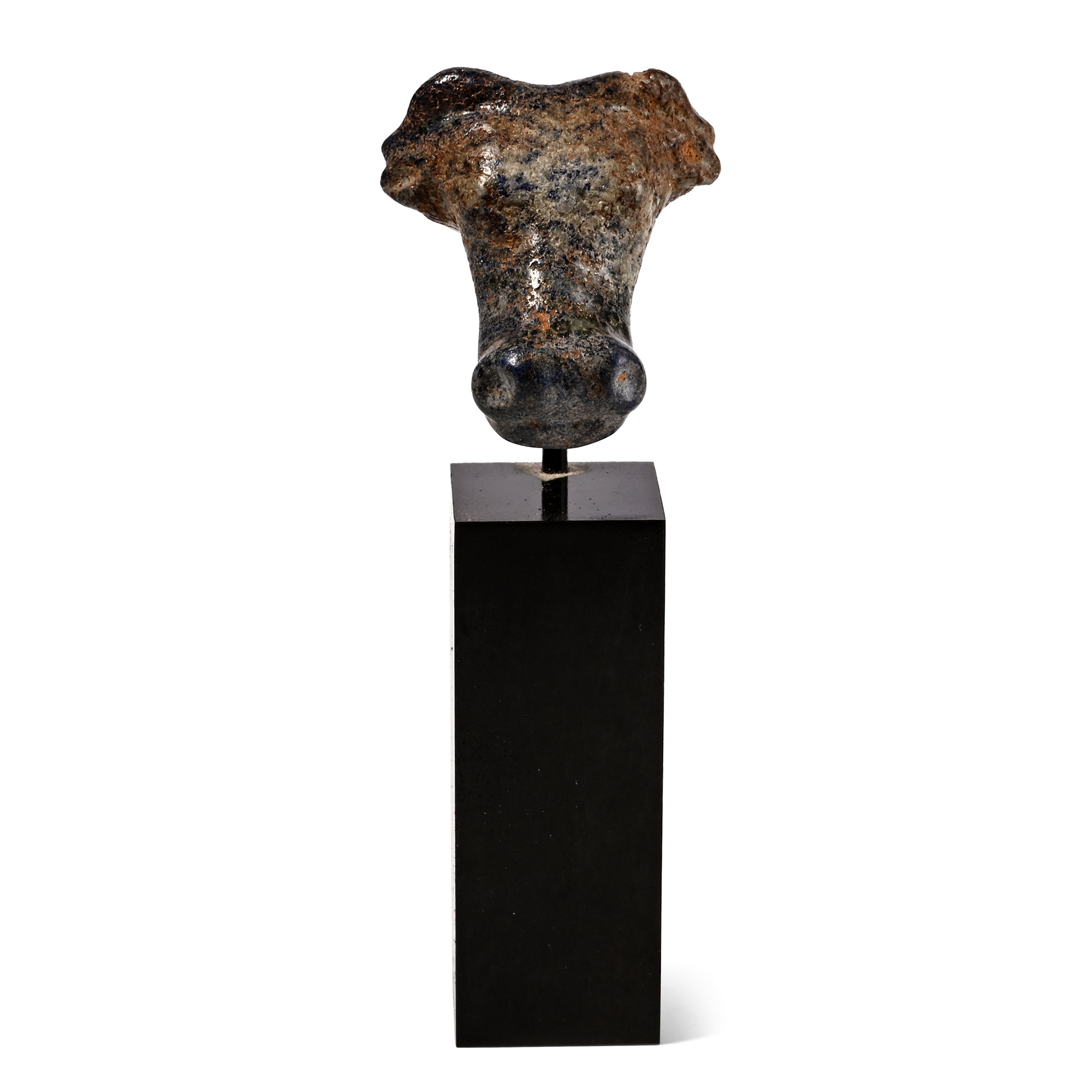
Western Asiatic Lapis Lazuli Head of a Bull
1ST MILLENNIUM B.C.
1 3/8, 3 1/2 in. (170 grams total, bull: 34 mm, 89 mm high including stand).
Carved in the round with indented nostrils and mouth, domed eyes, horns spread above the ears; mounted on a custom-made stand.
ProvenanceAcquired on the American (?) art market.
Private collection, London, UK.
TimeLine Auctions follows a vetting process to ensure the authenticity and legality of all items, reinforcing our commitment to integrity and responsible trading. Each antiquity, antique, and coin lot undergoes thorough examination by a vetting committee of at least ten external specialists, professional trade association members, scientists, and archaeologists: Our Vetting Process
AUCTIONS:
TimeLine is a leading auction house specialising in antiquities, ancient art, collectables, natural history, coins, medals, and books. Our auctions offer museums, collectors, historians, and enthusiasts the opportunity to acquire unique and historically significant pieces.
-
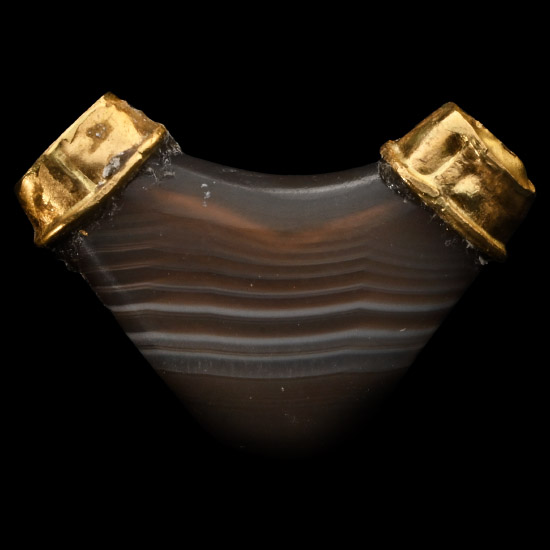
Achaemenid Banded Agate Elbow Bead
6th-4th century B.C.Sold for (Inc. bp): £416
Carved from agate with horizontal contrasting banding, with a later ellipsoid gold cap to each finial. 1.26 grams, 19 mm
From the collection of a late Japanese gentleman, 1970s onwards. -
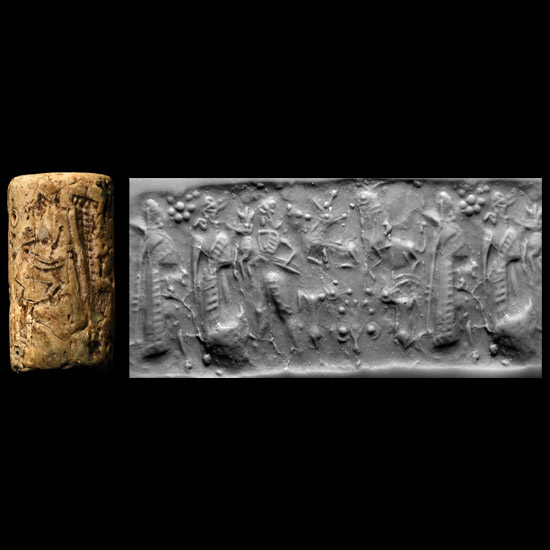
Western Asiatic Buff Steatite Cylinder Seal with Figural Scene
900-700 B.C.Sold for (Inc. bp): £221
Frieze with two opposed standing figures wearing floor-length robes with fringed edges, ovicaprids and other beasts in the field; supplied with a museum-quality impression. 6.69 grams, 28 mm
From the private collection of a European gentleman (1942-2024), formed since the 1970s. -
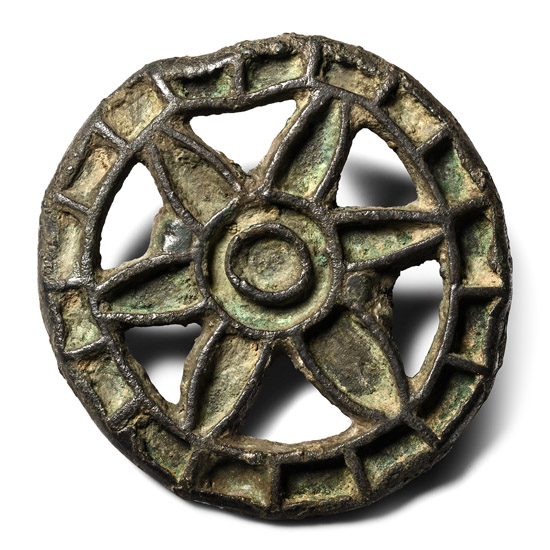
Large West Central Asian Bronze Six-Spoked Wheel Seal Matrix
Circa 2300-2000 B.C.Sold for (Inc. bp): £124
Openwork seal formed as a spoked wheel, accompanied by an old scholarly note, typed and signed by W.G. Lambert, late Professor of Assyriology, University of Birmingham, 1970-1993, which states: 'Stamp Seal of Bronze, 43 x 43 x 12 mm. This is round, with flat face and flat back, on which a loop handle is mounted. The design, which is both compartmented and open-work, consists of a rosette, with six 'rays' off a central small circular band, and a plain outer band surrounded the whole, divided into 17 segments. This comes from west central Asia and dates to c. 2300-2000 B.C. There is some wear and denting, but the piece is generally in fair condition, the metal having been conserved.' 27.9 grams, 45 mm
Acquired in the late 1980s-early 1990s. Ex property of a West London businessman. Academically researched and catalogued by the late Professor Lambert in the early 1990s. Accompanied by a copy of a scholarly report, numbered T-871, typed and signed by Professor Wilfrid George Lambert.
