
Loading, please wait...
LOT 1242
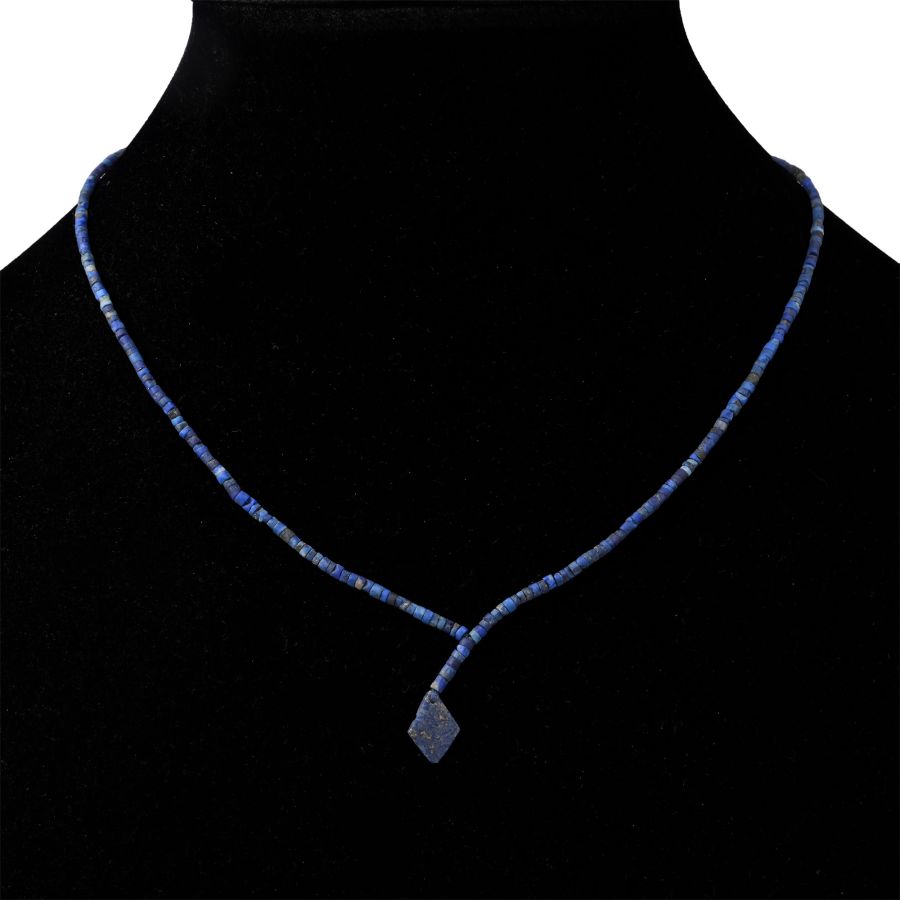
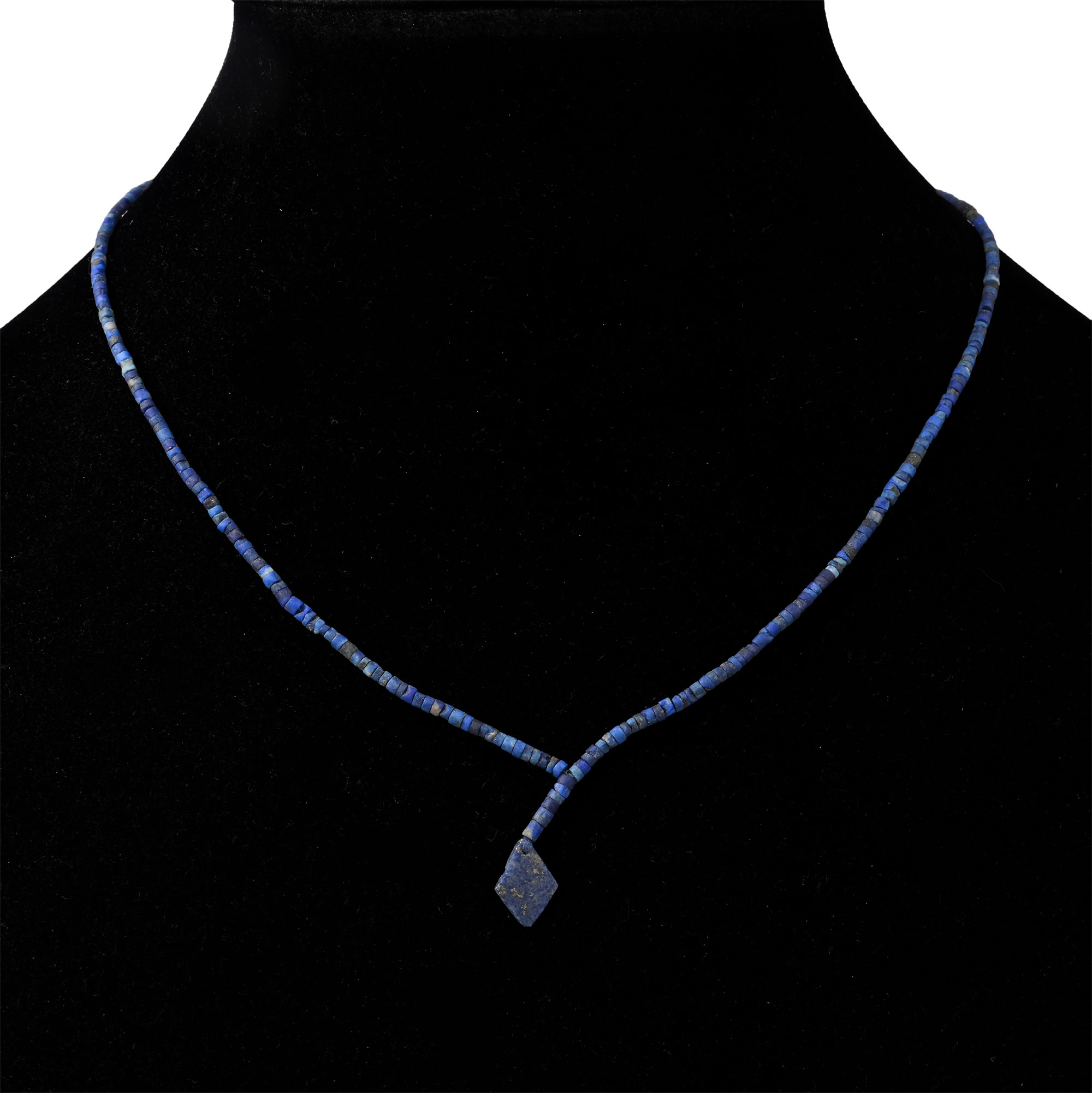
Western Asiatic Lapis Lazuli Bead Necklace String
CIRCA 1ST MILLENNIUM B.C.
12 1/4 in. (3.19 grams, 31 cm).
Composed of small cylindrical beads with a lozenge-shaped pendant, restrung. [No Reserve]
ProvenanceEx late Japanese gentleman's private collection, 1970-2010.
Accompanied by a previously illustrated catalogue card with provenance.
TimeLine Auctions follows a vetting process to ensure the authenticity and legality of all items, reinforcing our commitment to integrity and responsible trading. Each antiquity, antique, and coin lot undergoes thorough examination by a vetting committee of at least ten external specialists, professional trade association members, scientists, and archaeologists: Our Vetting Process
AUCTIONS:
TimeLine is a leading auction house specialising in antiquities, ancient art, collectables, natural history, coins, medals, and books. Our auctions offer museums, collectors, historians, and enthusiasts the opportunity to acquire unique and historically significant pieces.
-
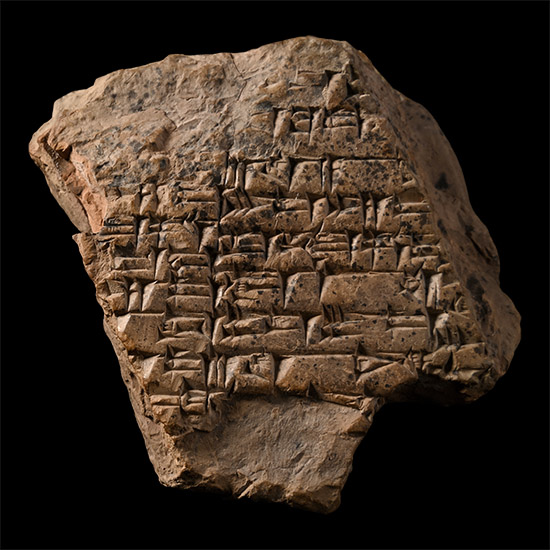
Ur III Terracotta Cuneiform Tablet Fragment
Circa 21st century B.C.Sold for (Inc. bp): £715
Polygonal fragment with densely arranged impressed cuneiform text on one side. 67 grams, 74 mm
London, UK, art market, 1980s. Private collection, London, UK. -
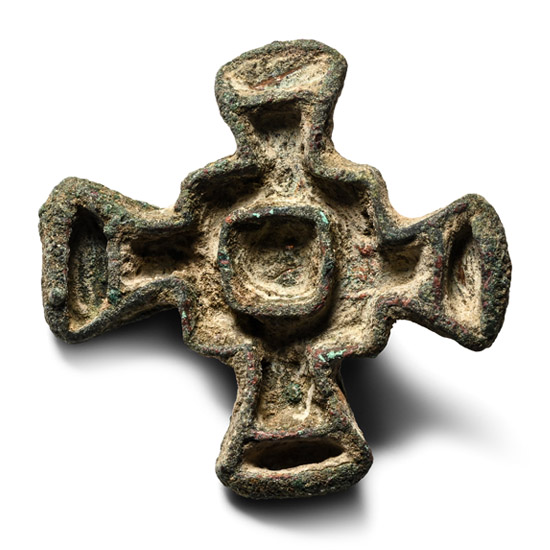
West Central Asian Bronze Quadrate Cross Seal Matrix
Circa 2300-2000 B.C.Sold for (Inc. bp): £39
Comprising a cross-shaped body with a small loop on the reverse, accompanied by an old scholarly note, typed and signed by W.G. Lambert, late Professor of Assyriology, University of Birmingham, 1970-1993, which states: 'Stamp Seal of Bronze, 39 x 38 x 12 mm. This bears the shape of the design, with flat compartmented face and flat back on which is mounted a loop handle for suspension. The design is a quadrate cross with small square in the middle, and to the end of each arm is added a rough oblong shape. This comes from west central Asia and dates to c. 2300-2000 B.C. It is generally in good condition, only the handle is worn and the outer edges are also a little worn in two places.' 17.1 grams, 39 mm
Acquired in the late 1980s-early 1990s. Ex property of a West London businessman. Academically researched and catalogued by the late Professor Lambert in the early 1990s. Accompanied by a copy of a scholarly report, numbered U-388, typed and signed by Professor Wilfrid George Lambert. -
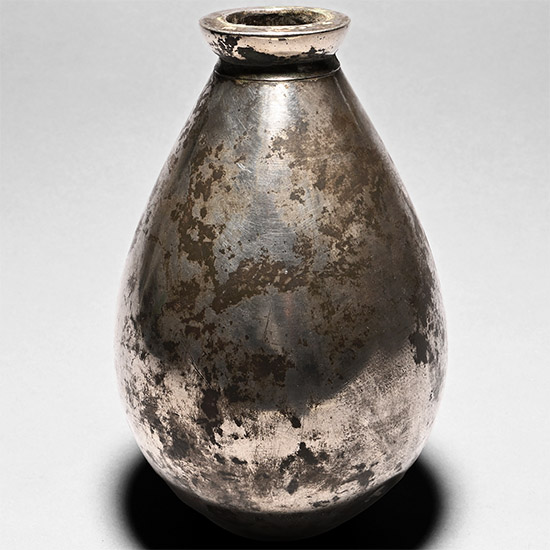
Large Sasanian Silver Bulb-Shaped Vessel
5th-6th century A.D.Sold for (Inc. bp): £2,340
Ovoid in profile with a short neck and a flat rim, pierced at the bottom; minor dents to the surface. 485 grams, 17 cm
London, UK gallery, 1971-early 2000s. Private collection, London, UK. This lot has been checked against the Interpol Database of stolen works of art and is accompanied by search certificate number no.13139-248448.
