
Loading, please wait...
LOT 1270
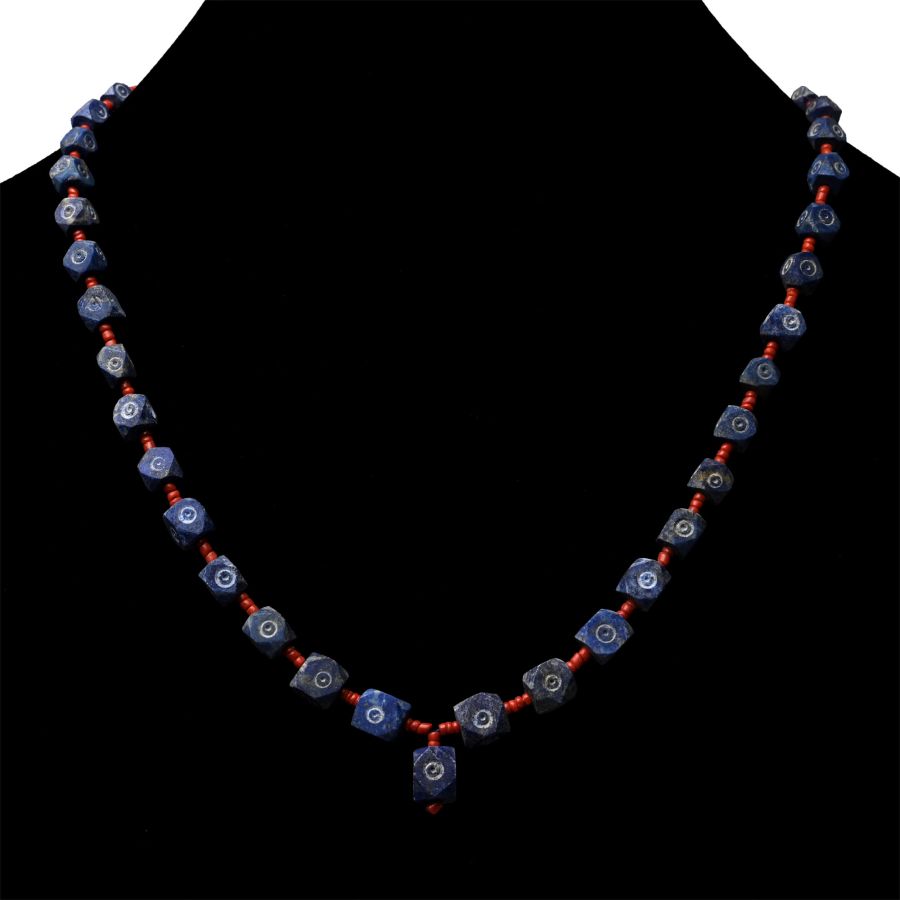
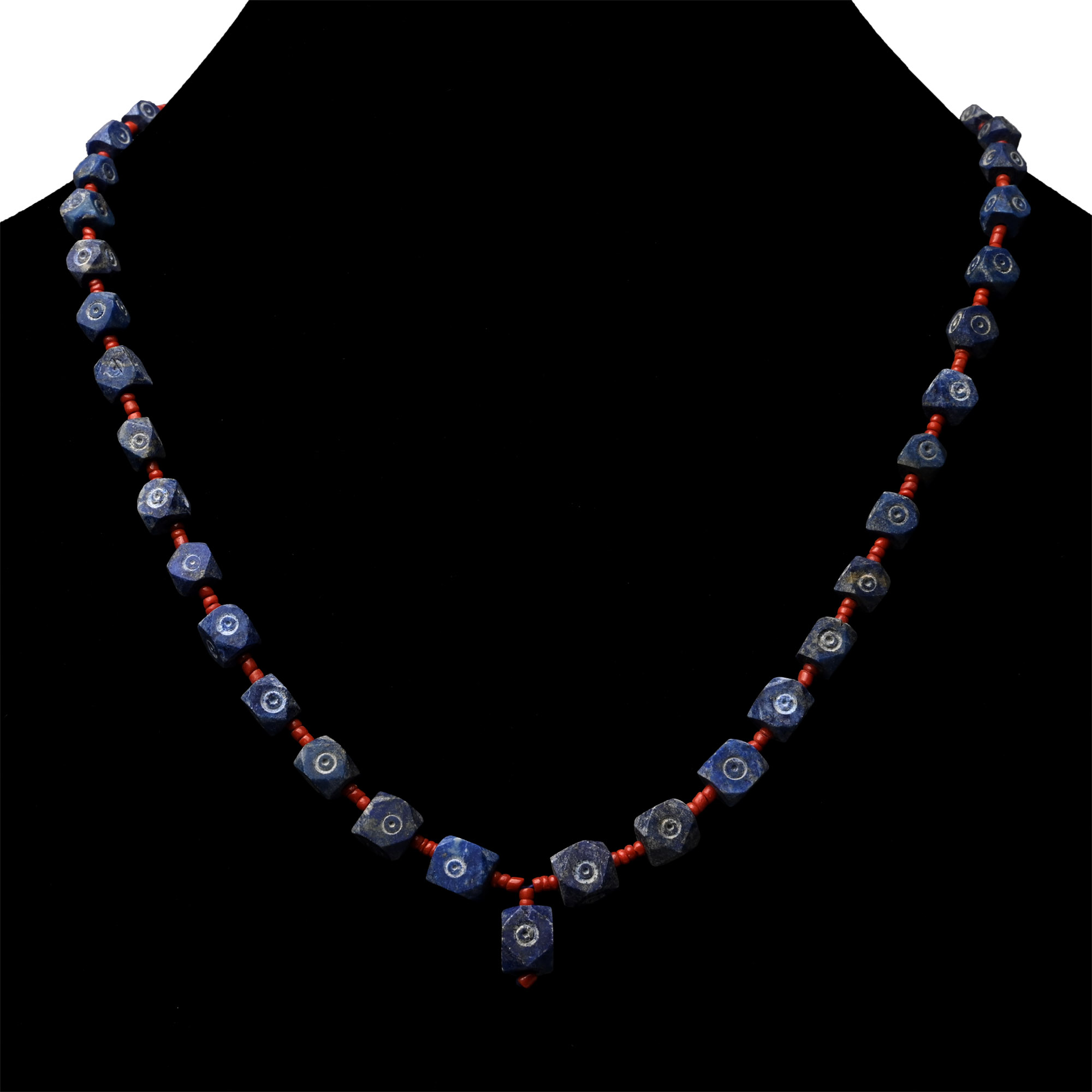
Western Asiatic Lapis Lazuli Bead Necklace String
20TH CENTURY A.D.
16 1/8 in. (33 grams, 41 cm).
Composed of cornerless cube-shaped beads with incised ring-and-dot decoration, interspersed with small annular glass beads; restrung. [No Reserve]
ProvenanceFrom the London, UK, art market in the 1990s.
This lot has been cleared against the Art Loss Register database, and is accompanied by an illustrated lot declaration signed by the Head of the Antiquities Department, Dr Raffaele D'Amato.
TimeLine Auctions follows a vetting process to ensure the authenticity and legality of all items, reinforcing our commitment to integrity and responsible trading. Each antiquity, antique, and coin lot undergoes thorough examination by a vetting committee of at least ten external specialists, professional trade association members, scientists, and archaeologists: Our Vetting Process
AUCTIONS:
TimeLine is a leading auction house specialising in antiquities, ancient art, collectables, natural history, coins, medals, and books. Our auctions offer museums, collectors, historians, and enthusiasts the opportunity to acquire unique and historically significant pieces.
-
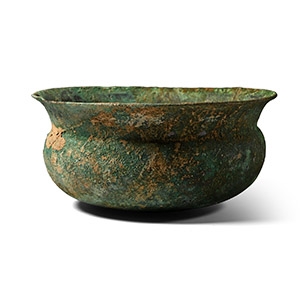
Luristan Bronze Bowl
Circa 1000 B.C.Sold for (Inc. bp): £65
With globular body, round profile and flared rim. 138 grams, 12.1 cm
Ex London, UK, collections, 1990s-2000s. This lot has been cleared against the Art Loss Register database, and is accompanied by an illustrated lot declaration signed by the Head of the Antiquities Department, Dr Raffaele D'Amato.
The people of Luristan were nomadic, constantly moving in summer and winter pastures, and needed metal utensils. Therefore, in addition to weapons, these excellent metal workers produced, in considerable numbers, light and elegant bronze vases and cups. -
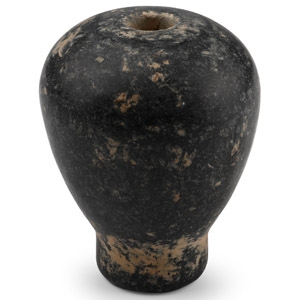
Western Asiatic Stone Macehead
3rd millennium B.C.Estimate: £100 - 140 (+bp*)
Opening Bid: £50
Piriform in profile with extended tubular socket. 494 grams, 82 mm
From a London, UK, collection, 2000s. This lot has been cleared against the Art Loss Register database, and is accompanied by an illustrated lot declaration signed by the Head of the Antiquities Department, Dr Raffaele D'Amato. -
.jpg)
Achaemenid Heavy Gold Earring Pair
Circa 6th-4th century B.C.Sold for (Inc. bp): £2,340
A matched pair of large earrings decorated with pomegranates on the outer edge, the crescentic body divided in transversal grooves representing the abdomen of a bee, with granulation on the inner and outer edge, a horizontal gold wire with circlets to the centre. 23.78 grams total, 38 mm each
From a private family collection formed since the early 19th century, thence by descent. Property of a New Zealand legal professional. Accompanied by an academic report by Dr Raffaele D’Amato. This lot has been checked against the Interpol Database of stolen works of art and is accompanied by search certificate number no.12326-223715. This lot has been cleared against the Art Loss Register database, and is accompanied by an illustrated lot declaration signed by the Head of the Antiquities Department, Dr Raffaele D'Amato.
Fruit were generally considered to be a symbol of sensuality, temptation and fertility; the giving and accepting of fruit may be regarded as a symbolic sexual act, or at least a prelude to marriage. It follows naturally that the pomegranate, with its innumerable fleshy seeds symbolising life and fecundity, was an attribute of Aphrodite.
