
Loading, please wait...
LOT 1099
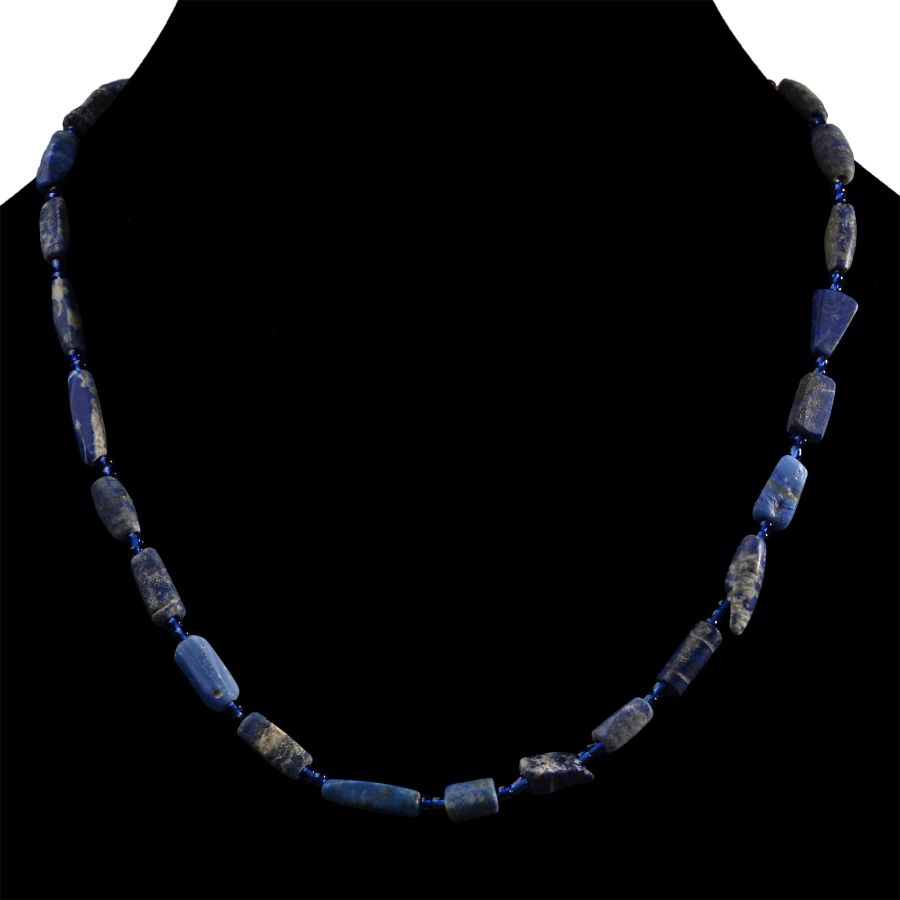
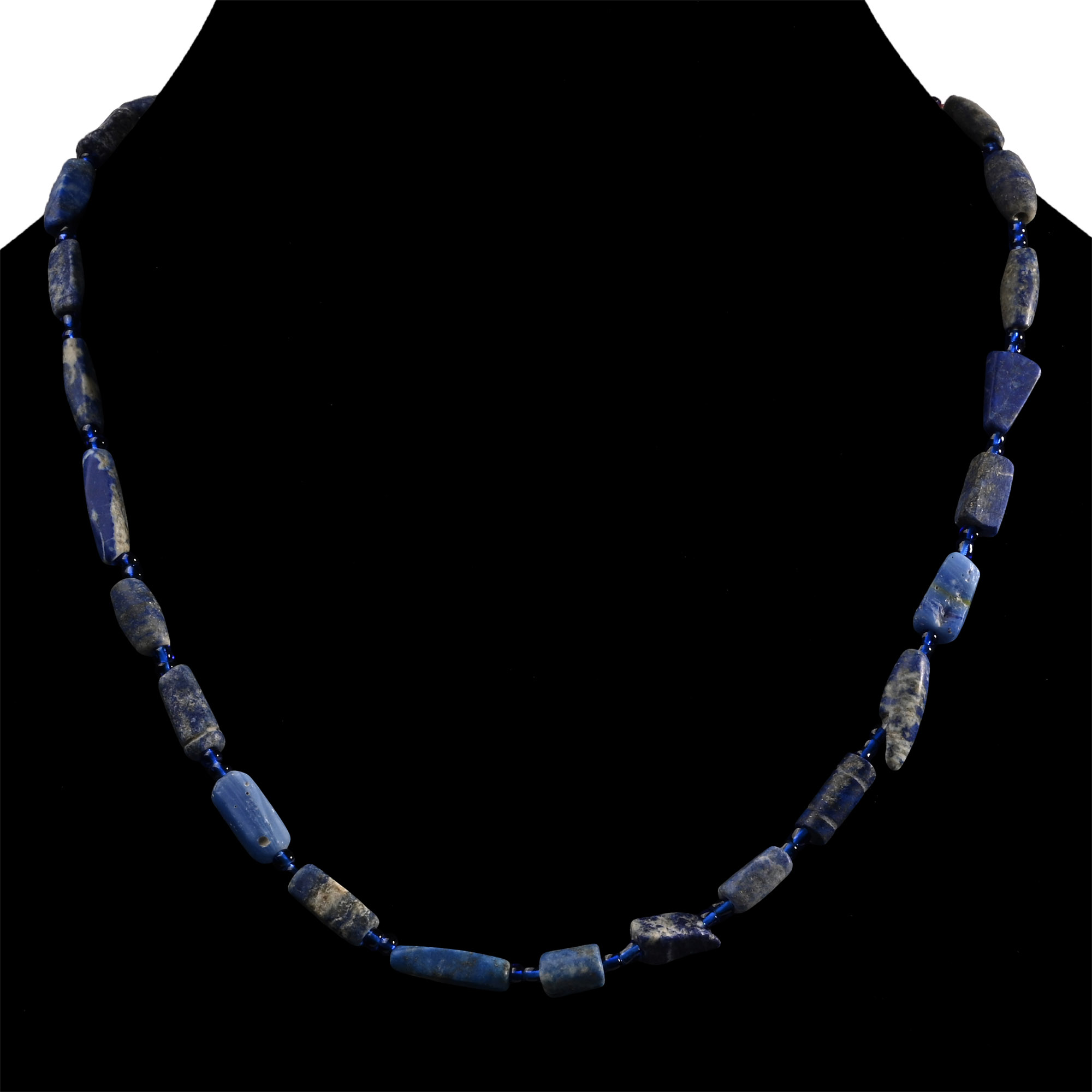
Western Asiatic Lapis Lazuli Bead Necklace String
20TH CENTURY A.D.
15 3/4 in. (19 grams, 40 cm).
Composed of variously shaped elongated beads interspersed with small annular glass beads; restrung. [No Reserve]
ProvenanceFrom the London, UK, art market in the 1990s.
This lot has been cleared against the Art Loss Register database, and is accompanied by an illustrated lot declaration signed by the Head of the Antiquities Department, Dr Raffaele D'Amato.
TimeLine Auctions follows a vetting process to ensure the authenticity and legality of all items, reinforcing our commitment to integrity and responsible trading. Each antiquity, antique, and coin lot undergoes thorough examination by a vetting committee of at least ten external specialists, professional trade association members, scientists, and archaeologists: Our Vetting Process
AUCTIONS:
TimeLine is a leading auction house specialising in antiquities, ancient art, collectables, natural history, coins, medals, and books. Our auctions offer museums, collectors, historians, and enthusiasts the opportunity to acquire unique and historically significant pieces.
-
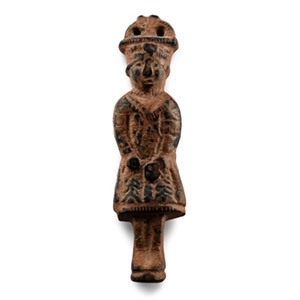
Western Asiatic Bronze Standing Figure Mount
16th-18th century A.D.Sold for (Inc. bp): £234
An appliqué of a female standing wearing a decorated knee-length robe, hands on her thighs holding a purse(?), elaborate pierced headdress; hollow to the reverse. 44 grams, 74 mm
Fine condition.
From a private Belgian collection; previously part of a private collection formed in Germany in the 1990s. From the private collection of John Meredith, acquired since the 1990s; thence by descent. This lot has been cleared against the Art Loss Register database, and is accompanied by an illustrated lot declaration signed by the Head of the Antiquities Department, Dr Raffaele D'Amato. -
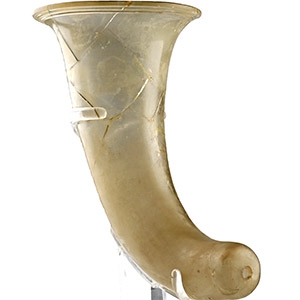
Sasanian Glass Rhyton
3rd-5th century A.D.Estimate: £10,000 - 14,000 (+bp*)
Opening Bid: £5,000
With trumpet-shaped broad end, tapering sidewalls and thick pierced finial; mounted in a custom-made wooden case. 718 grams, 25.5 cm
Japanese private collection, prior 1979. with Aaron Gallery, Iran, prior 1970. with Aaron Gallery, London, 19 September 1980. This lot has been checked against the Interpol Database of stolen works of art and is accompanied by search certificate number no.12798-241349. This lot has been cleared against the Art Loss Register database, and is accompanied by an illustrated lot declaration signed by the Head of the Antiquities Department, Dr Raffaele D'Amato. -
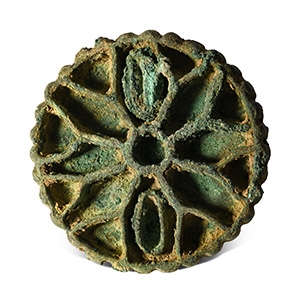
West Central Asian Bronze Stamp Seal with Quadrate Cross
Circa 2300-2000 B.C.Estimate: £100 - 140 (+bp*)
Opening Bid: £50
Discoid stamp seal with segmented face; accompanied by an old scholarly note, typed and signed by W.G. Lambert, late Professor of Assyriology, University of Birmingham, 1970-1993, which states: 'Stamp Seal of Bronze. 51x51x16 mm. This is round with zig-zag outer edge, flat face and flat back in the centre of which is a loop handle on inverted U-shape. the design, which is both compartmented and open-work, consists of a quadrate cross within an outer band which as loops on its inner side, and the zig-zag on its outer side. This comes from west central Asia and dates to c.2300-2000 B.C. It is covered with incrustation, which could be removed. The metal appears to be in good condition.' 68.2 grams, 52 mm
Acquired in the late 1980s-early 1990s. Ex property of a West London businessman. Academically researched and catalogued by the late Professor Lambert in the early 1990s. This lot has been cleared against the Art Loss Register database, and is accompanied by an illustrated lot declaration signed by the Head of the Antiquities Department, Dr Raffaele D'Amato.
