
Loading, please wait...
LOT 1330
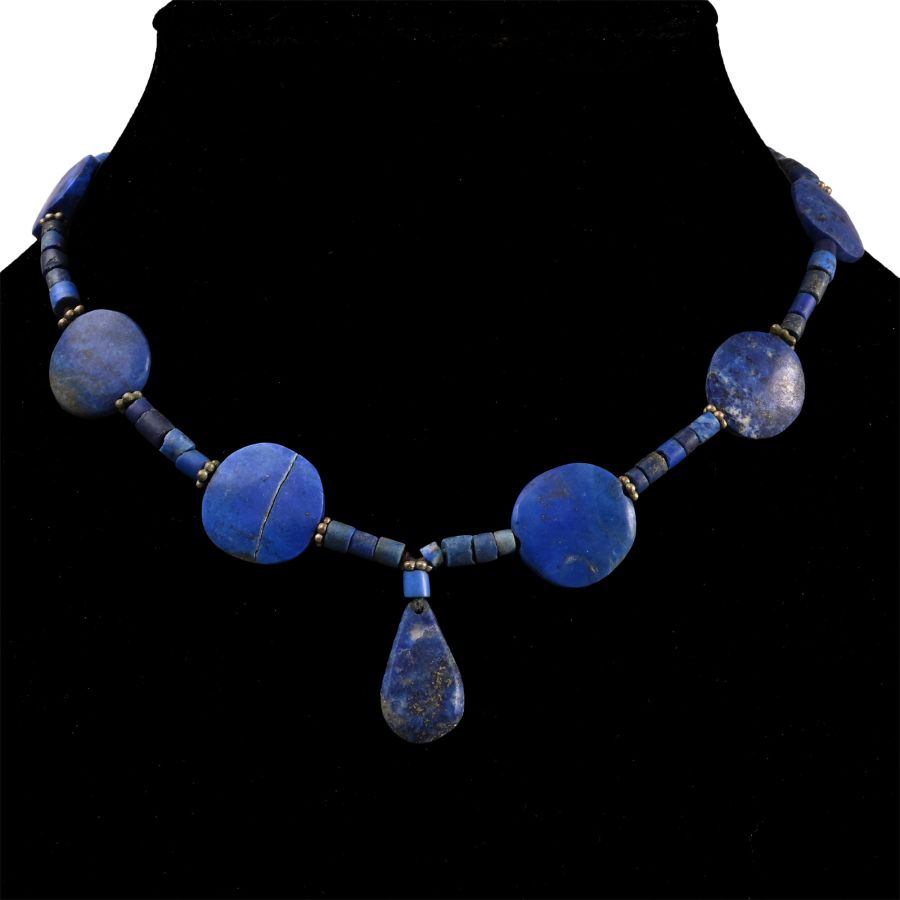
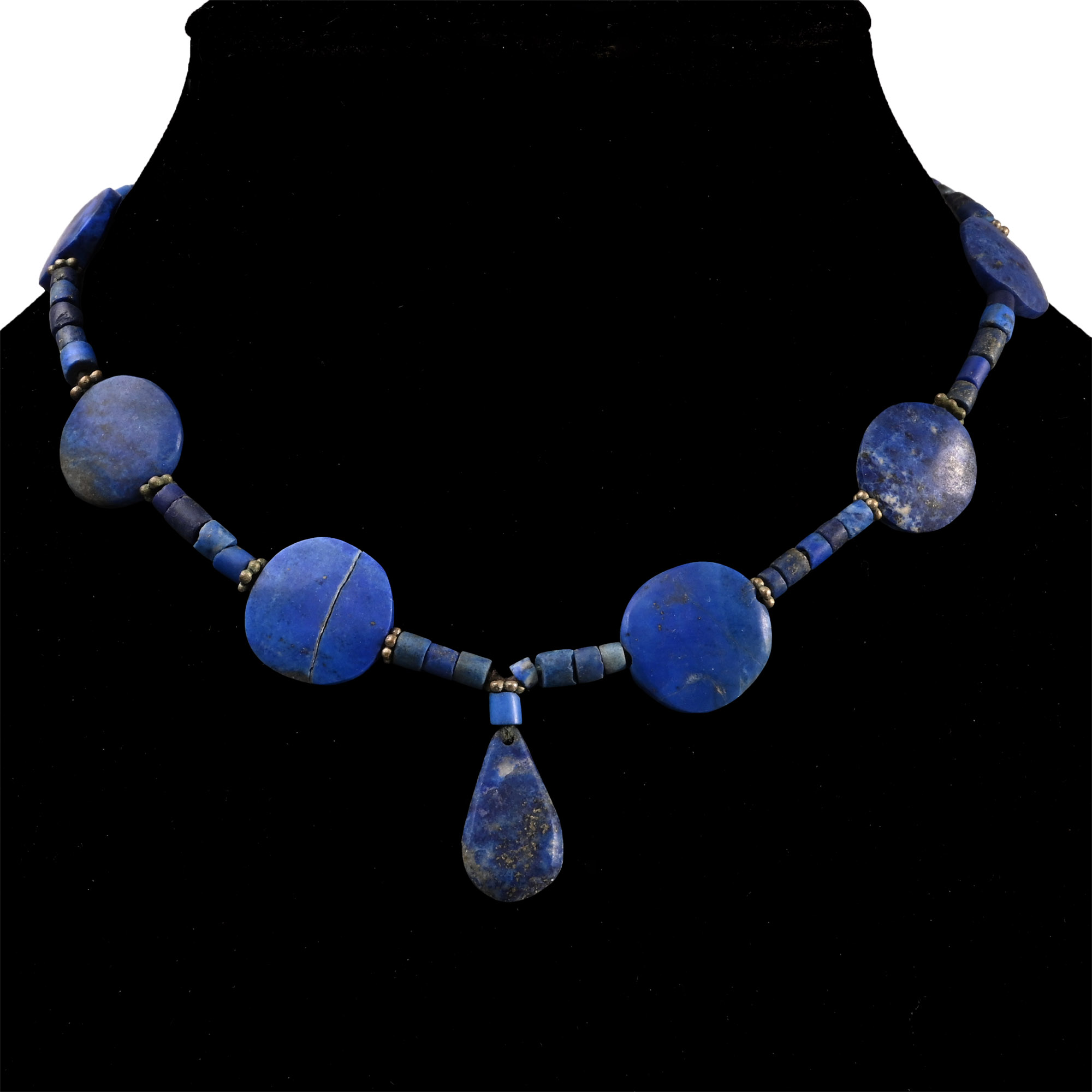
Western Asiatic Lapis Lazuli Bead Necklace String
20TH CENTURY A.D.
10 7/8 in. (22.8 grams, 27.5 cm).
Composed of coin-shaped large beads interspersed with small cylindrical beads, central feature a teardrop-shaped pendant; restrung. [No Reserve]
ProvenanceFrom the London, UK, art market in the 1990s.
This lot has been cleared against the Art Loss Register database, and is accompanied by an illustrated lot declaration signed by the Head of the Antiquities Department, Dr Raffaele D'Amato.
TimeLine Auctions follows a vetting process to ensure the authenticity and legality of all items, reinforcing our commitment to integrity and responsible trading. Each antiquity, antique, and coin lot undergoes thorough examination by a vetting committee of at least ten external specialists, professional trade association members, scientists, and archaeologists: Our Vetting Process
AUCTIONS:
TimeLine is a leading auction house specialising in antiquities, ancient art, collectables, natural history, coins, medals, and books. Our auctions offer museums, collectors, historians, and enthusiasts the opportunity to acquire unique and historically significant pieces.
-
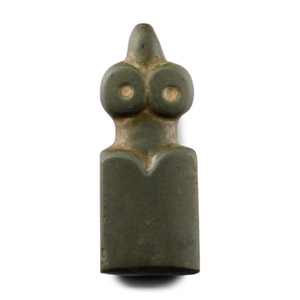
Sumerian Green Stone Amulet
4th millennium B.C.Estimate: £3,500 - 4,500 (‡+bp*)
Opening Bid: £1,750
Carved in the round as a rectangular block with slit to upper edge, vertical spike with two annulet 'eyes'; pierced for suspension. 13.2 grams, 41 mm
with M. Petropoulos, Zurich, early 1990s. with Rhéa gallery. Private collection, acquired in 1999. This lot has been checked against the Interpol Database of stolen works of art and is accompanied by a search certificate number no.12897-241753. This lot has been cleared against the Art Loss Register database, and is accompanied by an illustrated lot declaration signed by the Head of the Antiquities Department, Dr Raffaele D'Amato. -
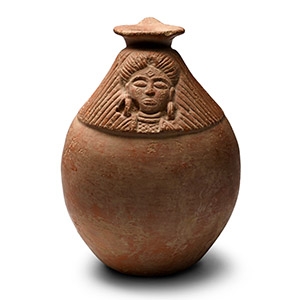
Western Asiatic Red Terracotta Jug with Face
1st millennium B.C.Sold for (Inc. bp): £650
Bulbous in profile with trumpet-shaped mouth and strap handle to rear; below the mouth, a trapezoidal panel with high-relief image of a female mask with radiating strands of hair, lozengiform urna to the brow, drop earrings. 1.25 kg, 20.7 cm
UK collection, 1990s. Acquired on the UK art market, before 2000. Private collection, Mr M.V., a London-based businessman. This lot has been cleared against the Art Loss Register database, and is accompanied by an illustrated lot declaration signed by the Head of the Antiquities Department, Dr Raffaele D'Amato. -
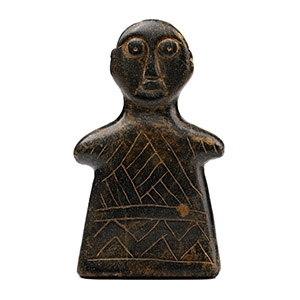
Anatolian Black Stone Idol
3rd millennium B.C.Estimate: £4,000 - 6,000 (‡+bp*)
Opening Bid: £2,000
Carved in the half-round with hatched detailing to the tunic and belt, discoid head with reserved annulet eyes and trapezoidal nose, lateral stub ears. 156 grams, 10.1 cm
Ex Swiss European collection, 1980s. Private collection, 1994. Private collection, since the late 1990s. This lot has been checked against the Interpol Database of stolen works of art and is accompanied by a search certificate number no.12874-241677. This lot has been cleared against the Art Loss Register database, and is accompanied by an illustrated lot declaration signed by the Head of the Antiquities Department, Dr Raffaele D'Amato.
