
Loading, please wait...
LOT 1304
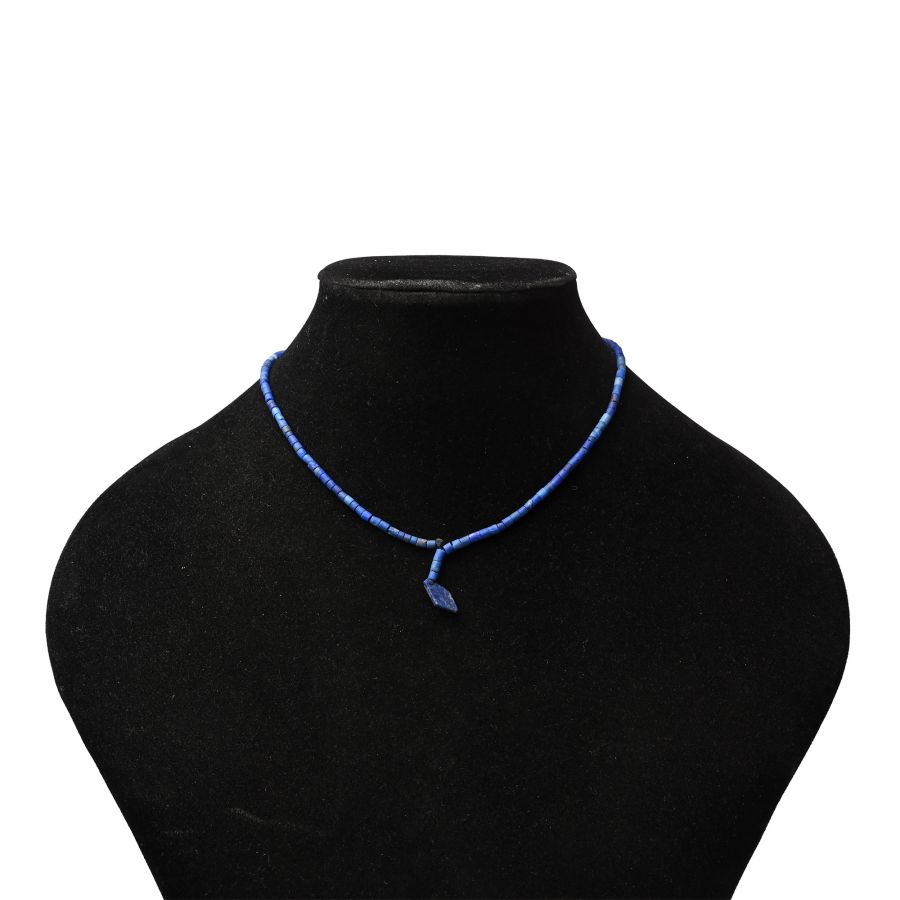
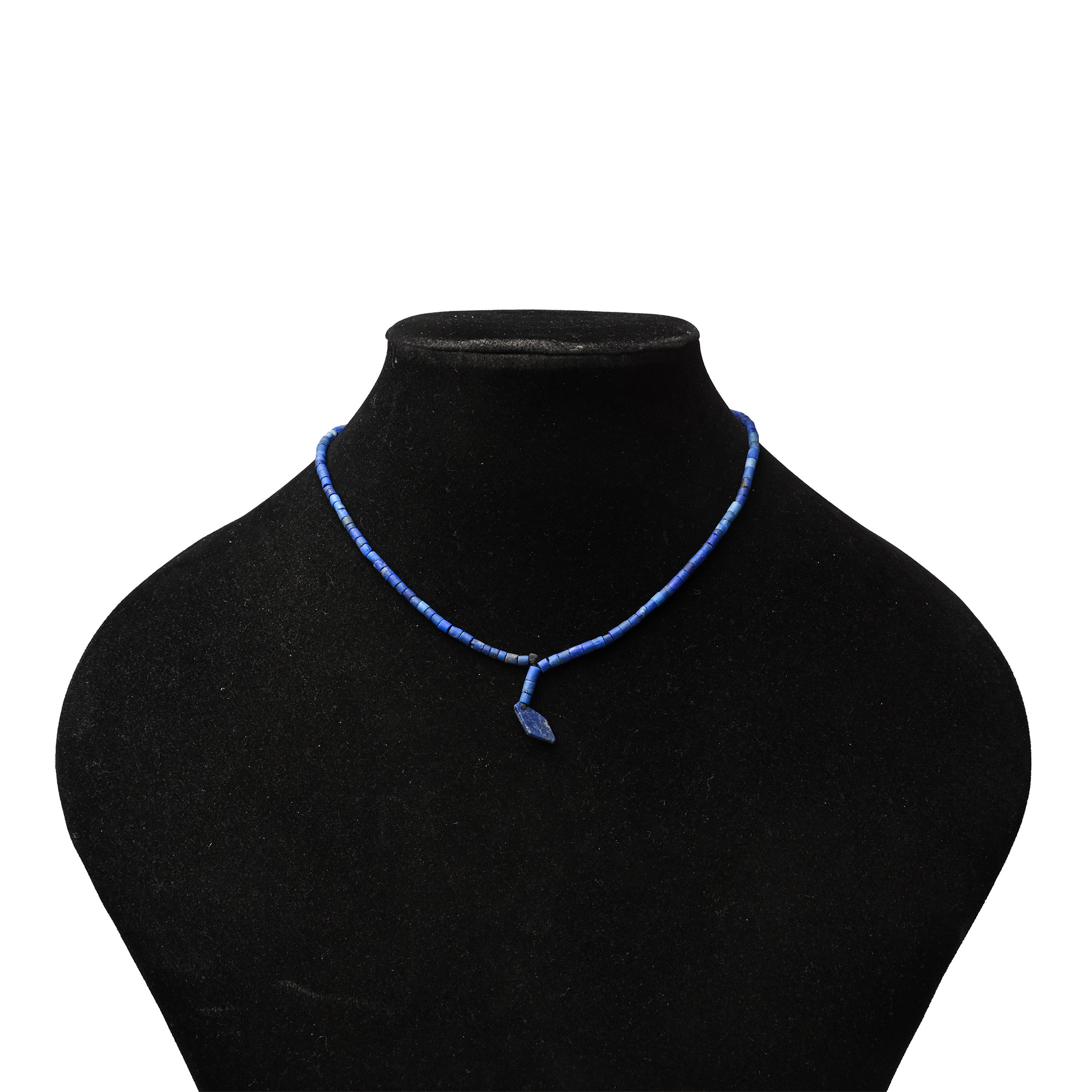
Western Asiatic Lapis Lazuli Bead Necklace String
20TH CENTURY A.D.
12 3/8 in. (5.67 grams, 31.5 cm).
Composed of short cylindrical beads with a lozengiform pendant; restrung. [No Reserve]
ProvenanceFrom the London, UK, art market in the 1990s.
This lot has been cleared against the Art Loss Register database, and is accompanied by an illustrated lot declaration signed by the Head of the Antiquities Department, Dr Raffaele D'Amato.
TimeLine Auctions follows a vetting process to ensure the authenticity and legality of all items, reinforcing our commitment to integrity and responsible trading. Each antiquity, antique, and coin lot undergoes thorough examination by a vetting committee of at least ten external specialists, professional trade association members, scientists, and archaeologists: Our Vetting Process
AUCTIONS:
TimeLine is a leading auction house specialising in antiquities, ancient art, collectables, natural history, coins, medals, and books. Our auctions offer museums, collectors, historians, and enthusiasts the opportunity to acquire unique and historically significant pieces.
-

Western Asiatic Terracotta Beast Head
1st millennium B.C.Sold for (Inc. bp): £13
With applied eyes and mane, pricked ears, round-section nose; hollow-formed, possibly the spout from a rhyton or pitcher. 24.6 grams, 47 mm
Fair condition, chipped.
Early 1990s, London, Uk, collection. Acquired on the UK art market. From a private collection, Lancashire, UK. From the private collection of John Meredith, acquired since the 1990s; thence by descent. This lot has been cleared against the Art Loss Register database, and is accompanied by an illustrated lot declaration signed by the Head of the Antiquities Department, Dr Raffaele D'Amato. -
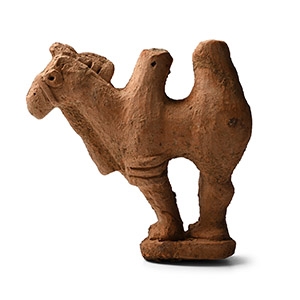
Bactrian Terracotta Camel Figurine
1st millennium B.C.Sold for (Inc. bp): £169
Modelled in the round standing on a sub-rectangular base, stylised anatomical detailing including remains of a bridge and eyes. 184 grams, 10.3 cm
Fair condition.
Ex property of an Essex gentleman; acquired on the UK art market; previously from an old English collection formed in the 1980s. From the private collection of John Meredith, acquired since the 1990s; thence by descent. This lot has been cleared against the Art Loss Register database, and is accompanied by an illustrated lot declaration signed by the Head of the Antiquities Department, Dr Raffaele D'Amato. -
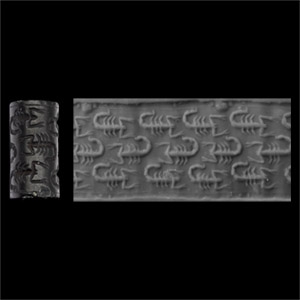
Syrian Hematite Cylinder Seal with Scorpions
1800-1500 B.C.Sold for (Inc. bp): £1,105
With scorpions and restrung pair of red stone beads, old handwritten label '1628'; accompanied by an copy of an old scholarly note, typed and signed by W.G. Lambert, late Professor of Assyriology, University of Birmingham, 1970-1993, which states: 'Cylinder Seal of Hematite, 18x9.5 mm. This seal shows three rows of three scorpions, the middle row facing the opposite direction from the other two. This is a Syrian seal c. 1800-1500 B.C., of an unusual type. It is in fine state of preservation, and the insects are well engraved. The scorpion was a divine symbol ln the Ancient Near East, but in Syria it is not known of which deity it was the symbol. The design is in fact very old, being found in Jemdet Nasr seals c. 3000 B.C., and in Syria artists copied older motifs on many occasions.'; accompanied by a museum-quality impression. 5.4 grams, 18 mm
UK private collection, acquired 1980-1983. Accompanied by a copy of a scholarly note, typed and signed by Professor Wilfrid George Lambert in 1992. This lot has been cleared against the Art Loss Register database, and is accompanied by an illustrated lot declaration signed by the Head of the Antiquities Department, Dr Raffaele D'Amato.
