
Loading, please wait...
LOT 0891
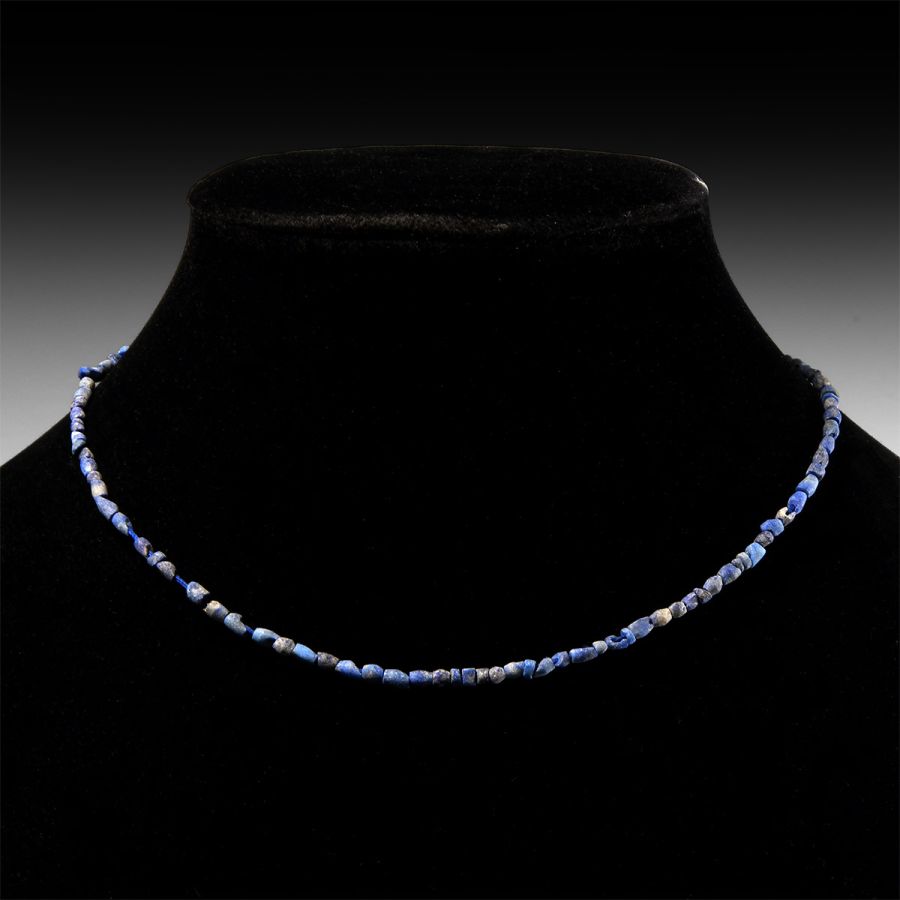
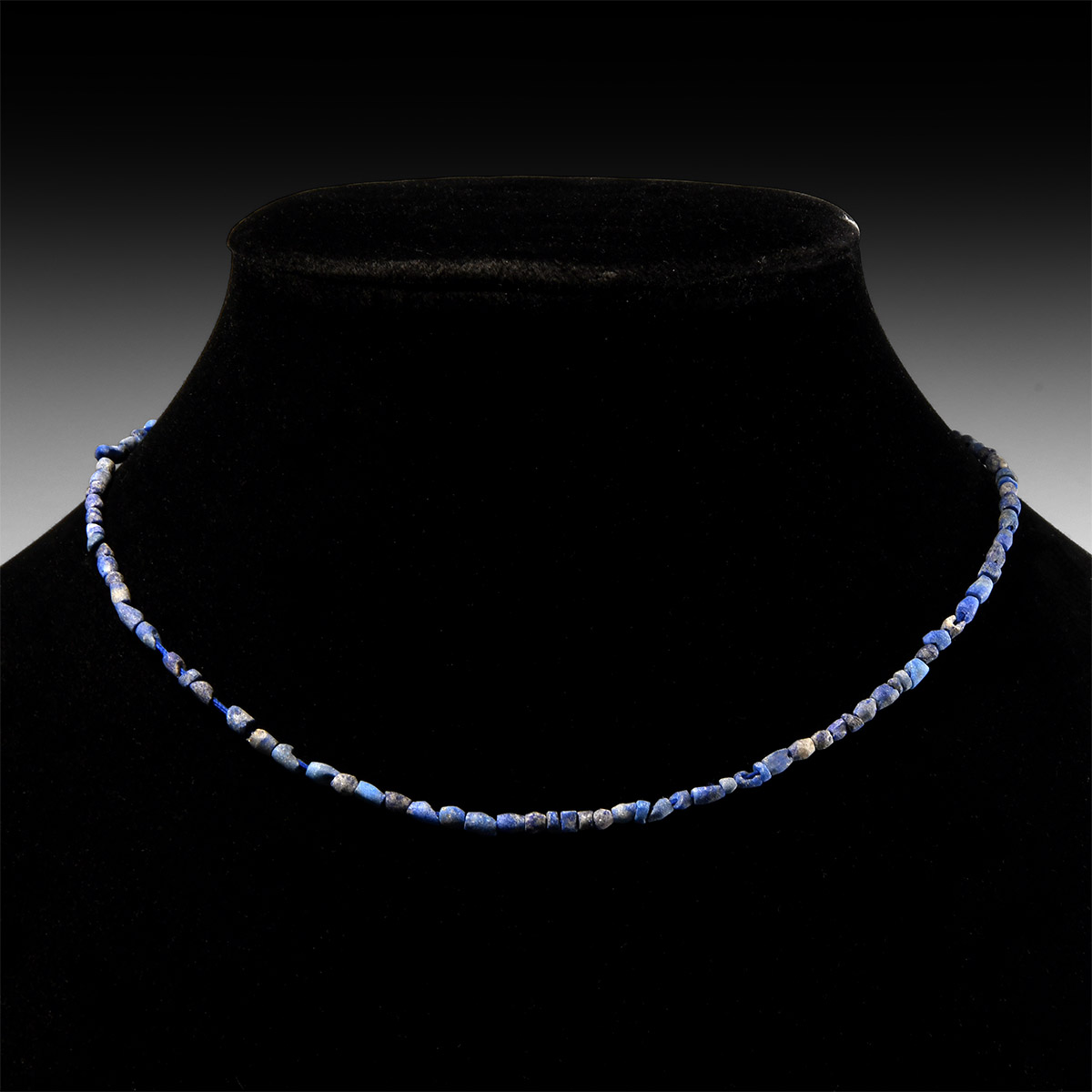
Western Asiatic Lapis Lazuli Bead Group
1ST MILLENNIUM B.C.
15 3/8 in. (3.66 grams, 39 cm long).
A string of lapis lazuli beads of various types, including biconical, wheel and tubular types. [No Reserve]
ProvenanceAcquired 1980-2015.
Ex Abelita family collection.
TimeLine Auctions follows a vetting process to ensure the authenticity and legality of all items, reinforcing our commitment to integrity and responsible trading. Each antiquity, antique, and coin lot undergoes thorough examination by a vetting committee of at least ten external specialists, professional trade association members, scientists, and archaeologists: Our Vetting Process
AUCTIONS:
TimeLine is a leading auction house specialising in antiquities, ancient art, collectables, natural history, coins, medals, and books. Our auctions offer museums, collectors, historians, and enthusiasts the opportunity to acquire unique and historically significant pieces.
-
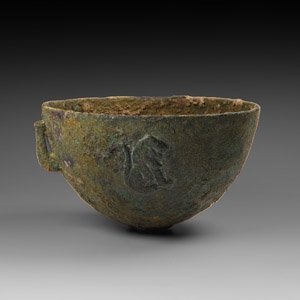
Proto Elamite Bowl with Seated Lions
3rd millennium B.C.Estimate: £800 - 1,000 (+bp*)
Opening Bid: £444
A conical bowl with D-section wall and shallow discoid foot, ornamented with a procession of three lions seated right in relief around the shoulder; remains of lug handle. 317 grams, 10.2 cm wide
Fine condition.
Acquired before 1983. Ex London gallery, 1990s. -
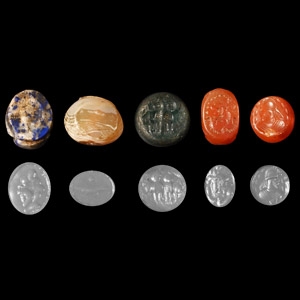
Sassanian Stamp Seal Collection
3rd-7th century A.D.Sold for (Inc. bp): £338
A mixed group of stamp seals in carnelian, lapis lazuli and other materials with intaglio profile bust, two horses and other designs. 16.4 grams total, 12-16 mm
English private collection. -
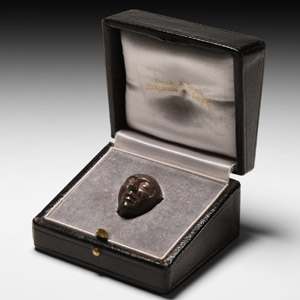
Sumerian Priest Head Pendant
3rd millennium B.C.Estimate: £3,500 - 4,500 (+bp*)
Opening Bid: £1,750
A haematite pendant in the form of the shaved head of a priest carved with semi-naturalistic facial features; drilled horizontally through the top of the head for suspension; displayed in a custom-made presentation box printed 'Derek J. Content Antiquities and Jewelry' to the interior. 13 grams, 23.5 mm (82 grams total)
Acquired in the late 1970s. Important North West London collection. This lot has been checked against the Interpol Database of stolen works of art and is accompanied by search certificate no.11644-199720.
