
Loading, please wait...
LOT 1113
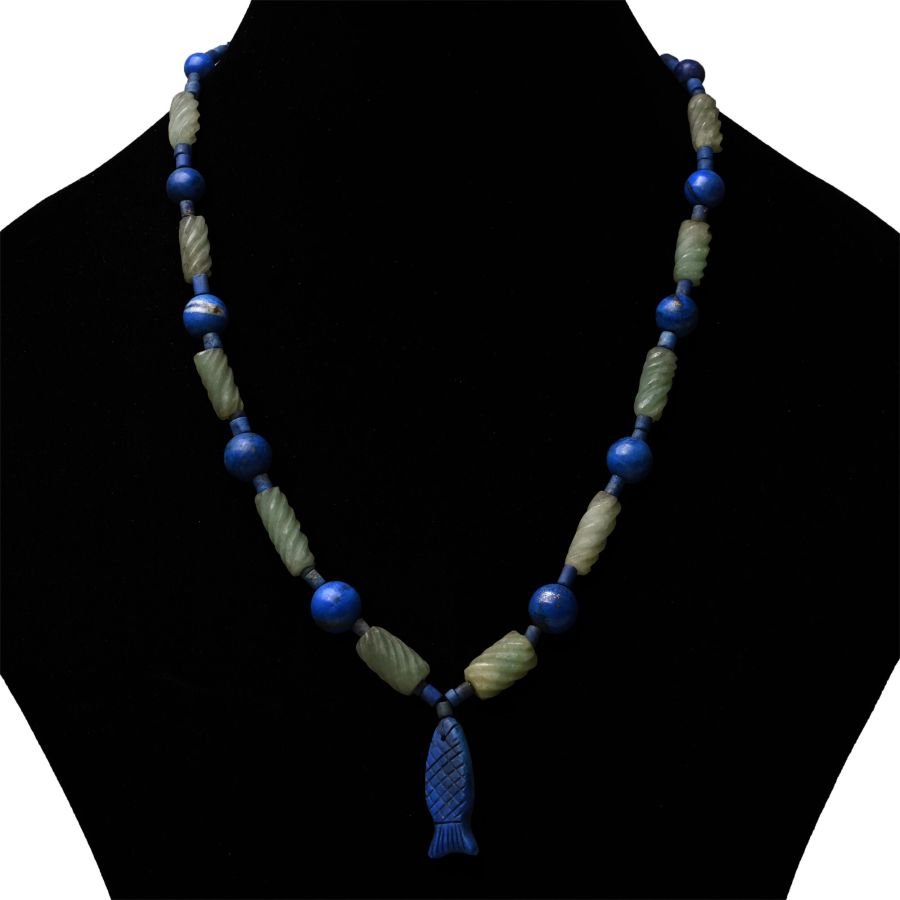
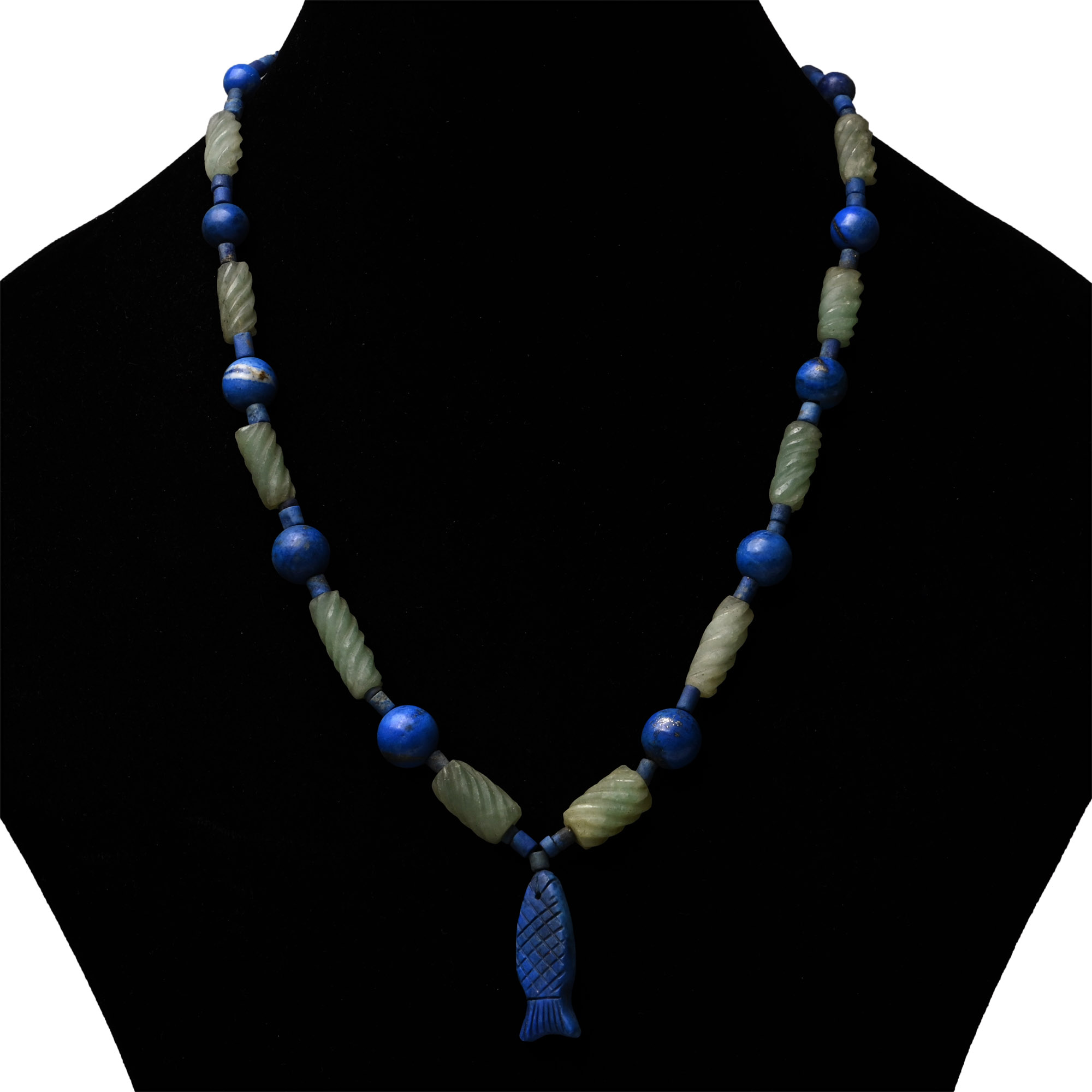
Western Asiatic Lapis Lazuli and Green Stone Bead Necklace String
20TH CENTURY A.D.
17 in. (50 grams, 43 cm).
Composed of large cylindrical beads with spiral-decoration, interspersed with large spherical and small tubular beads, central feature a fish-shaped pendant. [No Reserve]
ProvenanceFrom the London, UK, art market in the 1990s.
This lot has been cleared against the Art Loss Register database, and is accompanied by an illustrated lot declaration signed by the Head of the Antiquities Department, Dr Raffaele D'Amato.
TimeLine Auctions follows a vetting process to ensure the authenticity and legality of all items, reinforcing our commitment to integrity and responsible trading. Each antiquity, antique, and coin lot undergoes thorough examination by a vetting committee of at least ten external specialists, professional trade association members, scientists, and archaeologists: Our Vetting Process
AUCTIONS:
TimeLine is a leading auction house specialising in antiquities, ancient art, collectables, natural history, coins, medals, and books. Our auctions offer museums, collectors, historians, and enthusiasts the opportunity to acquire unique and historically significant pieces.
LOT 1113
Western Asiatic Lapis Lazuli and Green Stone Bead Necklace String
Sold for (Inc. bp): £26
-
.jpg)
Old Babylonian Cuneiform Terracotta Tablet
Circa 2000-1530 B.C.Sold for (Inc. bp): £3,640
Rectangular clay tablet with cuneiform text to both broad faces. 138 grams, 96 mm
Ex Oriental Dar Antiques, Jerusalem, 1967. European private collection. Accompanied by a thermoluminescence analysis report no.N125e33 from Oxford Authentication. This lot has been checked against the Interpol Database of stolen works of art and is accompanied by search certificate number no.12770-237184. This lot has been cleared against the Art Loss Register database, and is accompanied by an illustrated lot declaration signed by the Head of the Antiquities Department, Dr Raffaele D'Amato.
Old Babylonian tablets were found in regular excavations from Khafaje and Kish, although still today the main body came from dealers. A definite date can be assigned to them only on the basis of internal evidence. The scripts of the tablets varies a good deal: some tablets are written in archaic cursive, others in younger cursive, still others mix archaic and younger sign forms. -
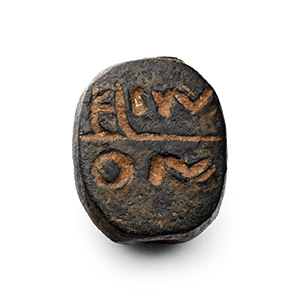
Western Asiatic Bronze Scaraboid Seal with Aramaic Inscription
1st millennium B.C.Estimate: £500 - 700 (+bp*)
Opening Bid: £250
Scaraboid bead with incised legend in two lines to the underside. 3.37 grams, 11 mm
From the collection of a gentleman, acquired on the London art market in the 1990s. This lot has been cleared against the Art Loss Register database, and is accompanied by an illustrated lot declaration signed by the Head of the Antiquities Department, Dr Raffaele D'Amato. -
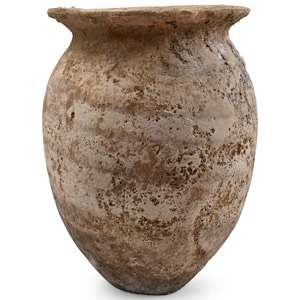
Mesopotamian Stone Vessel
1st millennium B.C.Sold for (Inc. bp): £130
With barrel-shaped body, short neck and everted rim. 1.03 kg, 15.5 cm
From a collection formed before 1990. Ex Mayfair, London, UK, gallery, 2000s. This lot has been cleared against the Art Loss Register database, and is accompanied by an illustrated lot declaration signed by the Head of the Antiquities Department, Dr Raffaele D'Amato.
