
Loading, please wait...
LOT 0980
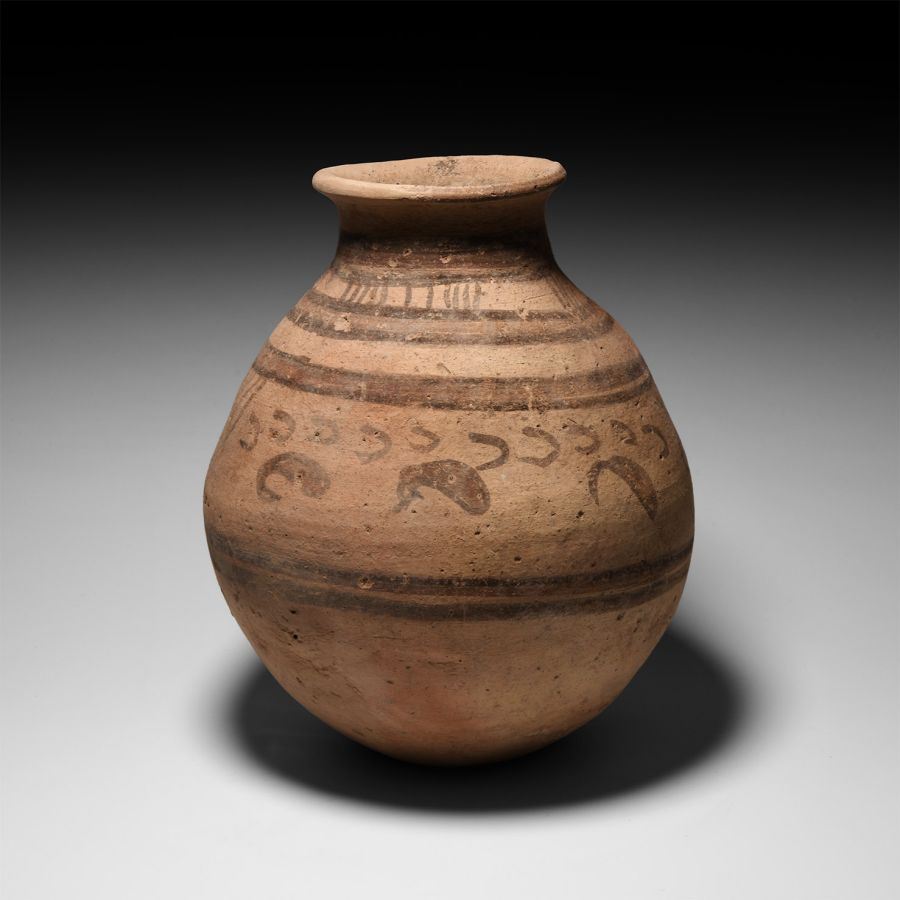
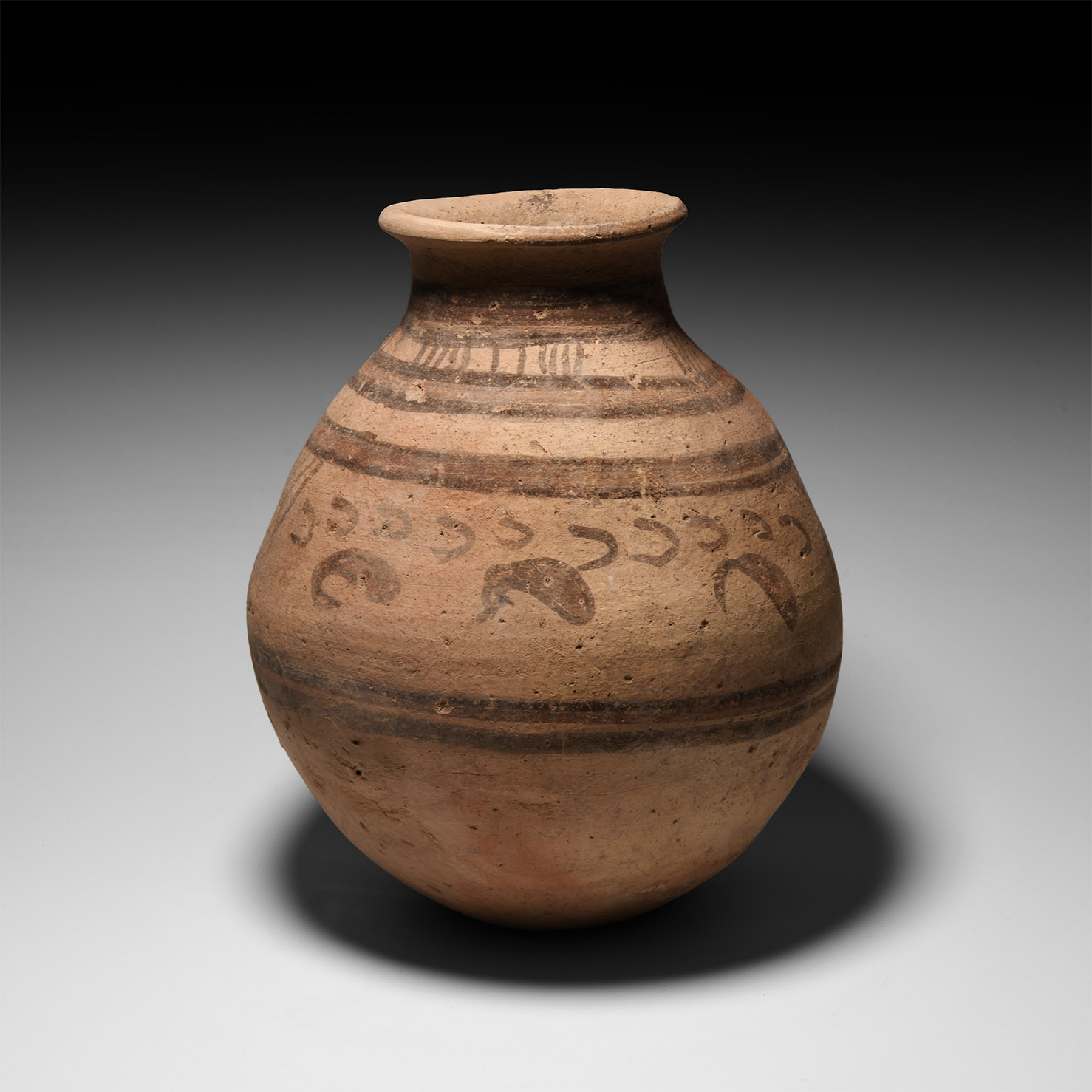
Western Asiatic Jar with Dolphins
2ND MILLENNIUM B.C.
9 5/8 in. (2.7 kg, 24.5 cm high).
A bulbous ceramic jar with everted rim, decorated with polychrome geometric bands and stylised dolphins.
ProvenanceAcquired 1970s-1990s.
Ex Pars Gallery, Mayfair, London, UK.
From a specialist collection of pottery.
TimeLine Auctions follows a vetting process to ensure the authenticity and legality of all items, reinforcing our commitment to integrity and responsible trading. Each antiquity, antique, and coin lot undergoes thorough examination by a vetting committee of at least ten external specialists, professional trade association members, scientists, and archaeologists: Our Vetting Process
AUCTIONS:
TimeLine is a leading auction house specialising in antiquities, ancient art, collectables, natural history, coins, medals, and books. Our auctions offer museums, collectors, historians, and enthusiasts the opportunity to acquire unique and historically significant pieces.
LOT 0980
Western Asiatic Jar with Dolphins
Estimate £350 - 450€410 - 520 (for guidance only)$470 - 610 (for guidance only)
-
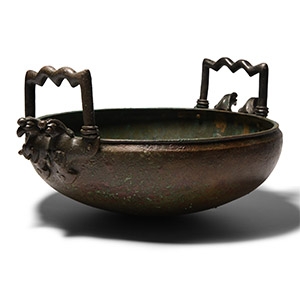
Western Asiatic Bronze Zoomorphic Cauldron
Hasanlu IV, circa 10th-8th century B.C.Estimate: £5,000 - 7,000 (+bp*)
Opening Bid: £2,500
A bronze calotte-shaped cauldron or basin with collared rectangular handles featuring scalloped grips along the upper edges, a pair of stylised bird of prey protomes beneath each, talons drawn up to their chests, bulging eyes, prominent hooked beaks, wings spread and fan-shaped tails. 679 grams, 23.5 cm wide
Ex Maurice Braham, 1970s. London collection, 1990s. Accompanied by previous typed and illustrated catalogue pages. This lot has been checked against the Interpol Database of stolen works of art and is accompanied by search certificate no.11640-199105.
A rare object. The limited number of parallels feature birds of a more schematic style. Only four published parallel cauldrons with bird protomes are known to exist. Given the quality of the ornament, such basis may have been used by members of the elite in Iron Age Iranian society, although their exact functions remains unclear. One 'orientalised' Etruscan bronze cauldron was found used as a cremation vessel, placed in a tumulus and associated with a localised 'heroic' burial context. Other feasible uses include high status drinking vessels or symbols of rank. -
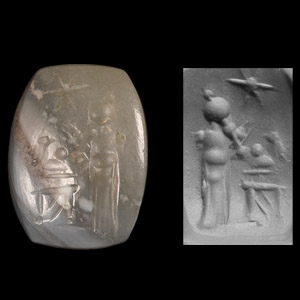
Neo-Babylonian Agate Stamp Seal with King Worshipping
Circa 6th century B.C.Sold for (Inc. bp): £338
An agate stamp seal with slightly convex base bearing intaglio scene of a worshipping king standing left, a star above; pierced towards the apex for suspension. 11.68 grams, 22.09 mm
Acquired 1969-1999. London collection of the late Mr S.M., thence by descent. -
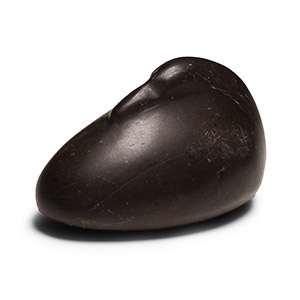
Neo-Babylonian Duck Weight
Circa 7th-6th century B.C.Sold for (Inc. bp): £390
A polished haematite duck weight, the animal modelled with its head resting along its back. 33 grams, 42 mm wide
Acquired 1980s-1990s. H.N.collection, Milton Keynes, Bedfordshire, UK.
