
Loading, please wait...
LOT 1167
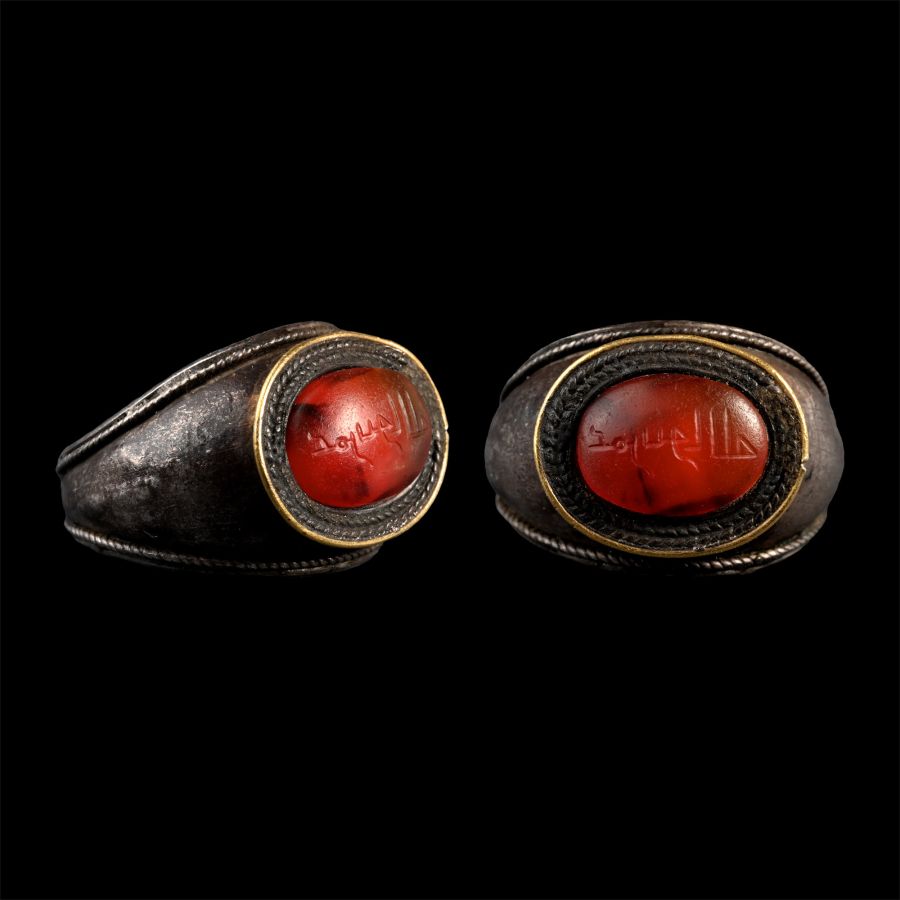
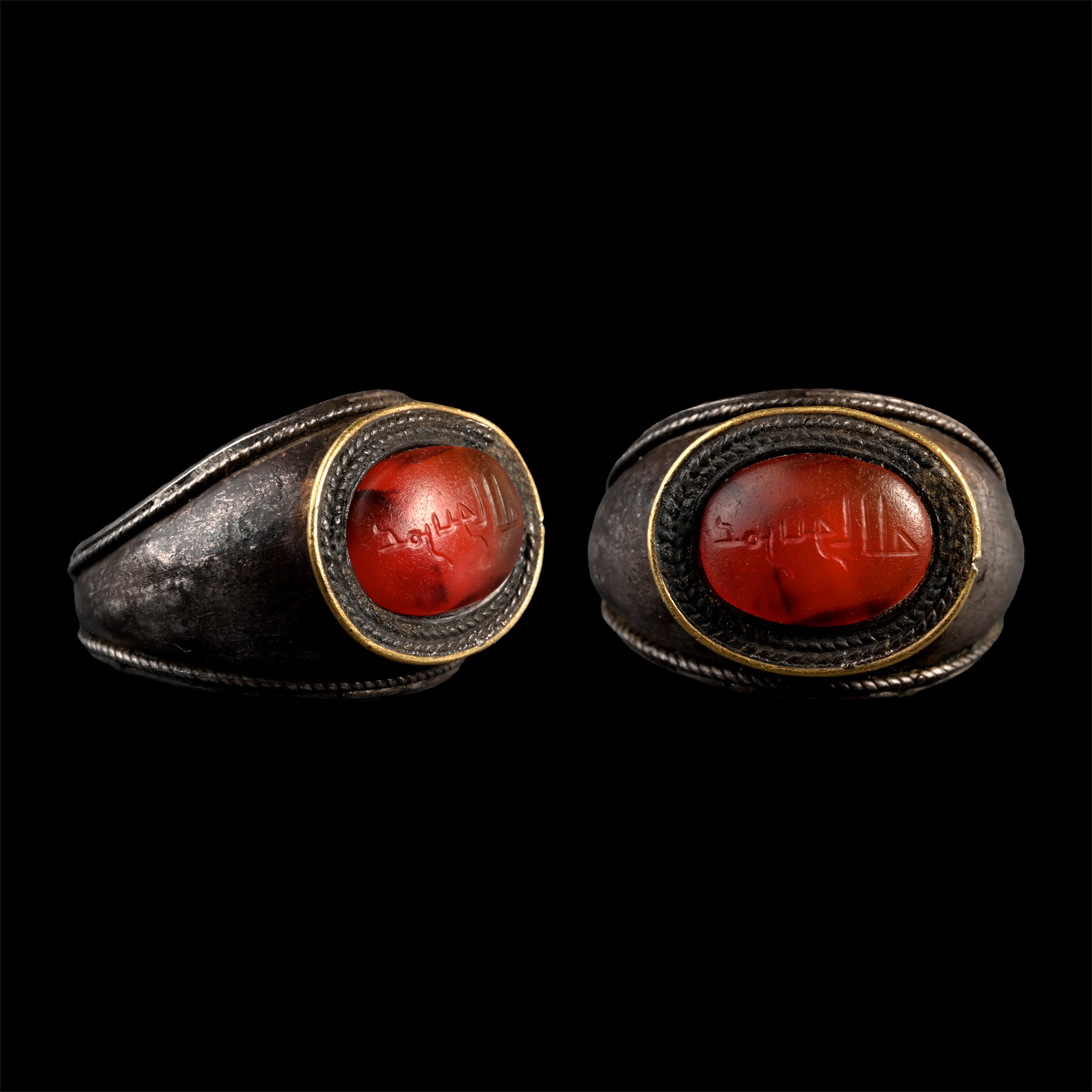
Western Asiatic Inscribed Gemstone in Silver Ring
12TH-13TH CENTURY A.D.
1 1/8 in. (9.77 grams, 28.57 mm overall, 19.06 mm internal diameter (approximate size British R 1/2, USA 8 3/4, Europe 19.38, Japan 18)).
A hollow-form D-section hoop with applied filigree rope to the borders, raised gilt bezel set with a carnelian intaglio engraved with a one line inscription.
ProvenancePrivate collection of Mr K.A., acquired in the 1990s-early 2000s.
This lot has been cleared against the Art Loss Register database, and is accompanied by an illustrated lot declaration signed by the Head of the Antiquities Department, Dr Raffaele D'Amato.
TimeLine Auctions follows a vetting process to ensure the authenticity and legality of all items, reinforcing our commitment to integrity and responsible trading. Each antiquity, antique, and coin lot undergoes thorough examination by a vetting committee of at least ten external specialists, professional trade association members, scientists, and archaeologists: Our Vetting Process
AUCTIONS:
TimeLine is a leading auction house specialising in antiquities, ancient art, collectables, natural history, coins, medals, and books. Our auctions offer museums, collectors, historians, and enthusiasts the opportunity to acquire unique and historically significant pieces.
-
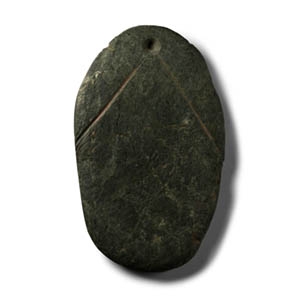
Western Asiatic Schematic Green Schist Idol
3rd-2nd millennium B.C.Estimate: £200 - 300 (+bp*)
Opening Bid: £100
Ellipsoid in plan with drilled socket to one end and radiating grooves. 26.3 grams, 61 mm
Ex Galerie Dominique Thirion, Brussels, Belgium. From the private collection of Mr K.A. This lot has been cleared against the Art Loss Register database, and is accompanied by an illustrated lot declaration signed by the Head of the Antiquities Department, Dr Raffaele D'Amato. -
.jpg)
Elamite Silver Staff Terminal with Interlaced Dragons
1st millennium B.C.Estimate: £1,500 - 2,000 (+bp*)
Opening Bid: £638
Hollow-formed with bulb finial, low-relief image of opposed dragons with detailed scale texture; circumferential band with incised guilloche below; mounted on a custom-made stand. 45 grams total, 20 cm including stand
London, UK gallery, 1971-early 2000s. This lot has been checked against the Interpol Database of stolen works of art and is accompanied by search certificate no.11966-210624. This lot has been cleared against the Art Loss Register database, and is accompanied by an illustrated lot declaration signed by the Head of the Antiquities Department, Dr Raffaele D'Amato. -
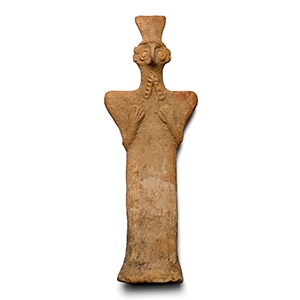
Syro-Hittite Terracotta Figure
1500-1200 B.C.Sold for (Inc. bp): £208
With lentoid-section body and flared base (restored); the face with pinched profile, tall headdress with transverse segmented peak, applied disc eyes, applied chevron beard, hands raised to the chest. 150 grams, 20 cm
Previously with Alex Szolin, Nottingham, UK. Ex Gerrard collection, 1990s. From the private collection of John Meredith, acquired since the 1990s; thence by descent. This lot has been cleared against the Art Loss Register database, and is accompanied by an illustrated lot declaration signed by the Head of the Antiquities Department, Dr Raffaele D'Amato.
