
Loading, please wait...

LOT 1141
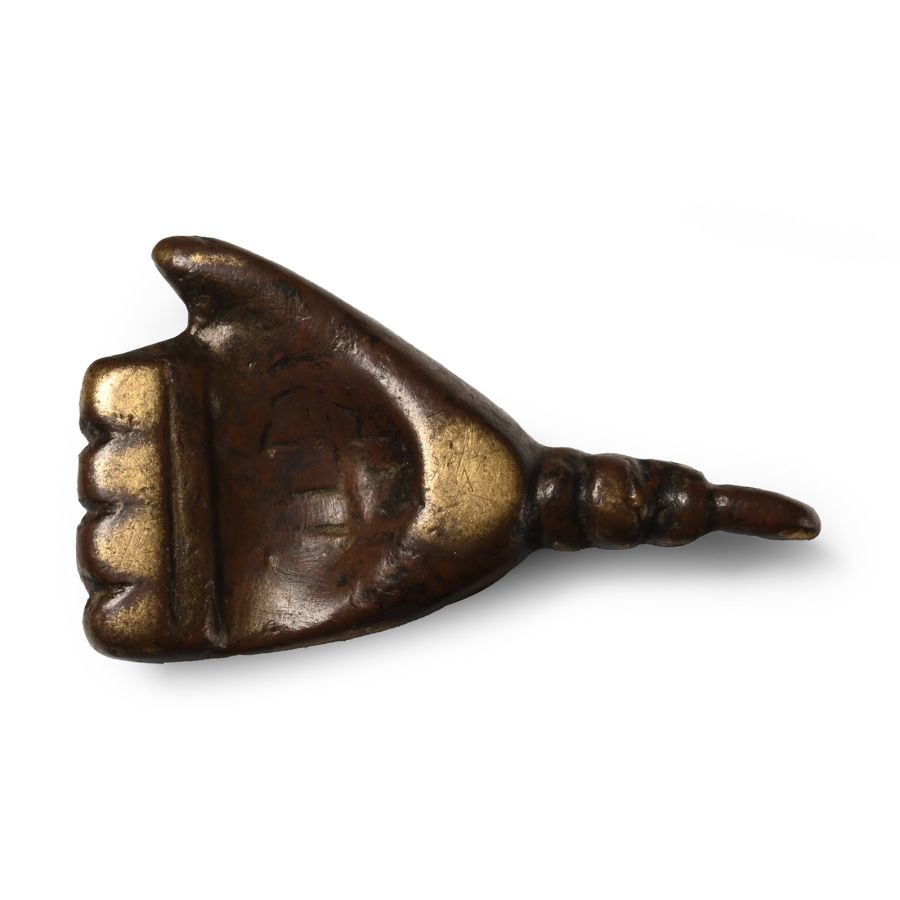
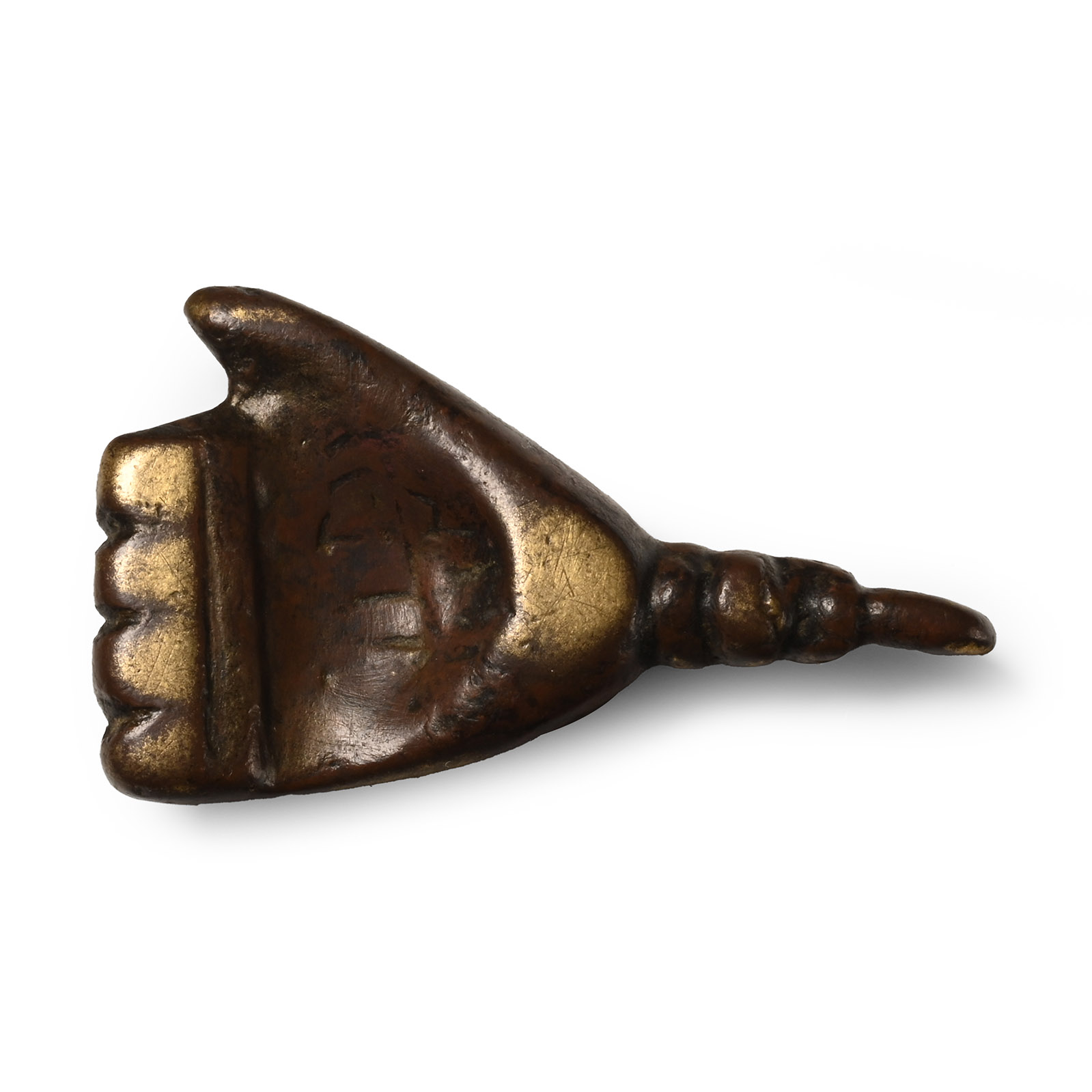
Western Asiatic Inscribed Bronze Hand Pendant
14TH-15TH CENTURY A.D.
2 in. (42.6 grams, 50 mm).
In the form of a hand with fingers held in a gripping position against the top of the palm; possible enigmatic inscription to the palm; simple detailing delineating each finger; collared arm and suspension loop. [No Reserve]
ProvenanceAcquired before the early 1970s.
Ex London, UK, gallery.
Property of a London gentleman.
TimeLine Auctions follows a vetting process to ensure the authenticity and legality of all items, reinforcing our commitment to integrity and responsible trading. Each antiquity, antique, and coin lot undergoes thorough examination by a vetting committee of at least ten external specialists, professional trade association members, scientists, and archaeologists: Our Vetting Process
AUCTIONS:
TimeLine is a leading auction house specialising in antiquities, ancient art, collectables, natural history, coins, medals, and books. Our auctions offer museums, collectors, historians, and enthusiasts the opportunity to acquire unique and historically significant pieces.
-
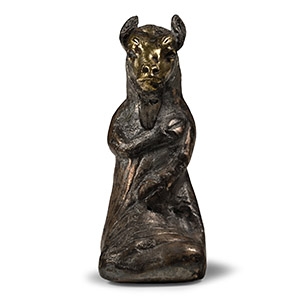
Proto-Elamite Silver-Gilt Kneeling Bull-Headed Anthropomorphic Deity
Circa late 4th-3rd millennium B.C.Sold for (Inc. bp): £5,460
Hollow-formed on a D-shape footprint, kneeling figure in striped robe draped around the body, arms held across the chest and abdomen with exposed hooves; arched neck with parcel-gilt bull's head and small goatee beard; suspension loop to rear of neck. 27.2 grams, 56 mm
Acquired by the previous owner on the London art market in the 1980s and kept in London. This lot has been checked against the Interpol Database of stolen works of art and is accompanied by a search certificate number no.12413-225443. -
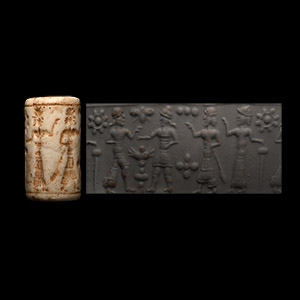
Mesopotamian White Stone Cylinder Seal
2nd-1st millennium B.C.Estimate: £1,800 - 2,400 (+bp*)
Opening Bid: £900
With frieze depicting a post or bush between two opposed figures, one with tight-fitting trousers and arms bent towards the other with knee-length kilt and strapped garment to the chest, insect in flight between them; rosette below and three pellets above with two advancing figures in long tiered robes with one arm raised, the leading figure holding a sword at his wait, the following figure with one hand on a pedestal, sun-wheel above; supplied with a museum-quality impression. 22 grams, 34 mm
Ex S. collection, London, UK, 1980s-2000s. This lot has been checked against the Interpol Database of stolen works of art and is accompanied by a search certificate number no.12420-226378. -
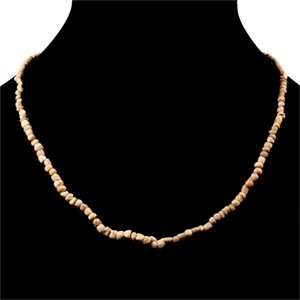
Western Asiatic Glass, Shell and Stone Bead Necklace String
1st millennium B.C. and laterSold for (Inc. bp): £20
Composed mainly of oblate and annular beads, restrung. 10.4 grams, 39.5 cm
Ex property of a late Japanese collector, 1970-2000s.
