
Loading, please wait...
LOT 0240
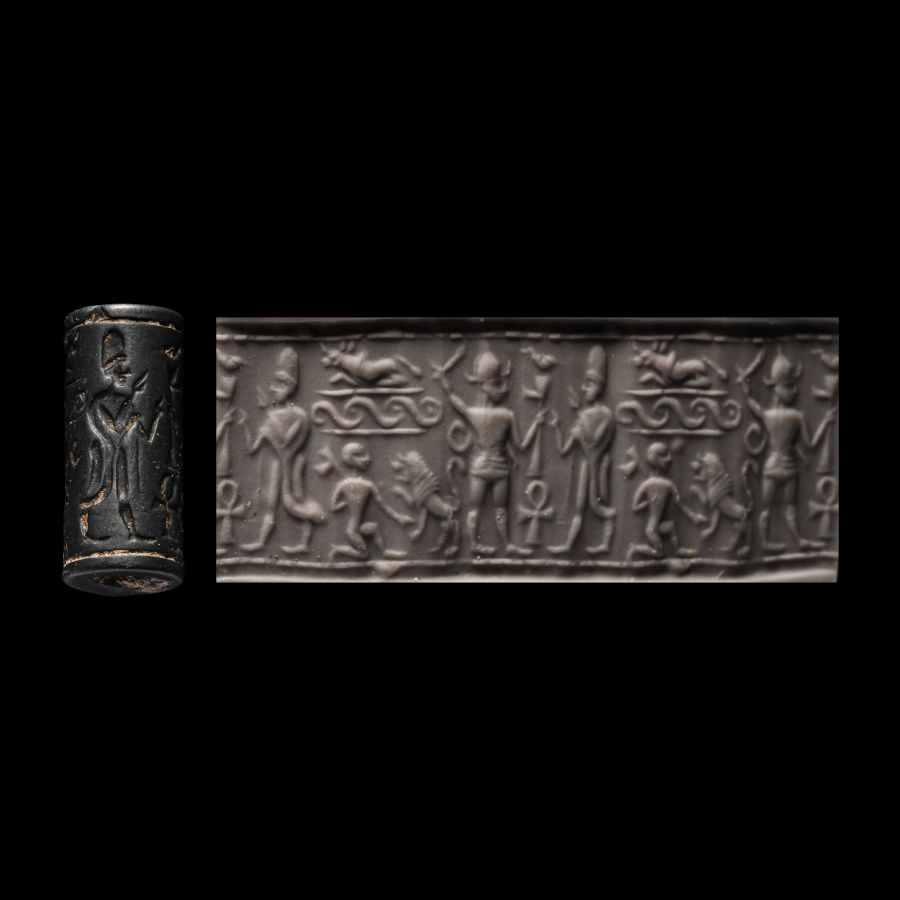
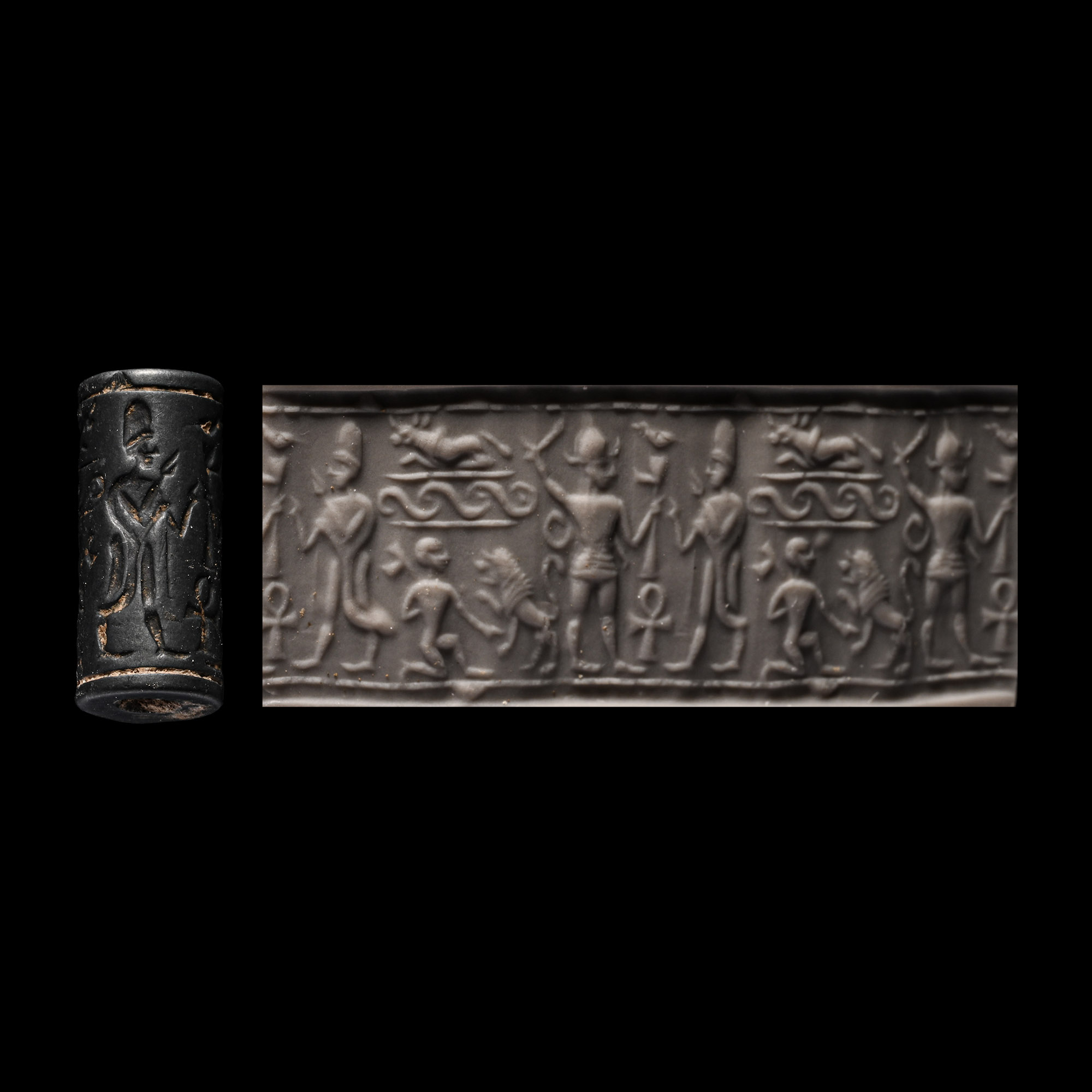
Western Asiatic Haematite Cylinder Seal with Presentation Scene
CIRCA 2ND MILLENNIUM B.C.
3/4 in. (4.04 grams, 18 mm).
With detailed frieze including a standing figure with tall helmet, raising his arm to strike a similar figure with both hands raised, bird above the scene and ankh below, smaller combat scene below with beast and kneeling figure with an axe; guilloche and other items in the field; supplied with a museum-quality impression.
ProvenanceFrom an important London, UK, collection, 1970-1990.
Examined by Professor Wilfrid George Lambert FBA (1926-2011), historian, archaeologist, and specialist in Assyriology and Near Eastern archaeology, in the late 1980s and early 1990s.
TimeLine Auctions follows a vetting process to ensure the authenticity and legality of all items, reinforcing our commitment to integrity and responsible trading. Each antiquity, antique, and coin lot undergoes thorough examination by a vetting committee of at least ten external specialists, professional trade association members, scientists, and archaeologists: Our Vetting Process
AUCTIONS:
TimeLine is a leading auction house specialising in antiquities, ancient art, collectables, natural history, coins, medals, and books. Our auctions offer museums, collectors, historians, and enthusiasts the opportunity to acquire unique and historically significant pieces.
LOT 0240
Western Asiatic Haematite Cylinder Seal with Presentation Scene
Sold for (Inc. bp): £1,170
-
Western Asiatic Bronze Knobbed Bracelet Pair
Circa 1st millennium B.C.Sold for (Inc. bp): £117
Each annular hoop with a round-section body with regularly disposed knops to the outer edge. 56 grams total, 75-76 mm
Ex old English collection. London art market, pre 2000. Property of a London, UK, gentleman. -
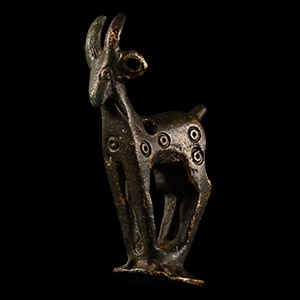
Western Asiatic Bronze Ibex Statuette
1st millennium B.C.Sold for (Inc. bp): £156
Standing on a D-shaped base with perforations to the outer edge, ring-and-dot motifs to the flanks, pierced ears and perforation to the shoulders. 21.2 grams, 44 mm
Acquired London art market, 1960s-1980s. Ex property of a Hertfordshire, UK collector. Acquired on the UK art market in 2016. Property of a Kent lady collector. -
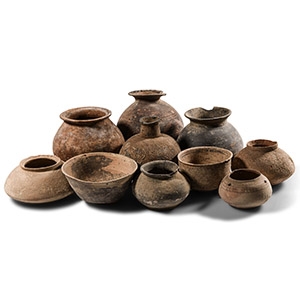
Western Asiatic Pottery Vessel Group
Circa 3rd-1st millennium B.C.Sold for (Inc. bp): £117
Comprising various types, including examples decorated with painted geometric motifs; some chipped. 2.36 kg total, 7.9-14 cm
Acquired 1980-2015. Ex Abelita family collection.
