
Loading, please wait...
LOT 0930
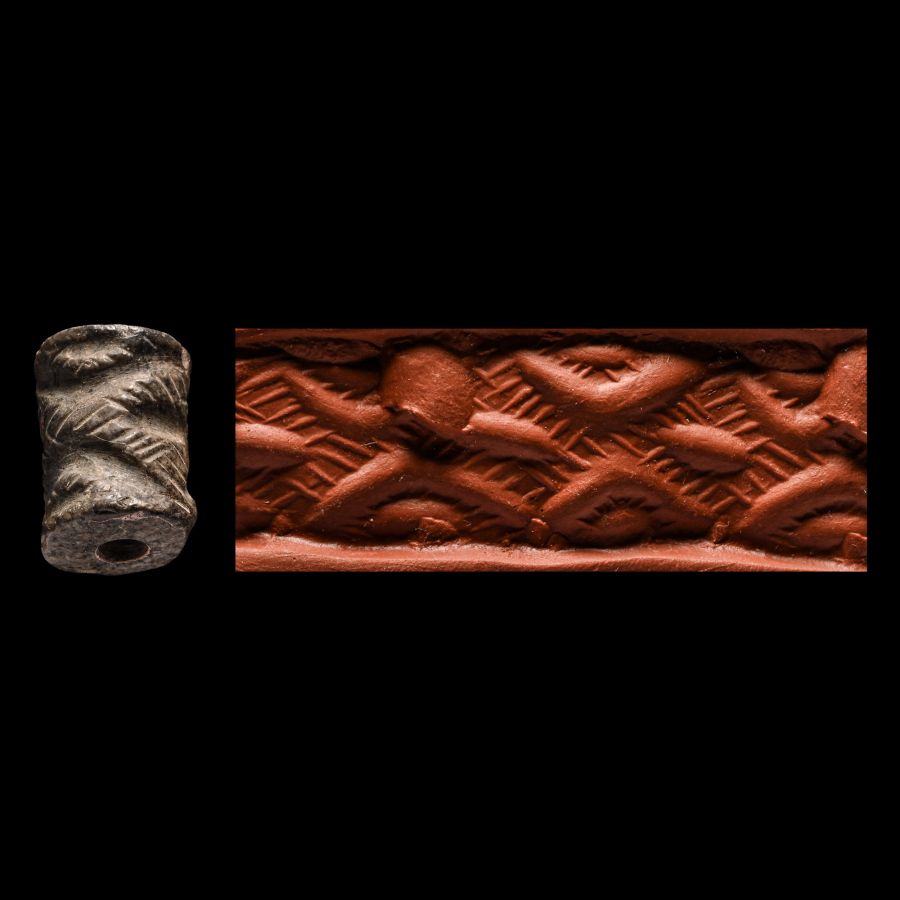
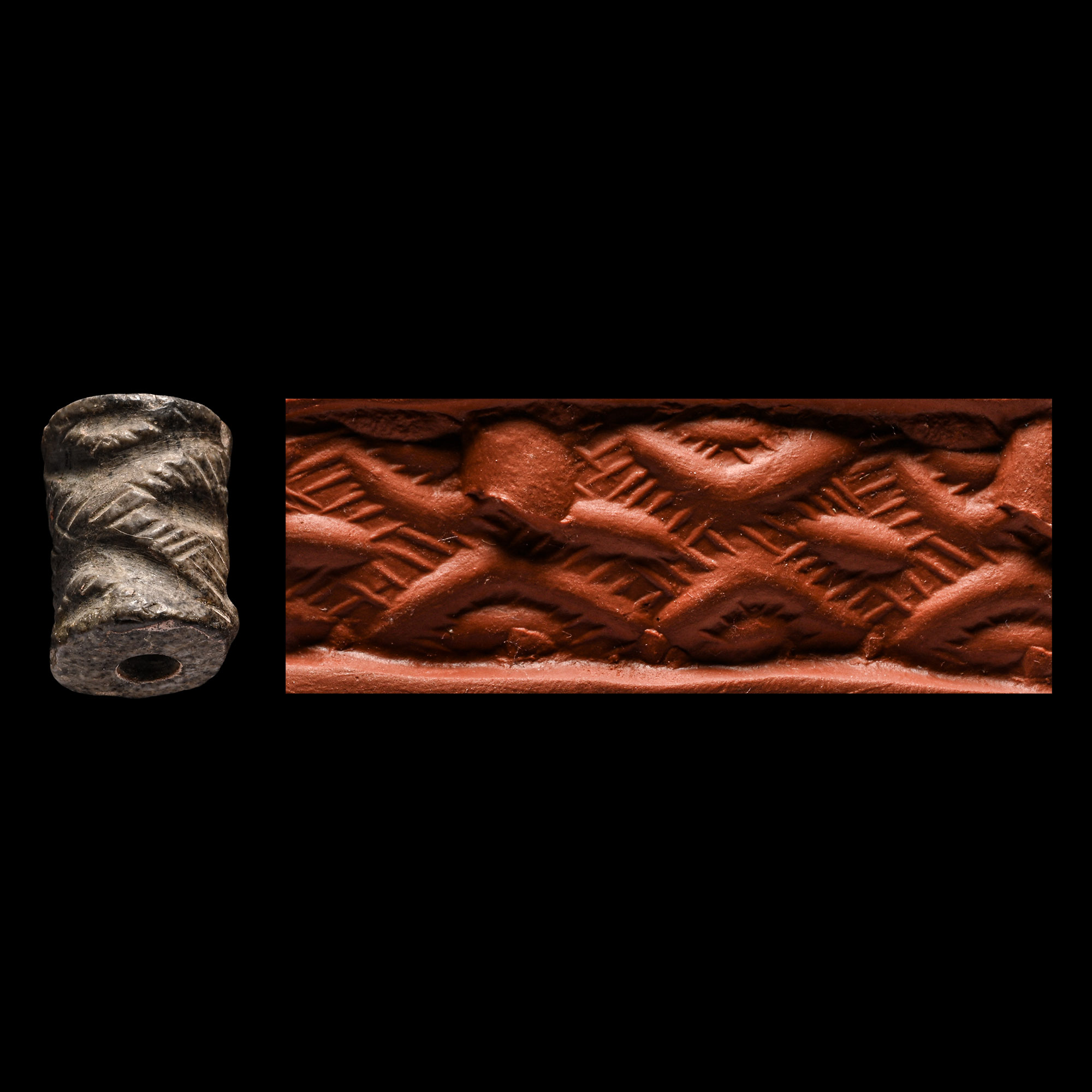
Western Asiatic Grey Stone Geometric Cylinder Seal
3RD MILLENNIUM B.C.
3/4 in. (5.1 grams, 18 mm).
With carved geometric design of chevrons and fusils on a hatched field.
ProvenanceFrom a Cotswold, UK, collection, item no.61; as seen and catalogued by the late Professor Wilfrid George Lambert pre 1990.
FootnotesThe late W.G. Lambert was Professor of Assyriology at the University of Birmingham in the period 1970-1993.
CONDITIONTimeLine Auctions follows a vetting process to ensure the authenticity and legality of all items, reinforcing our commitment to integrity and responsible trading. Each antiquity, antique, and coin lot undergoes thorough examination by a vetting committee of at least ten external specialists, professional trade association members, scientists, and archaeologists: Our Vetting Process
AUCTIONS:
TimeLine is a leading auction house specialising in antiquities, ancient art, collectables, natural history, coins, medals, and books. Our auctions offer museums, collectors, historians, and enthusiasts the opportunity to acquire unique and historically significant pieces.
-
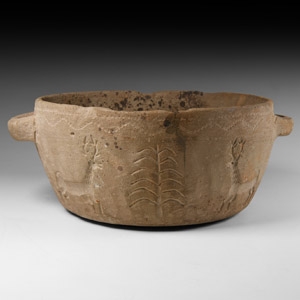
Bactrian Bowl with Animal Decoration
2nd millennium B.C.Estimate: £400 - 600 (+bp*)
Opening Bid: £222
With cylindrical body and lug handles, reserved stylised images on each side comprising two deer facing a palm tree. 805 grams, 19 cm wide
Fine condition.
French collection, 1990s-early 2000s. Mediterranean archaeology, Asia, Prehistory & Curiosities Sale, Vermot & Associés, Paris, 18 July 2020, lot 329. From an important Paris gallery, France. Ex private Parisian collection.
The motif of deer facing a palm tree appear on the ceramics from Harappa. The motif of the deer and sacred tree was widespread throughout the Oxus Valley, as well as in the ancient cultures of Bactria and Margiana. -
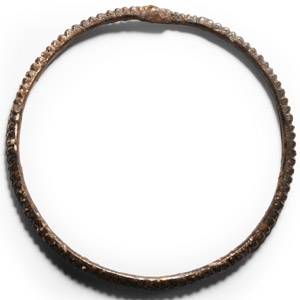
Western Asiatic Bronze Ribbed Bracelet
Circa 1st millennium B.C.Sold for (Inc. bp): £20
Of annular form with overlapping terminals. 20.3 grams, 78 mm
Ex old English collection. London art market, pre 2000. Property of a London, UK, gentleman. -
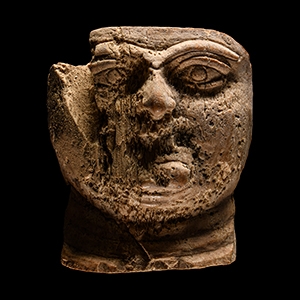
Western Asiatic Bone Doll's Face
1st millennium B.C.Sold for (Inc. bp): £195
Modelled as a human bust with naturalistic facial features, almond-shaped eyes, furrowed brow, remains of narrow lips, fleshy nose, cheeks and chin, ornamented neck. 8.29 grams, 35 mm
From an important collection, by descent; seen and numbered by Professor Lambert in the 1980-1990s.
