
Loading, please wait...


LOT 1214
Western Asiatic Grey Stone Cylinder Seal with Figural Scene
750-650 B.C.
3/8 in. (1.36 grams, 10 mm).
Frieze depicting a kneeling figure in segmented kilt facing a figure with one arm raised standing back-to-back with a similar figure in a flounced knee-length garment; supplied with a museum-quality impression. [No Reserve]
ProvenanceFrom the private collection of a European gentleman (1942-2024), formed since the 1970s.
LiteratureCf. similar seal in Teissier, B., Ancient Near Eastern Cylinder Seals from the Marcopoli Collection, Berkeley-Los Angeles, 1984, no.162.
CONDITIONTimeLine Auctions follows a vetting process to ensure the authenticity and legality of all items, reinforcing our commitment to integrity and responsible trading. Each antiquity, antique, and coin lot undergoes thorough examination by a vetting committee of at least ten external specialists, professional trade association members, scientists, and archaeologists: Our Vetting Process
AUCTIONS:
TimeLine is a leading auction house specialising in antiquities, ancient art, collectables, natural history, coins, medals, and books. Our auctions offer museums, collectors, historians, and enthusiasts the opportunity to acquire unique and historically significant pieces.
LOT 1214
Western Asiatic Grey Stone Cylinder Seal with Figural Scene
Sold for (Inc. bp): £104
-
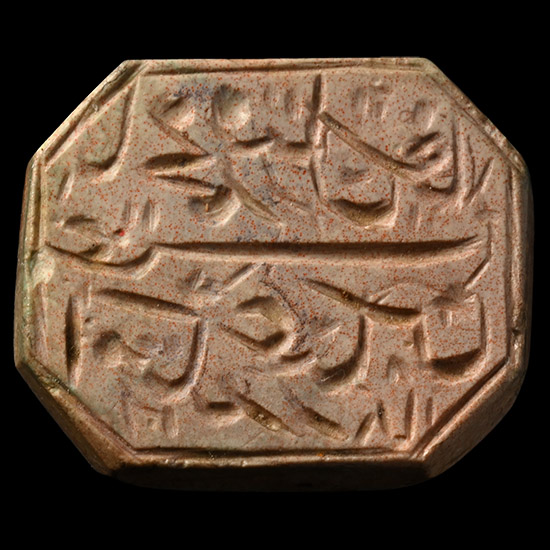
Western Asiatic Agate Bifacial Named Calligraphic Gemstone
Circa 15th century A.D.Sold for (Inc. bp): £598
Octagonal tabular bifacial panel with incised borders; dense nastaliq script to each face; with old collector's note with transliteration and translation 'Constant hearing with the blessing of the name Muhammed / Sakander Abbas'. 1.63 grams, 17 mm
From the private collection of a European gentleman (1942-2024), formed since the 1970s.
The Nastaʿlīq was one of the most important and widespread calligraphic styles used to write Persian. It was developed in Iran in the 8th and 9th centuries. It was also occasionally used to write the original Arabic language, known as taʿliq, for the titles and headings of books or printed publications, but its use was predominant in Persian, Ottoman Turkish, Urdu, and other languages of Perso-Indian influence. Nastaʿlīq is still widespread in Iran, Pakistan, and Afghanistan for written poetry and as a form of artistic expression (arabesque). -
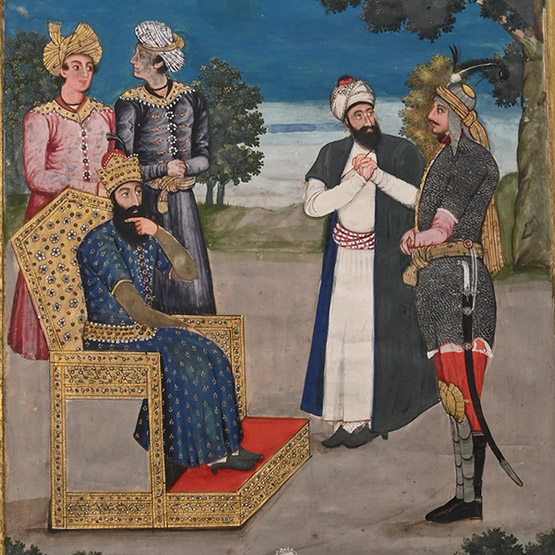
Persian Painted Gilt Shahnameh Miniature Leaf
20th century A.D.Estimate: £300 - 400 (+bp*)
Opening Bid: £160
Paper leaf from a manuscript mounted in a rectangular veneer reveal; Side A: gilt-bordered painted miniature with in two bands of calligraphic text divided into four blocks; nobleman in floor-length robe wearing a crown and turban sitting on a gilt throne with floral decoration, stroking his beard; two courtiers to his rear and a third to one side; standing military figure in helmet and mailcoat, with a scabbarded shamshir at his side, greaves and poleyns on his legs; all set in a garden with fountain and verdure; Side B: four columns of calligraphic text in 29 lines; signature to the bottom left. 90 grams, 40.2 x 28 cm
Private collection, UK. -
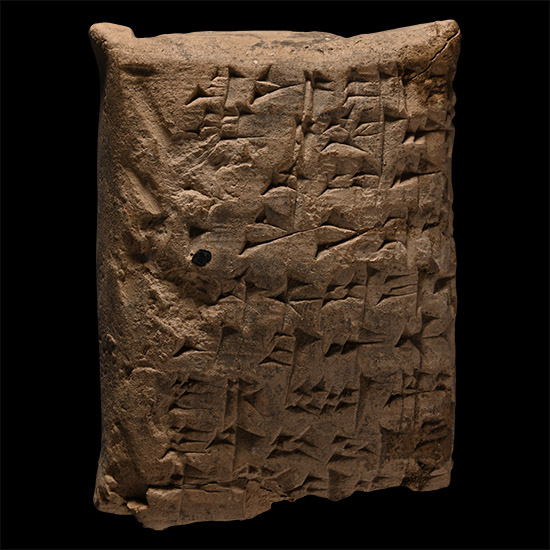
Old Babylonian Cuneiform Tablet with Legal Text
Circa 2000-1900 B.C.Sold for (Inc. bp): £2,210
The majority of a pillow-shaped tablet with impressed cuneiform text on three sides and a cylinder seal impression on the short face. 214 grams, 76 mm
Private collection, 1980s. UK private collection before 2000. Acquired on the UK art market. Private collection, London, UK. Academically researched and catalogued by the late Professor Lambert. Accompanied by an original handwritten slip written by Professor Wilfrid George Lambert.
