
Loading, please wait...
LOT 1164
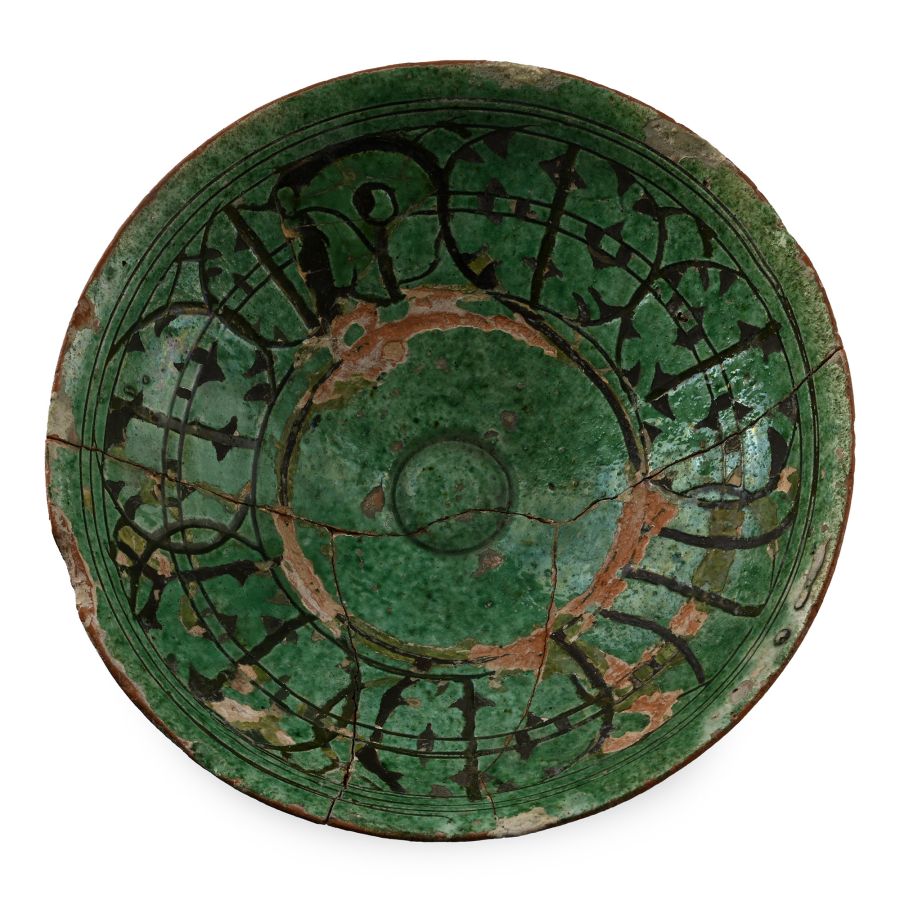
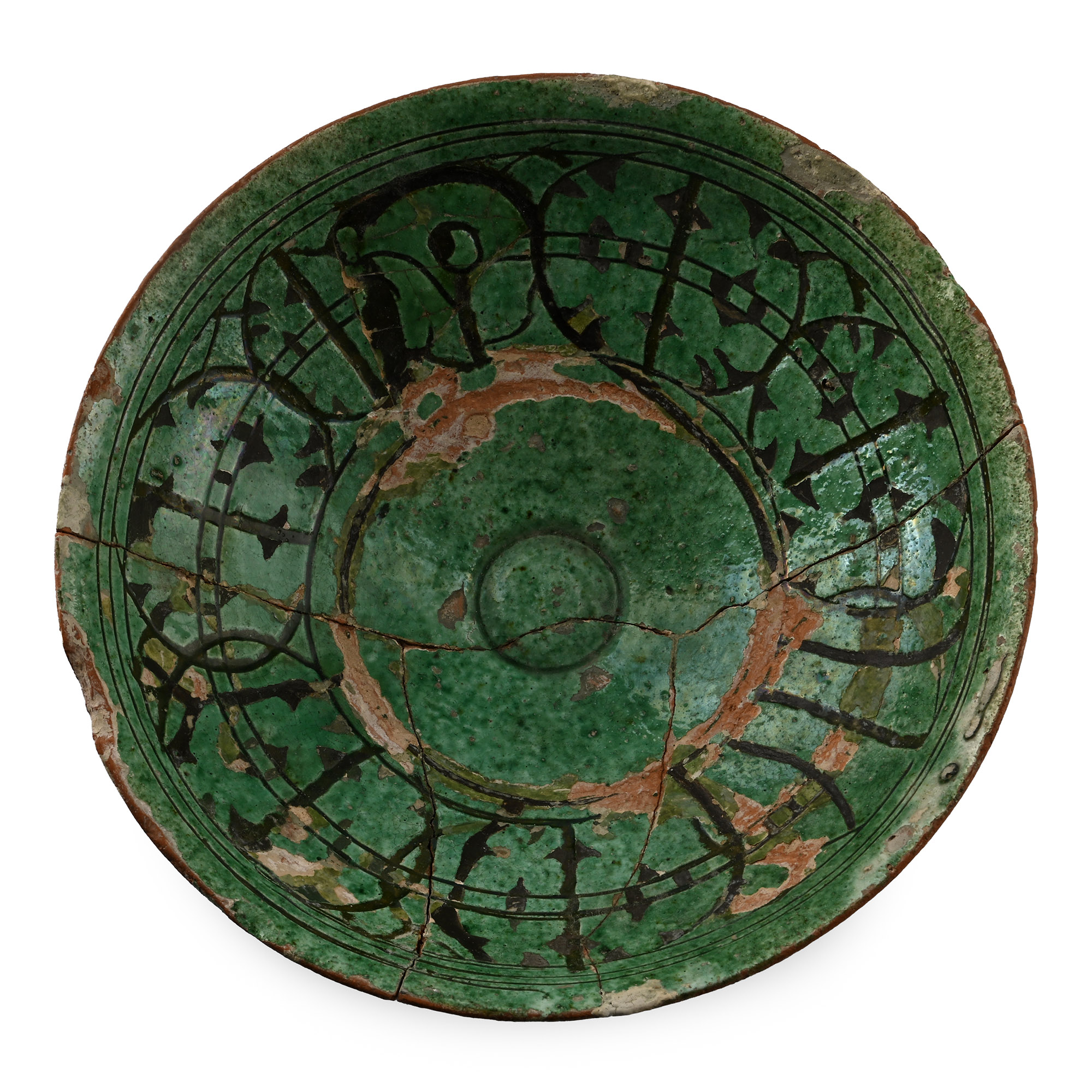
Western Asiatic Green Glazed Bowl with Incised Decoration
9TH CENTURY A.D.
7 1/2 in. (455 grams, 19 cm wide).
Funnel-shaped with stepped foot, green glazed inner face with decorative scrolls; old label to the underside, repaired. [No Reserve]
ProvenanceFrom the private family collection of Ersula Barter-Hemmerich, the longest serving member of staff working at the United Nations, her private collection formed in the 1950s and 1960s; thence by descent to her grandson.
This lot has been cleared against the Art Loss Register database, and is accompanied by an illustrated lot declaration signed by the Head of the Antiquities Department, Dr Raffaele D'Amato.
TimeLine Auctions follows a vetting process to ensure the authenticity and legality of all items, reinforcing our commitment to integrity and responsible trading. Each antiquity, antique, and coin lot undergoes thorough examination by a vetting committee of at least ten external specialists, professional trade association members, scientists, and archaeologists: Our Vetting Process
AUCTIONS:
TimeLine is a leading auction house specialising in antiquities, ancient art, collectables, natural history, coins, medals, and books. Our auctions offer museums, collectors, historians, and enthusiasts the opportunity to acquire unique and historically significant pieces.
LOT 1164
Western Asiatic Green Glazed Bowl with Incised Decoration
Sold for (Inc. bp): £98
-
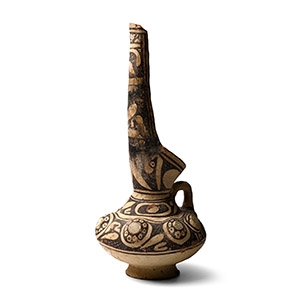
Western Asiatic Terracotta Zoomorphic Vessel with Glass Inlays
8th-9th century A.D.Estimate: £500 - 700 (+bp*)
Opening Bid: £250
Broad and squat with flared foot, loop handle, all U-section spout and strainer; raised bosses to shoulder each set with a glass inlay; reserved tendrils and flowers on a black field. 717 grams, 31.5 cm
UK collection, 1990s. Acquired on the UK art market, before 2000. Private collection, Mr M.V., a London-based businessman. This lot has been cleared against the Art Loss Register database, and is accompanied by an illustrated lot declaration signed by the Head of the Antiquities Department, Dr Raffaele D'Amato. -
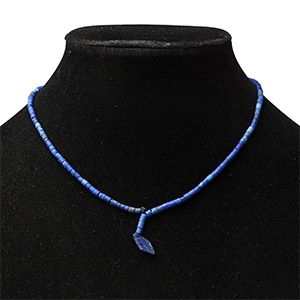
Western Asiatic Lapis Lazuli Bead Necklace String
20th century A.D.Sold for (Inc. bp): £13
Composed of short cylindrical beads with a lozengiform pendant; restrung. 5.67 grams, 31.5 cm
From the London, UK, art market in the 1990s. This lot has been cleared against the Art Loss Register database, and is accompanied by an illustrated lot declaration signed by the Head of the Antiquities Department, Dr Raffaele D'Amato. -
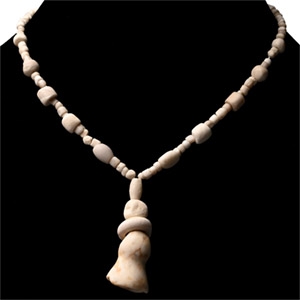
Western Asiatic White Stone Bead Necklace String
1st millennium B.C. and laterSold for (Inc. bp): £20
Composed of mainly annular and oblate stone and shell beads, central feature a stamp seal. 26 grams, 29 cm
From the London, UK, art market in the 1990s. This lot has been cleared against the Art Loss Register database, and is accompanied by an illustrated lot declaration signed by the Head of the Antiquities Department, Dr Raffaele D'Amato.
