
Loading, please wait...
LOT 1101
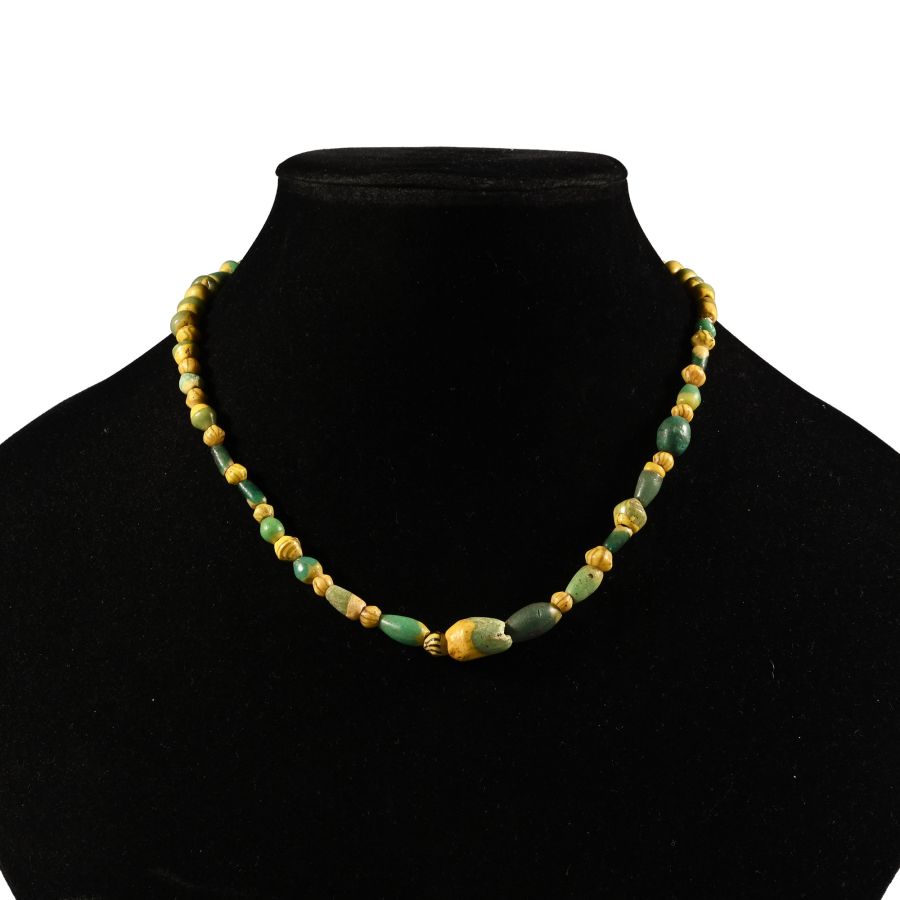
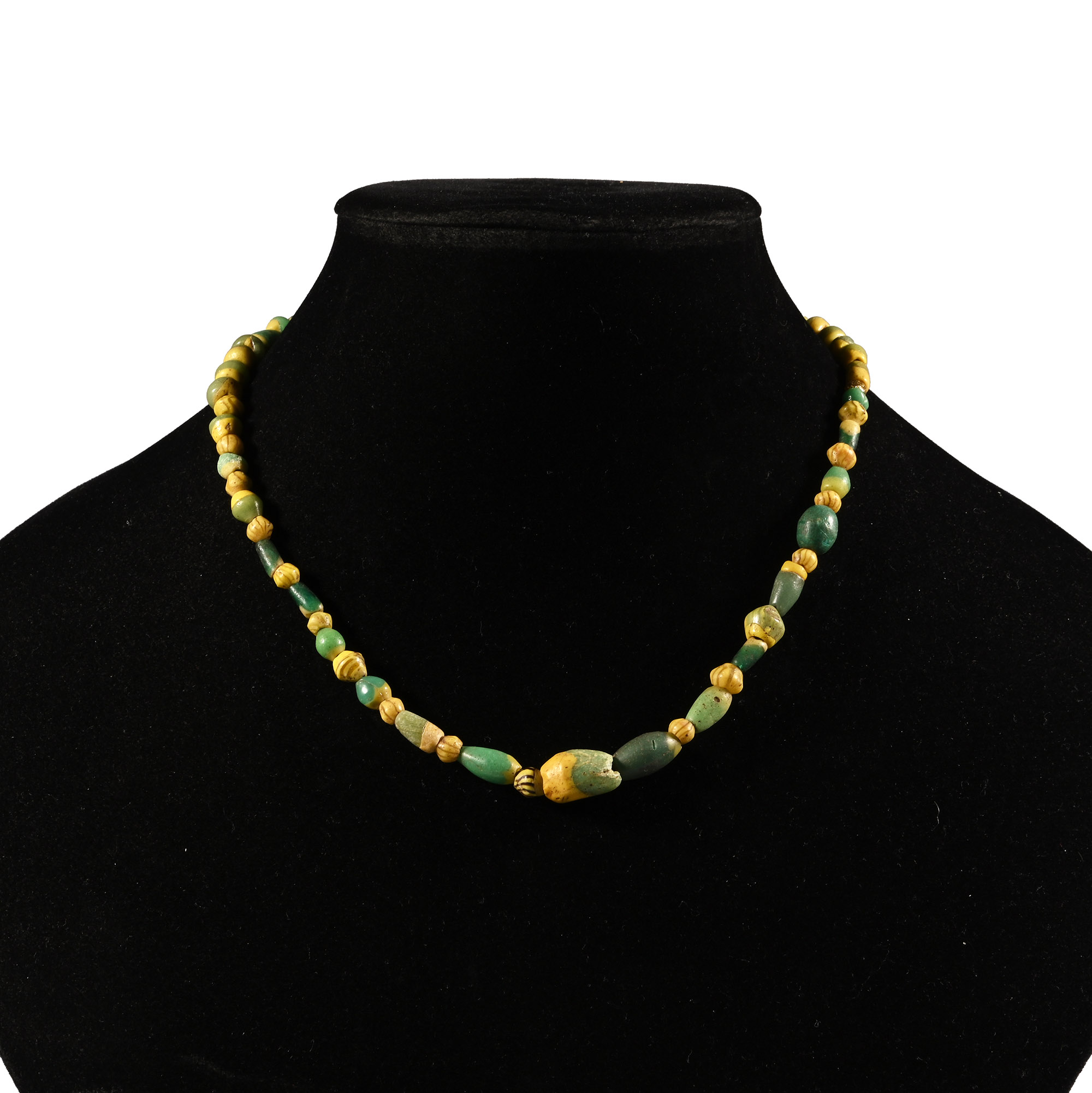
Western Asiatic Green and Yellow Glass Bead Necklace
LATE 1ST MILLENNIUM B.C. AND LATER
1 3/8 in. (23 grams, 36 mm).
Restrung group of green and yellow 'date beads', and other beads with spacer beads.
ProvenanceFrom the collection of a gentleman, acquired on the London art market in the 1990s.
This lot has been cleared against the Art Loss Register database, and is accompanied by an illustrated lot declaration signed by the Head of the Antiquities Department, Dr Raffaele D'Amato.
TimeLine Auctions follows a vetting process to ensure the authenticity and legality of all items, reinforcing our commitment to integrity and responsible trading. Each antiquity, antique, and coin lot undergoes thorough examination by a vetting committee of at least ten external specialists, professional trade association members, scientists, and archaeologists: Our Vetting Process
AUCTIONS:
TimeLine is a leading auction house specialising in antiquities, ancient art, collectables, natural history, coins, medals, and books. Our auctions offer museums, collectors, historians, and enthusiasts the opportunity to acquire unique and historically significant pieces.
-
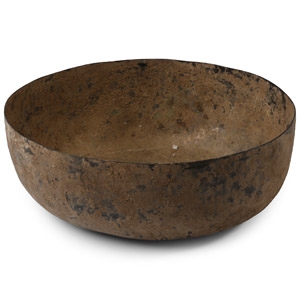
Western Asiatic Bronze Bowl
Circa 12th century A.D.Sold for (Inc. bp): £59
Raised from a single sheet with rounded base and slightly inturned walls. 415 grams, 19.5 cm
Ex London, UK, collections, 1990s-2000s. This lot has been cleared against the Art Loss Register database, and is accompanied by an illustrated lot declaration signed by the Head of the Antiquities Department, Dr Raffaele D'Amato. -
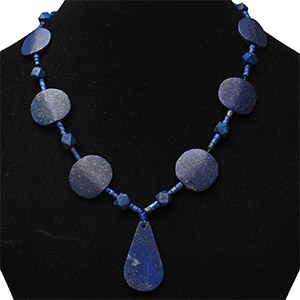
Western Asiatic Lapis Lazuli Bead Necklace String
20th century A.D.Sold for (Inc. bp): £72
Composed of coin-shaped beads interspersed with small cylindrical and larger cornerless cube bead, central feature a large discoid teardrop-shaped pendant; restrung. 71 grams, 39.5 cm
From the London, UK, art market in the 1990s. This lot has been cleared against the Art Loss Register database, and is accompanied by an illustrated lot declaration signed by the Head of the Antiquities Department, Dr Raffaele D'Amato. -
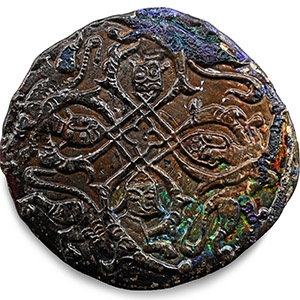
Western Asiatic Roundel for Administrative Purposes or a Weight Unit
9th-11th century A.D.Sold for (Inc. bp): £624
Iridescent blue glass disc with low-relief central quatrefoil, four advancing felines with heater-shaped heads; clay mould for the production of a very similar design, plano-convex in section with knop handle; both in a custom-made lined presentation case with hinged lid. 280 grams total, 9-10.3 cm
Acquired in the 1960s-1970s. Kept in the UK since 1981. This lot has been cleared against the Art Loss Register database, and is accompanied by an illustrated lot declaration signed by the Head of the Antiquities Department, Dr Raffaele D'Amato.
