
Loading, please wait...
LOT 0299
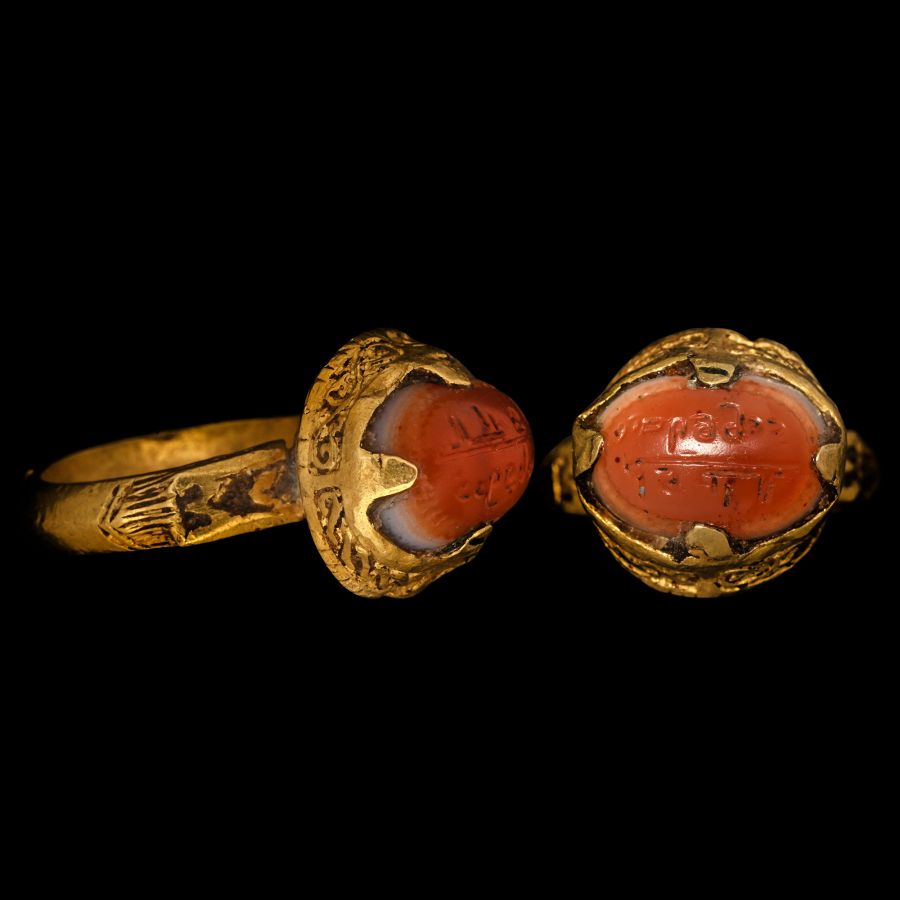
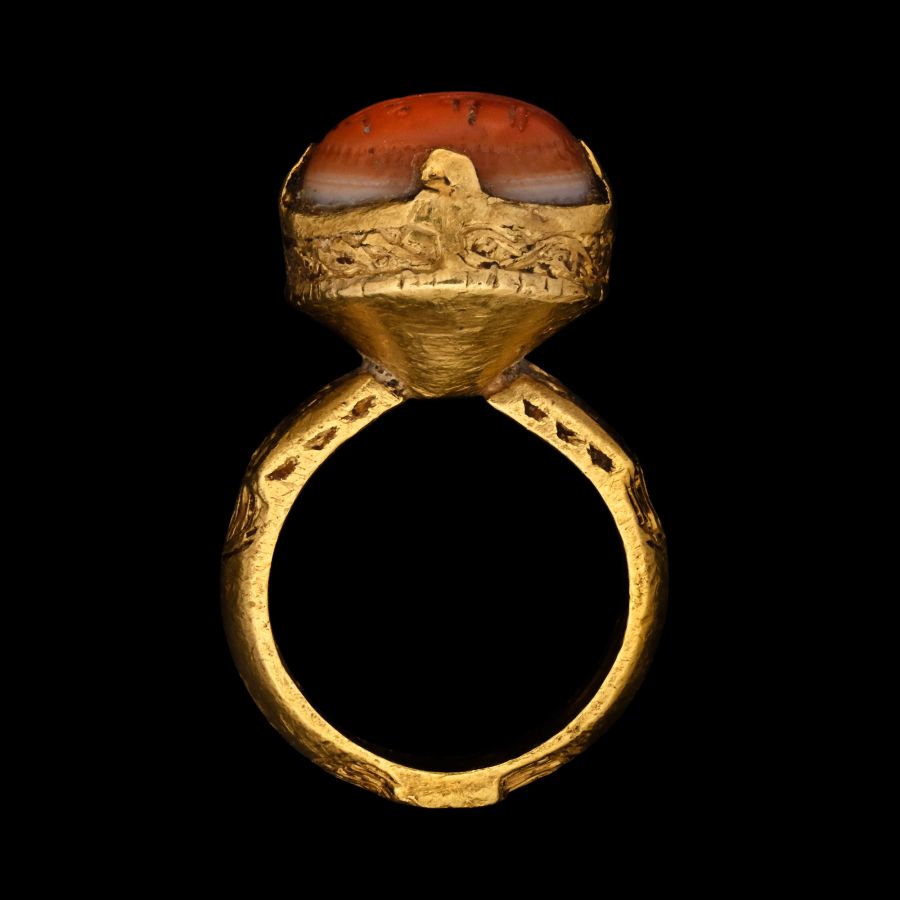
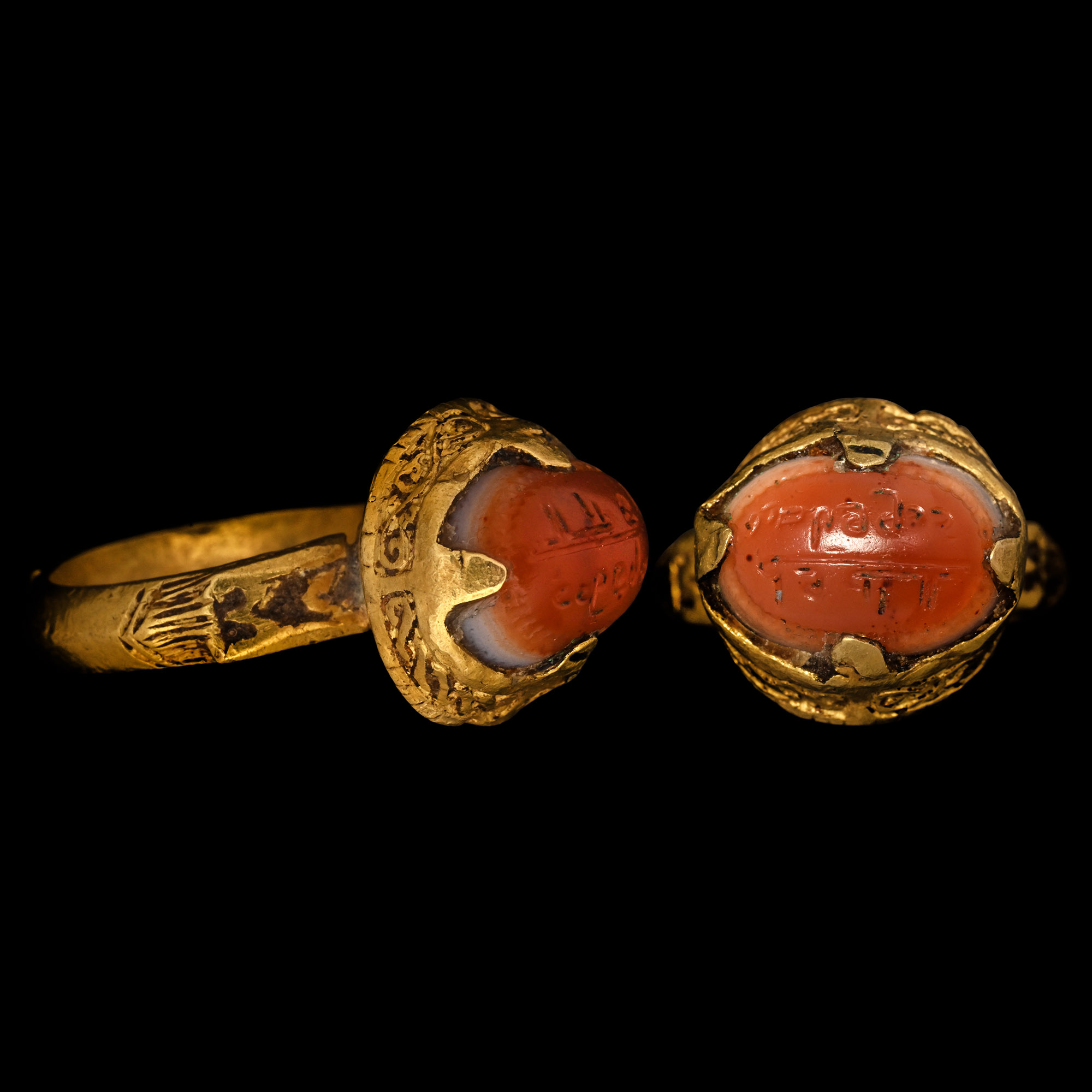
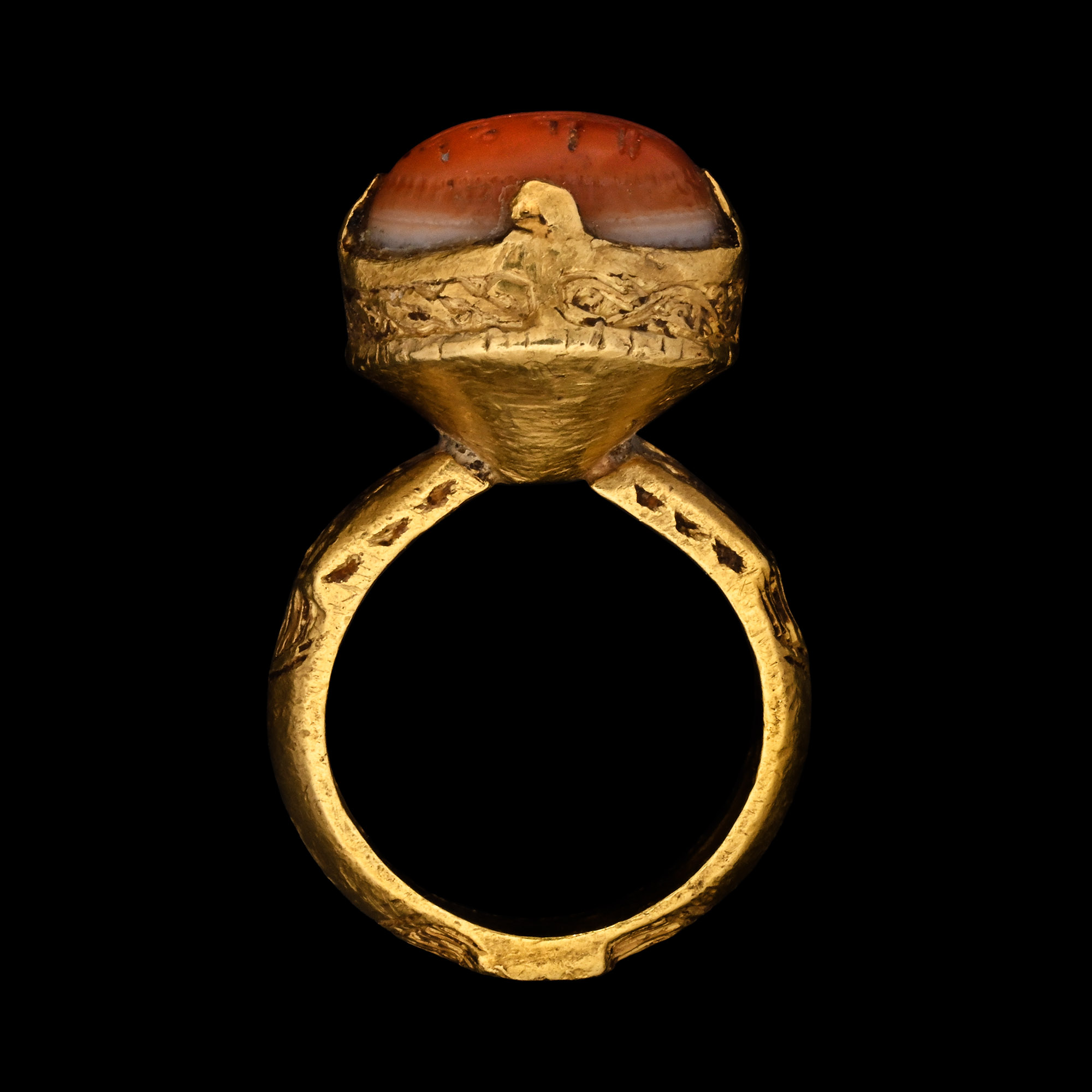
Western Asiatic Gold Ring with Inscribed Sardonyx Gemstone
10TH-12TH CENTURY A.D.
1 in. (7.33 grams, 27.65 mm overall, 13.76 x 14.32 mm internal diameter (approximate size British E 1/2, USA 2 1/2, Europe 3, Japan 3)).
With stepped shoulders supporting a cell bezel with a claw setting.
ProvenancePrivate collection, acquired on the German art market in 1993; thence by descent.
This lot has been checked against the Interpol Database of stolen works of art and is accompanied by search certificate number no.13183-249300.
Cf. Wärmländer, Ss.K.T.S., Wåhlander, L., Saage, R., Rezakhani, K., Hassan, S.A.H., 'Analysis and Interpretation of a Unique Arabic Finger Ring from the Viking Age Town of Birka, Sweden' in Scanning, volume 37, 2015, pp.131–137, fig.1 for a gemstone of similar shape with partially similar inscription.
FootnotesRings from the 9th-13th centuries represent a variety of artistic achievements; the techniques were elaborate, and the rings show rich decoration. The rings were set with cabochons, table-cut oval or rectangular stones such as turquoise, rubies, garnets or other precious stones. The Arabic inscription, engraved with early Kufic characters, contains the expression “AL__LLH”, which could be interpreted as “il-la-lah”, i.e. “For/to Allah”.
CONDITIONTimeLine Auctions follows a vetting process to ensure the authenticity and legality of all items, reinforcing our commitment to integrity and responsible trading. Each antiquity, antique, and coin lot undergoes thorough examination by a vetting committee of at least ten external specialists, professional trade association members, scientists, and archaeologists: Our Vetting Process
AUCTIONS:
TimeLine is a leading auction house specialising in antiquities, ancient art, collectables, natural history, coins, medals, and books. Our auctions offer museums, collectors, historians, and enthusiasts the opportunity to acquire unique and historically significant pieces.
LOT 0299
Western Asiatic Gold Ring with Inscribed Sardonyx Gemstone
Sold for (Inc. bp): £2,340
-
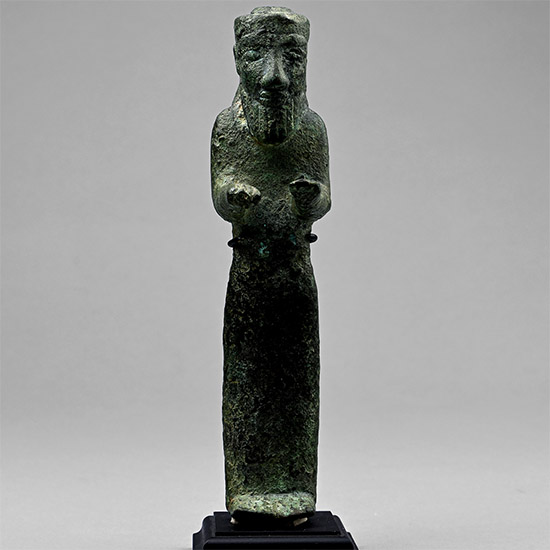
Old Babylonian Tall Copper Statuette of a Priest
Circa 1894-1595 B.C.Sold for (Inc. bp): £5,980
Modelled in the round standing figure wearing a floor-length robe; the head surmounted by a pillbox hat with thick shoulder-length hair to the rear, prominent triangular nose flanked by incised lentoid eyes, thick lips and a strong segmented bead; the arms bent forwards at the elbow to support a dish or patera; ellipsoid-section body and D-shaped flange for the feet; small lug to the underside; mounted on a custom-made stand. 540 grams total, 20.5 cm including stand
Moussaieff collection, Israel, formed from 1948. This lot has been checked against the Interpol Database of stolen works of art and is accompanied by search certificate number no.13287-251143. -
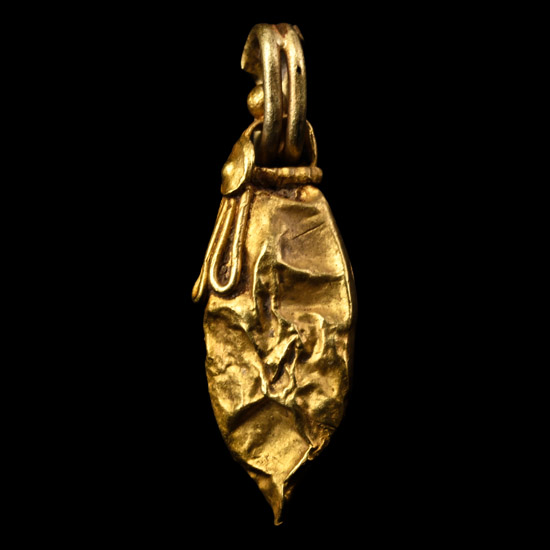
Western Asiatic Oval Gold Pendant
1st millennium B.C.Sold for (Inc. bp): £52
Comprising a hollow-form leaf-shaped pendant with applied filigree loops and a small boss beneath the ribbed suspension loop. 0.58 grams, 19 mm
Ex private British collection, formed in the 1980s. Property of a West Northamptonshire, UK, gentleman. -
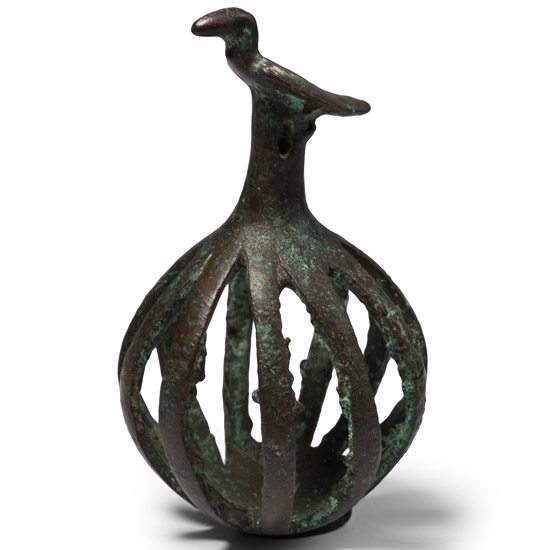
Luristan Bird-Headed Bell Harness Decoration
2nd-1st millennium B.C.Sold for (Inc. bp): £169
Comprising a bulb with a sidewall formed from vertical strips, surmounted by a perching bird; possibly a rumbler-bell. 65.75 grams, 80.24 mm
Ex Abelita family collection, 1980s-2000s.
