Loading, please wait...
Details
LOT 1629
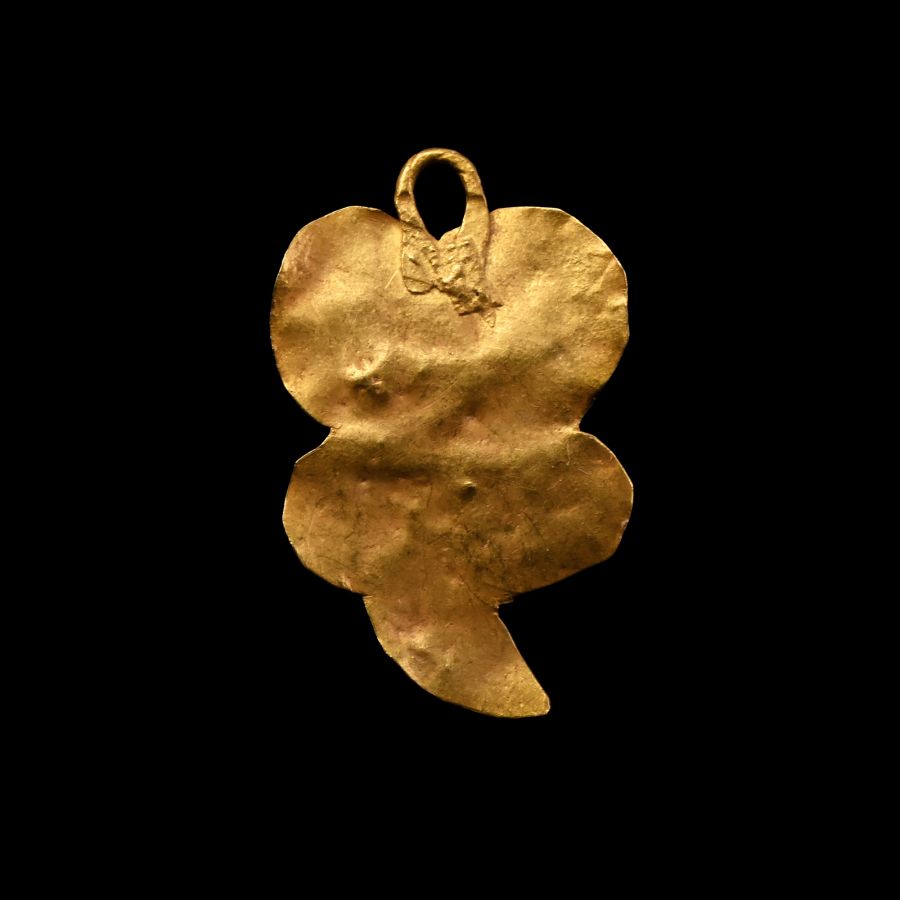
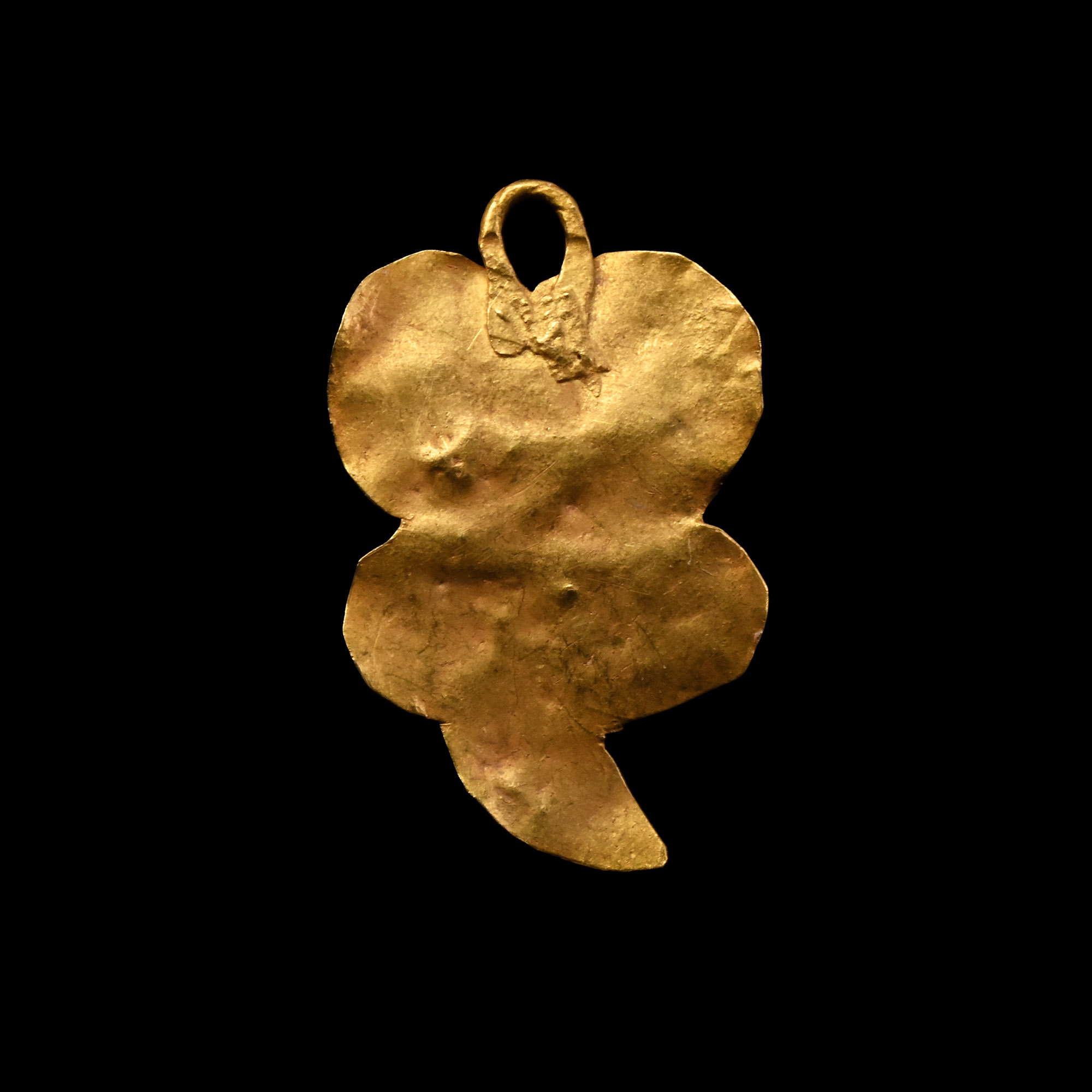
Western Asiatic Gold Pendant
1ST MILLENNIUM B.C.
5/8 in. (0.15 grams, 14 mm).
Four-lobed body formed from sheet-gold with a comma-shaped finial, suspension loop above. [No Reserve]
Provenance
Ex private British collection, formed in the 1980s.
Property of a West Northamptonshire, UK, gentleman.
VETTING:
TimeLine Auctions follows a vetting process to ensure the authenticity and legality of all items, reinforcing our commitment to integrity and responsible trading. Each antiquity, antique, and coin lot undergoes thorough examination by a vetting committee of at least ten external specialists, professional trade association members, scientists, and archaeologists: Our Vetting Process
AUCTIONS:
TimeLine is a leading auction house specialising in antiquities, ancient art, collectables, natural history, coins, medals, and books. Our auctions offer museums, collectors, historians, and enthusiasts the opportunity to acquire unique and historically significant pieces.
RELATED LOTS
-
Large Sogdian Silver Vessel with Animal Figures
Eastern Sogdian, 8th-9th century A.D.Estimate: £20,000 - 30,000 (+bp*)
Current Winning Bid: £11,600
Sheet-silver vessel with drum-shaped body, narrow discoid repoussé base; bands of repoussé foliage to the body beneath a raised collar and fluted neck and rim; rectangular-section crescent handle held by two securing hoops formed as miniature rams. 1.2 kg, 26.5 cm wide
From an old private collection. with Oxus Fine Arts Pte. Ltd, Singapore. Acquired by the current owner in London, 2012. This lot has been checked against the Interpol Database of stolen works of art and is accompanied by a search certificate number no.12288-220840.
Dr Grigoriev, in his studies on Sogdian silver artworks, has traced specific Sogdian features of metalwork prototypes on the basis of the ceramic replicas. Some of these features were distinguished on gold and silver vessels, which possess many other characteristics bringing them together. In our bucket, the style and the decoration of the flowers resemble those of the bucket with deer from Shirokovskoe (Perm, see Marshak, 1971, T,35), while the bands of repoussé foliage to the body beneath the raised collar and fluted neck and rim recall the decoration of the dish with deer from Rep’evka, in Samara Province (Darkevich, 1976, n.12). -
Western Asiatic Marbled Agate Cylinder Seal with Scorpions
2nd-1st millennium B.C.Sold for (Inc. bp): £195
Frieze depicting two scorpions advancing towards each other, starburst to the rear; supplied with a museum-quality impression. 1.02 grams, 13.24 mm
From the private collection of a European gentleman (1942-2024), formed since the 1970s. -
Large Bactrian Black Chlorite 'Hand Bag' Ceremonial Weight
3rd millennium B.C.Estimate: £15,000 - 20,000 (+bp*)
Opening Bid: £7,500
D-shaped in profile with a round-section loop; obverse with a reserved scene of two lions with hatched detailing to the fur advancing towards a small quadruped placed perpendicular to them; reverse with a median eagle with wings extended and feather detailing, flanked by rearing serpents and a scorpion; mounted on a custom-made stand. 6.25 kg total, 28.3 cm high including stand
with Gallery Rosen Ancient Art, Tel Aviv, 10 November 1969. Ex London, UK, gallery, 1971-early 2000s. London, UK, collection. Accompanied by a copy of an original invoice from Gallery Rosen Ancient Art, 10 November 1969. Accompanied by an academic report by Dr Raffaele D’Amato. This lot has been checked against the Interpol Database of stolen works of art and is accompanied by search certificate number no.13246-252973.
Among the most iconic intercultural style objects are the so-called 'lock' or 'handbag' weights. They have been found in a variety of different colourful stones, such as breccia, chlorite, fossiliferous limestone, calcite and onyx. At the beginning, these objects were probably not weights at all, but were likely badges of high office, carried to indicate authority. Similar objects have been found throughout Mesopotamia, the islands of the Persian Gulf, on the Iranian steppe, and in the Indus Valley.