
Loading, please wait...


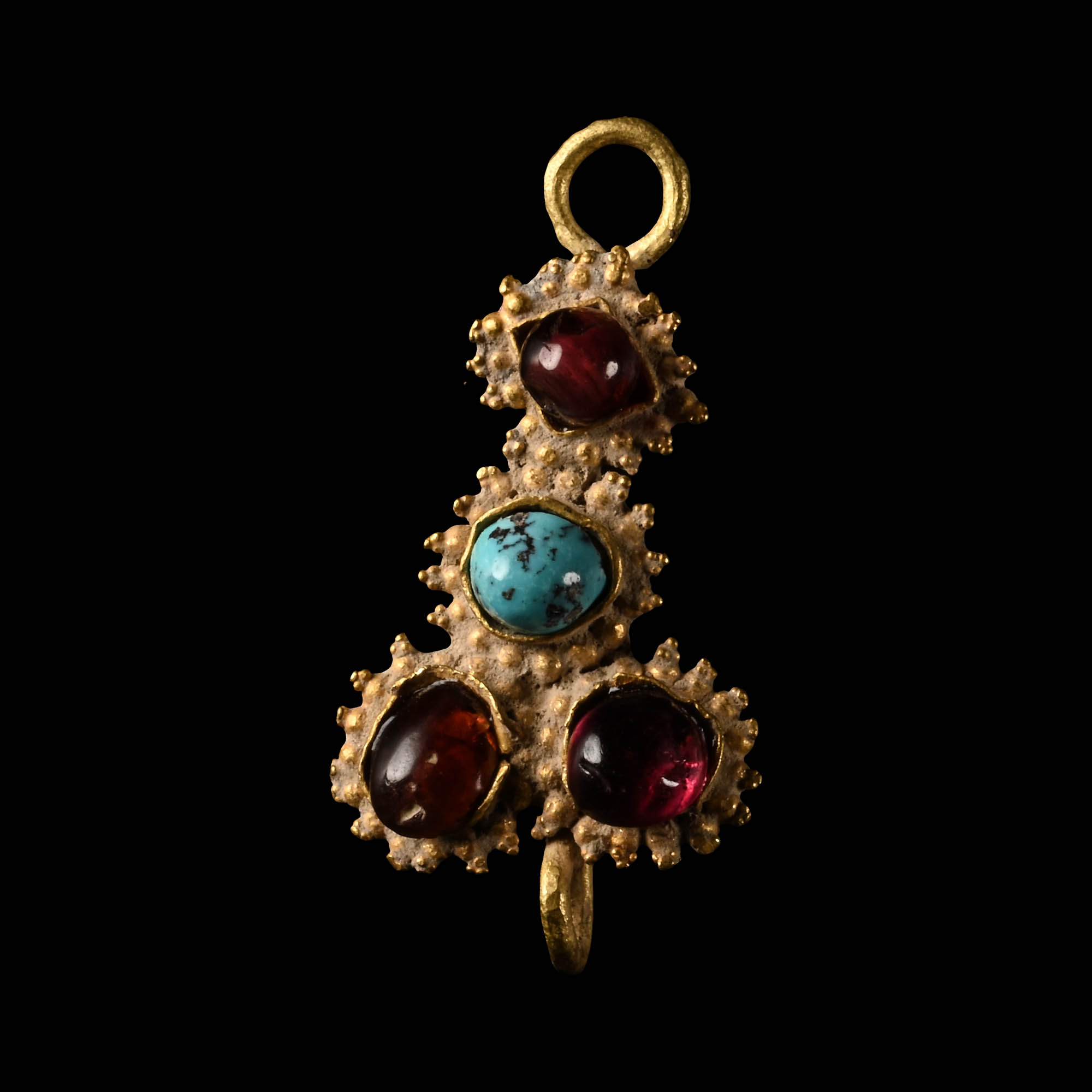
LOT 1163
Western Asiatic Gold Pendant
KUSHAN PERIOD, 1ST CENTURY B.C-1ST CENTURY A.D.
1 3/8 in. (4.85 grams, 34 mm).
Plaque comprising four circular cells set on a mounting bar, each cell with radiating granule clusters to the rim and set with an irregular garnet or turquoise; suspension ring to each end of bar.
ProvenanceEx property of a late Japanese collector, 1970-2000s.
CONDITIONTimeLine Auctions follows a vetting process to ensure the authenticity and legality of all items, reinforcing our commitment to integrity and responsible trading. Each antiquity, antique, and coin lot undergoes thorough examination by a vetting committee of at least ten external specialists, professional trade association members, scientists, and archaeologists: Our Vetting Process
AUCTIONS:
TimeLine is a leading auction house specialising in antiquities, ancient art, collectables, natural history, coins, medals, and books. Our auctions offer museums, collectors, historians, and enthusiasts the opportunity to acquire unique and historically significant pieces.
LOT 1163
Western Asiatic Gold Pendant
Estimate £400 - 600€460 - 700 (for guidance only)$540 - 810 (for guidance only)
-
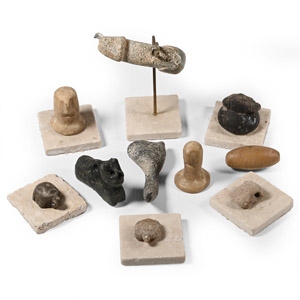
Western Asiatic Stone Idol and Other Artefact Group
1st millennium B.C. and laterSold for (Inc. bp): £104
Including phallus, heads, fusiform bead and other items, some on a ceramic base. 586 grams total, 48-94 mm including stand
From a collection acquired on the UK art market from various auction houses and collections mostly before 2000. From an important Cambridgeshire estate; thence by descent. -
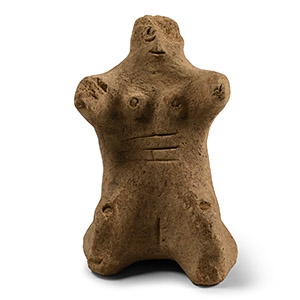
Western Asiatic Terracotta Fertility Figure
4th-3rd millennium B.C.Estimate: £250 - 350 (+bp*)
Opening Bid: £125
Modelled in the round with flared base, lightly modelled facial features, breasts and folds to the abdomen; head chipped. 156 grams, 94 mm
From the collection of Mr S.M., London, UK, 1990s. -
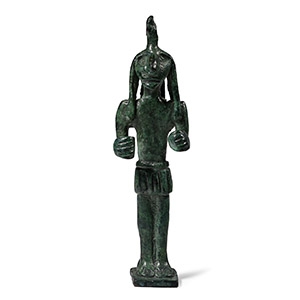
Canaanite Bronze Statuette with Braided Locks of Hair
Early 2nd millennium B.C.Estimate: £3,000 - 4,000 (+bp*)
Opening Bid: £1,667
Modelled in the round standing figure in belted kilt with braided hair and flame headdress, enigmatic face with wide hollow eyes; open hands held before the chest; integral legs, bare feet and base. 294 grams, 15.3 cm
UK private collection before 2000. Acquired on the UK art market. Property of a London gentleman. Accompanied by an academic report by Dr Raffaele D’Amato. This lot has been checked against the Interpol Database of stolen works of art and is accompanied by search certificate number no.12359-226971.
