
Loading, please wait...
LOT 0839
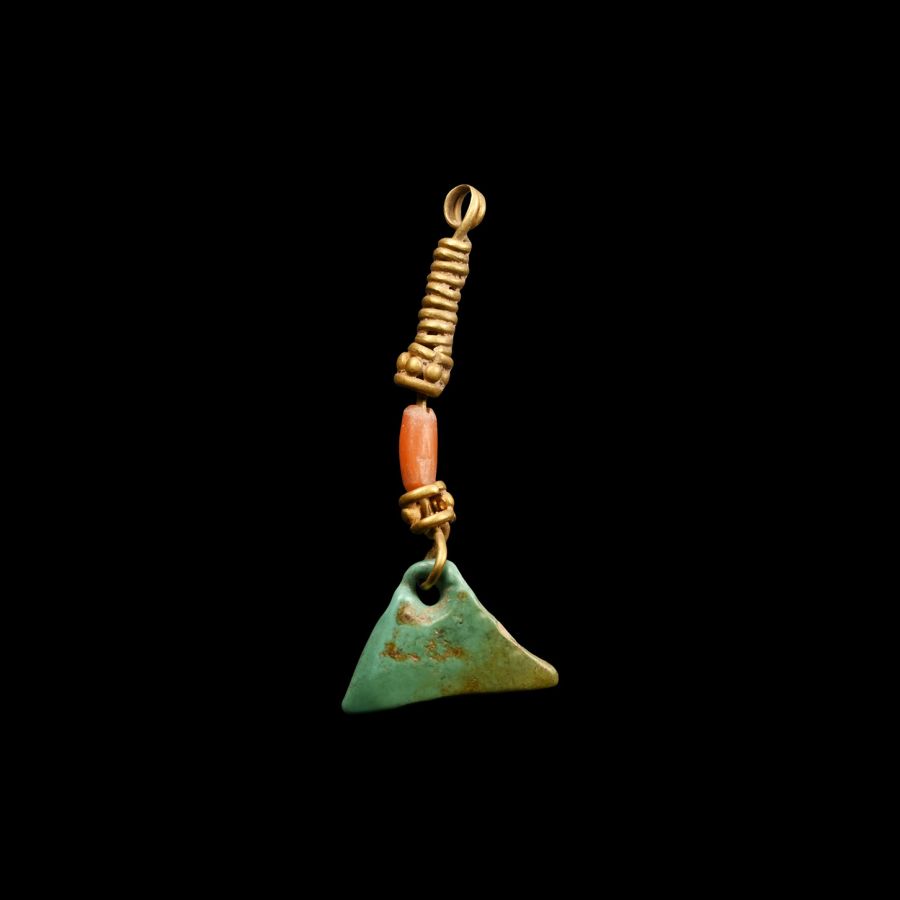
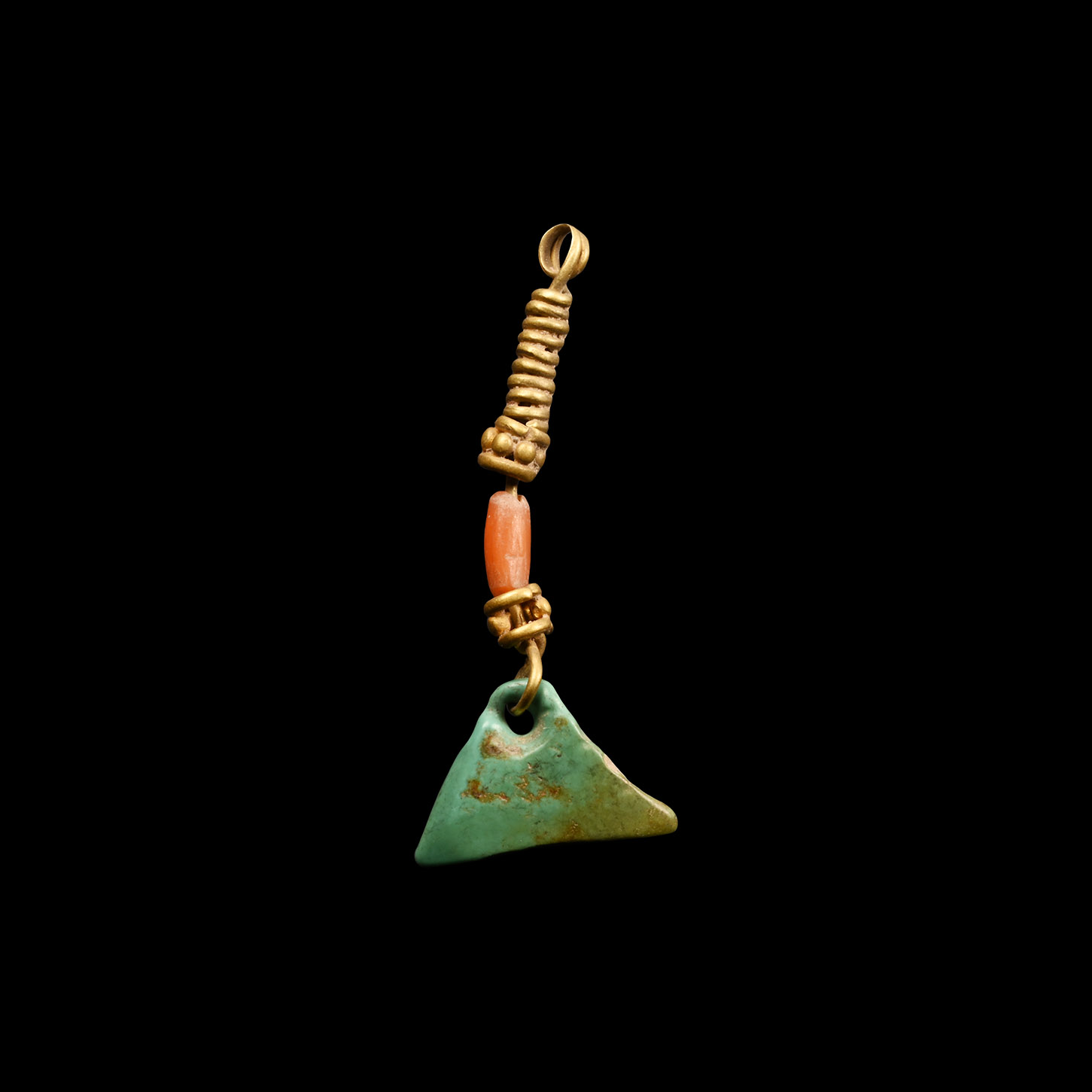
Western Asiatic Gold Pendant with Turquoise
LATE 1ST MILLENNIUM B.C.
1 1/4 in. (1.54 grams, 33 mm).
A gold pendant composed of a central gold stem with loop finial and coiled sleeves, a coral bead between two filigree beads with granules between plain bands, triangular turquoise pendant.
ProvenanceAcquired 1980-2015.
Ex Abelita family collection.
TimeLine Auctions follows a vetting process to ensure the authenticity and legality of all items, reinforcing our commitment to integrity and responsible trading. Each antiquity, antique, and coin lot undergoes thorough examination by a vetting committee of at least ten external specialists, professional trade association members, scientists, and archaeologists: Our Vetting Process
AUCTIONS:
TimeLine is a leading auction house specialising in antiquities, ancient art, collectables, natural history, coins, medals, and books. Our auctions offer museums, collectors, historians, and enthusiasts the opportunity to acquire unique and historically significant pieces.
-
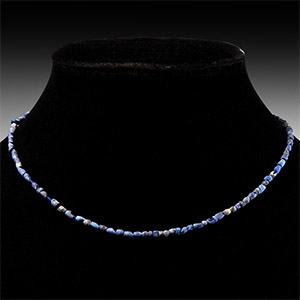
Western Asiatic Lapis Lazuli Bead Group
1st millennium B.C.Sold for (Inc. bp): £59
A string of lapis lazuli beads of various types, including biconical, wheel and tubular types. 3.66 grams, 39 cm long
Acquired 1980-2015. Ex Abelita family collection. -
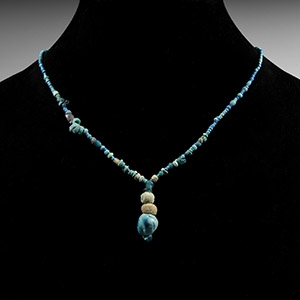
Achaemenid Faience and Other Bead Necklace
6th-4th century B.C. and laterSold for (Inc. bp): £26
A restrung designer necklace composed of mainly glass, stone and faience beads of various types and sizes, including spherical, ribbed, barrel, facetted and other types; in various shades of blue. 8.2 grams, 68 cm long
Acquired 1980-2015. Ex Abelita family collection. -
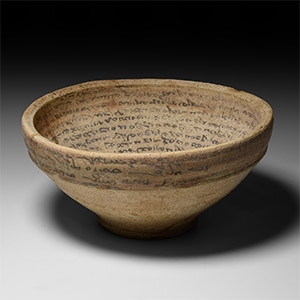
Aramaic Magical Bowl Bearing an Incantation Against Evil Spirits
4th-8th century A.D.Sold for (Inc. bp): £780
A ceramic flat-based bowl, inscribed in spiral from the bottom inner wall to the rim with Aramaic text, and on the outer rim. 692 grams, 19.5 cm wide
Early 1990s London collection. Acquired on the UK art market. From a private collection, Lancashire, UK
Aramaic incantation bowls are particular to the Sassanian period and have been found in the regions of modern Iraq. These simple ceramic bowls, also known as magic bowls, each contain an Aramaic inscription, written in ink, which spirals from the centre. The bowls seem to have played an important part in domestic life. For example, during excavation in Nippur in 1889, one or more incantation bowls were found in each house together with domestic artefacts, most often in doorways or under floorboards in the corner of rooms. The bowls are predominantly apotropaic, and the inscriptions tend to protect their owners from misfortunes such as child-birth, illness and evil spirits.
