
Loading, please wait...
LOT 1399
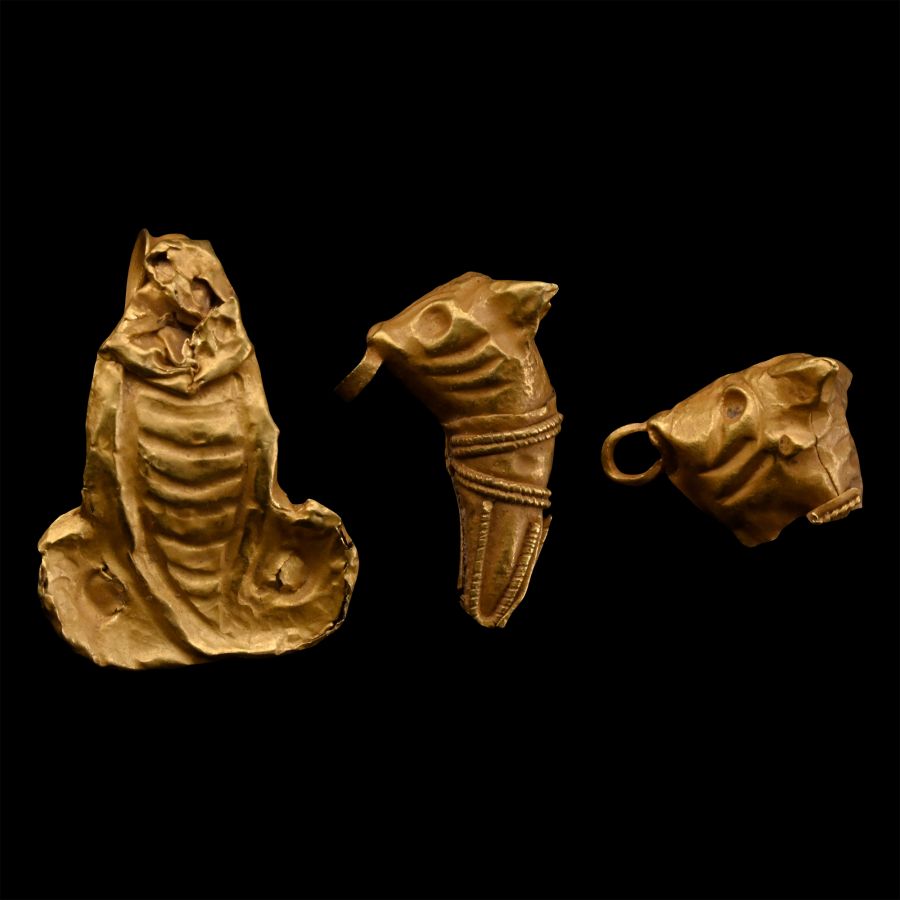
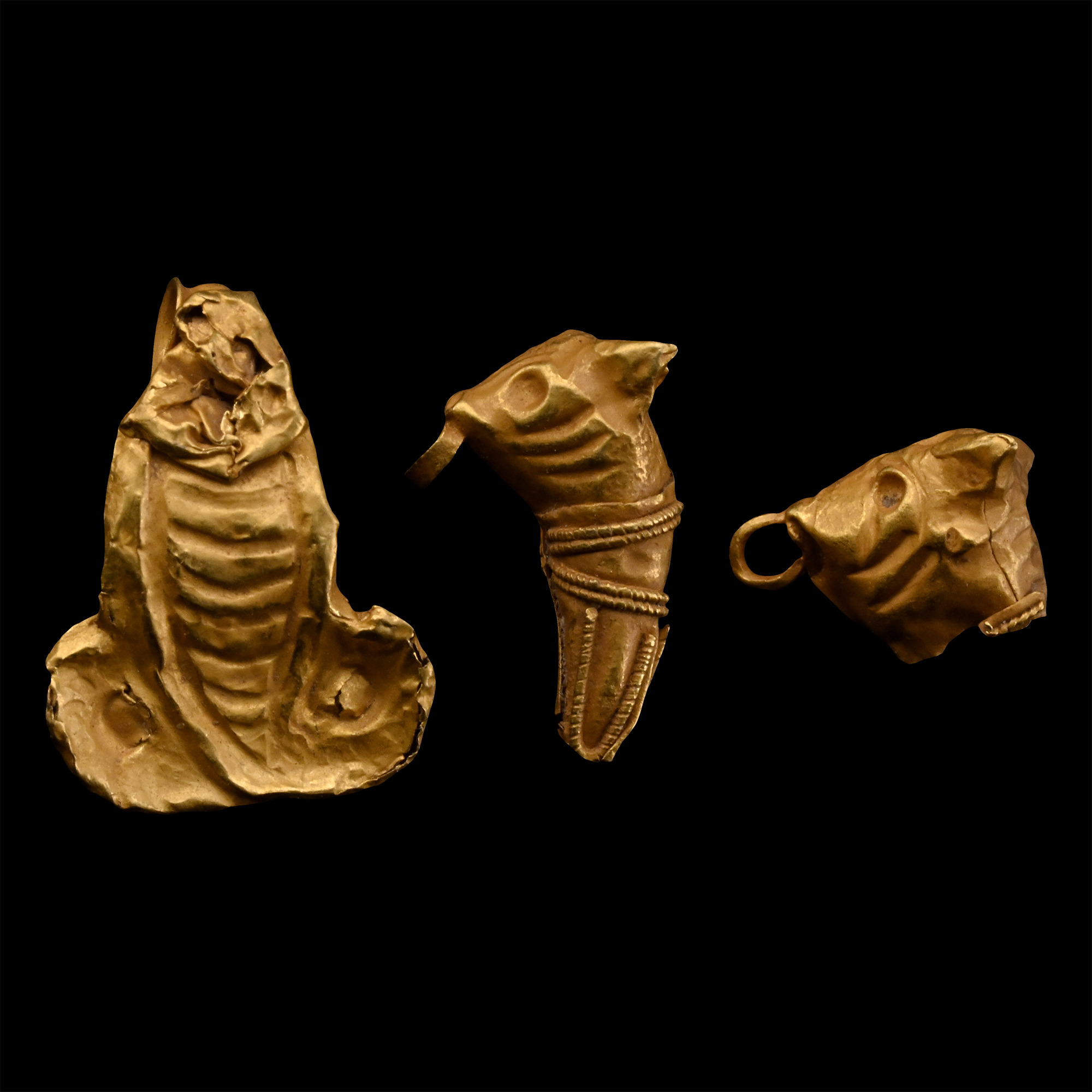
Western Asiatic Gold Pendant Group
LATE 1ST MILLENNIUM B.C.
1/8 - 1/2 in. (0.93 grams total, 8-14 mm).
Comprising hollow-formed animal heads and others. [3]
ProvenanceFrom the collection of a gentleman, acquired on the London art market in the 1990s.
CONDITIONTimeLine Auctions follows a vetting process to ensure the authenticity and legality of all items, reinforcing our commitment to integrity and responsible trading. Each antiquity, antique, and coin lot undergoes thorough examination by a vetting committee of at least ten external specialists, professional trade association members, scientists, and archaeologists: Our Vetting Process
AUCTIONS:
TimeLine is a leading auction house specialising in antiquities, ancient art, collectables, natural history, coins, medals, and books. Our auctions offer museums, collectors, historians, and enthusiasts the opportunity to acquire unique and historically significant pieces.
-
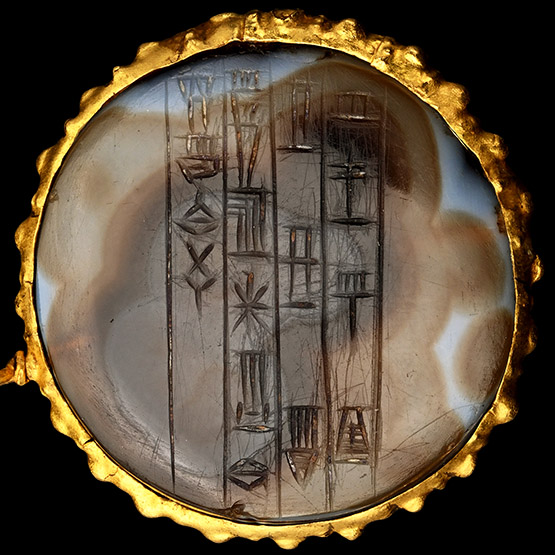
Kassite Agate Eye Bead with Cuneiform Inscription for King Kurigalzu II in Gold Mount
1400-1000 B.C.Estimate: £80,000 - 100,000 (‡+bp*)
Opening Bid: £40,000
Polished cabochon in a gold frame with radiating bosses, integral loop; reverse with four incised columns of cuneiform text naming Kurigalzu II. 18.30 grams, 42 mm
Private collection, Mrs M.V., circa 1980s. Kept in Switzerland since the late 1980s. This lot has been checked against the Interpol Database of stolen works of art and is accompanied by search certificate number no.13202-249238.
The cuneiform inscription names Kurigalzu II (c.1332-1308 B.C.), 'strong man, King of Babylon, son of Burnaburiaš.' Kurigalzu II was one of the most powerful Kassite rulers, known for his military campaigns and extensive building projects, including the foundation of the city of Dur-Kurigalzu. Inscribed Kassite agate eye beads are rare and are generally understood to have served amuletic or votive functions, combining royal titulary with protective symbolism. -
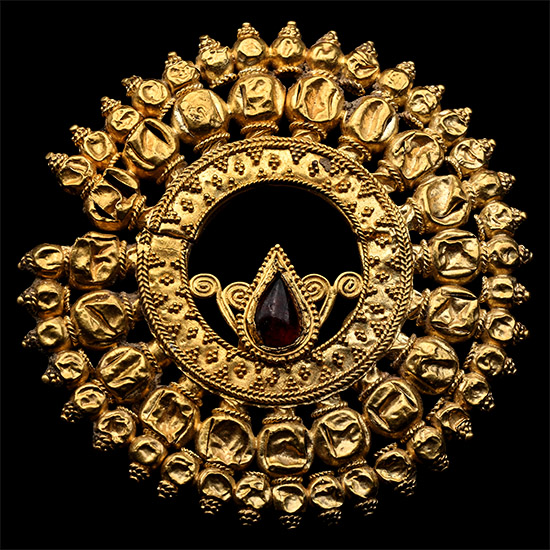
Achaemenid Elaborate Gold Earring
Circa 5th century B.C.Estimate: £3,000 - 4,000 (+bp*)
Opening Bid: £1,500
Crescent plaque with granulated inner borders and radiating triangles of granulation surrounded by a band of nineteen spheres, representing pomegranates, each with a filigree collar above and below, the outer band consisting of smaller spheres with a granulated pyramidal finial, at the centre a teardrop-shaped garnet cabochon set in a cell with a granulated border flanked by spirals. 13.55 grams, 51 mm
Ex David Lindhal, London, UK, in the 1990s. From a privately held London, UK, collection from the 1980s-1990s. This lot has been checked against the Interpol Database of stolen works of art and is accompanied by search certificate number no.13267-253966.
Fruits were generally considered to be a symbol of sensuality, temptation and fertility; the giving and accepting of fruit may be regarded as a symbolic sexual act, or at least a prelude to marriage. It follows naturally that the pomegranate, with its innumerable fleshy seeds symbolising life and fecundity, was an attribute of Aphrodite. -
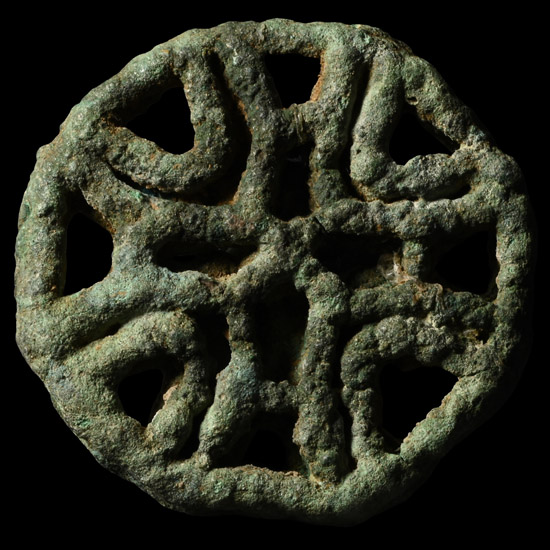
West Central Asian Bronze Stamp Seal with Cross
Bronze Age, circa 2300-2000 B.C.Sold for (Inc. bp): £20
Openwork type with voided cross and semicircles in the spandrels. 24.55 grams, 43.34 mm
From the private collection of a European gentleman (1942-2024), formed since the 1970s.
