
Loading, please wait...
LOT 0869
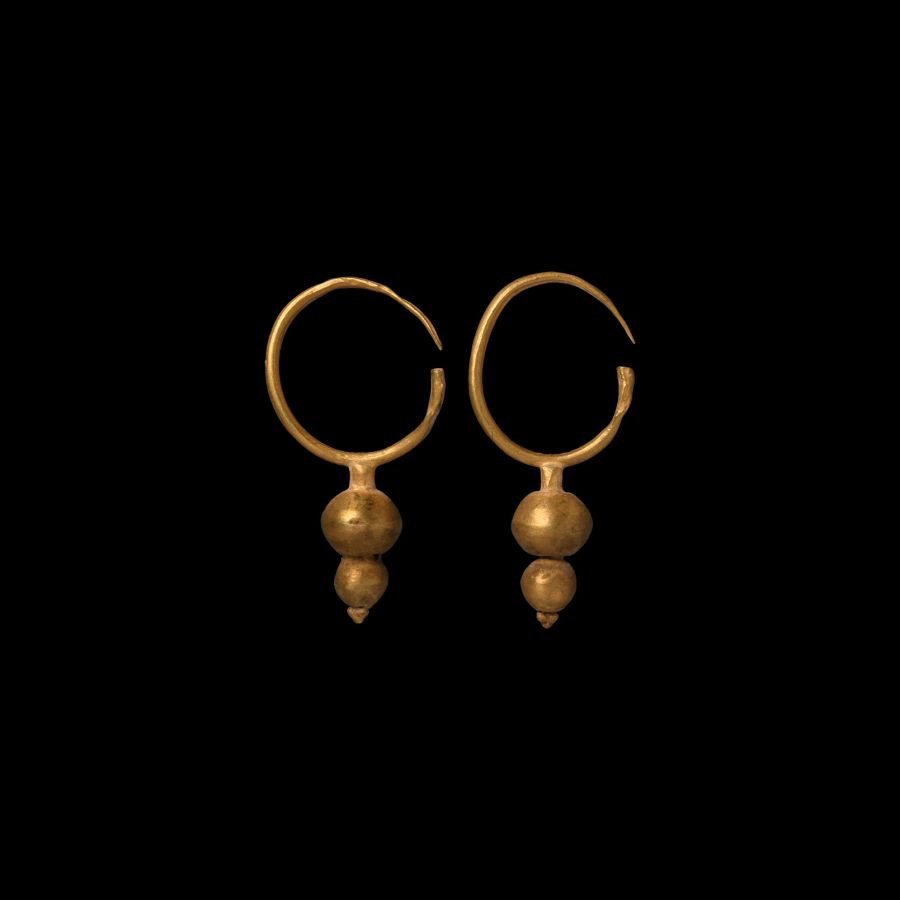
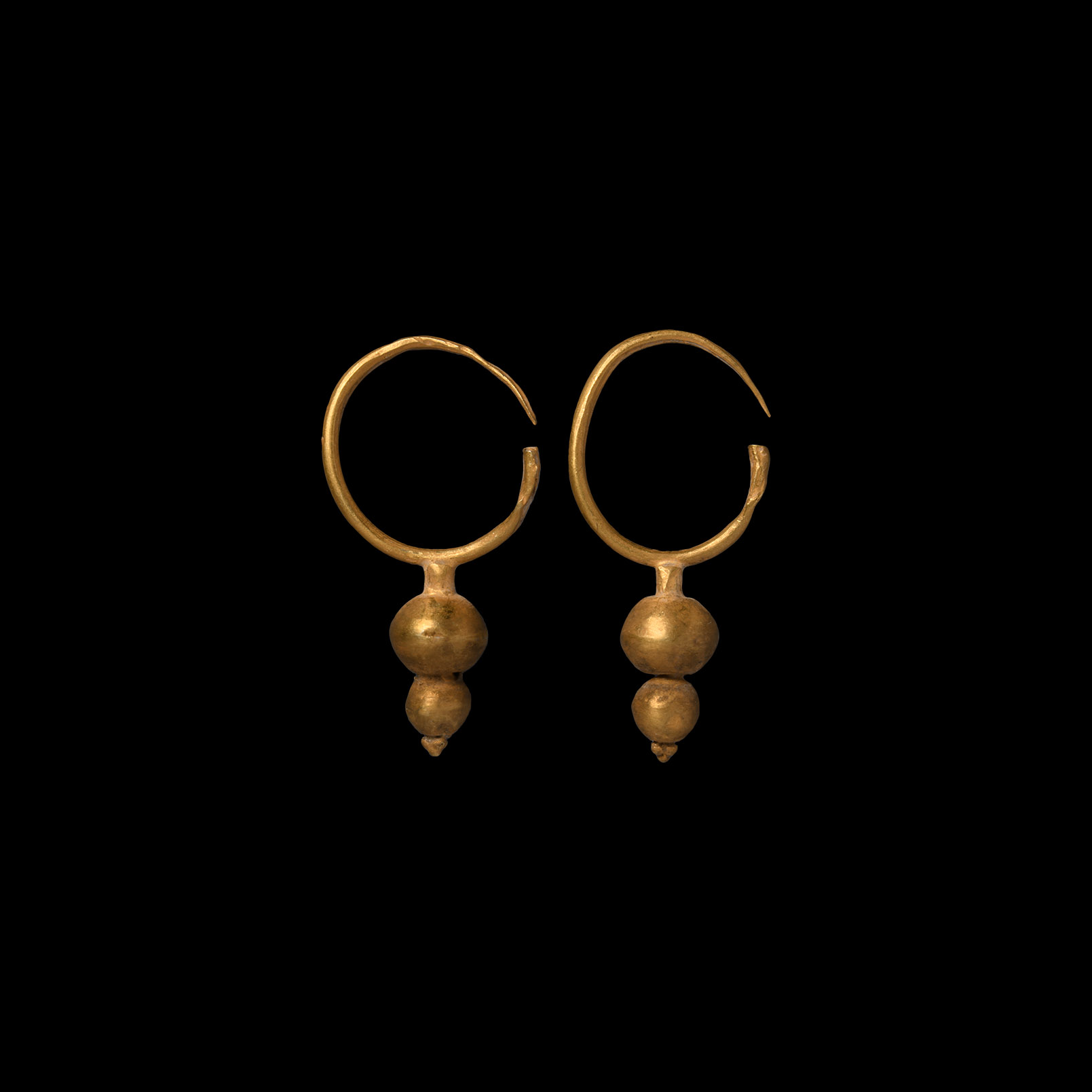
Western Asiatic Gold Earrings
2ND-3RD CENTURY A.D.
1 1/4 in. (2.47 grams, 31-32 mm).
A matching pair of gold earrings, each composed of a tapering penannular hoop with a pendant formed as two graduated bulbs with pyramid granule finial.
ProvenanceAcquired 1970-2010.
Collection of a late Japanese gentleman.
TimeLine Auctions follows a vetting process to ensure the authenticity and legality of all items, reinforcing our commitment to integrity and responsible trading. Each antiquity, antique, and coin lot undergoes thorough examination by a vetting committee of at least ten external specialists, professional trade association members, scientists, and archaeologists: Our Vetting Process
AUCTIONS:
TimeLine is a leading auction house specialising in antiquities, ancient art, collectables, natural history, coins, medals, and books. Our auctions offer museums, collectors, historians, and enthusiasts the opportunity to acquire unique and historically significant pieces.
-
.jpg)
Bactrian Manuscript Fragment of a Letter
Late 6th-early 7th century A.D.Sold for (Inc. bp): £104
A fragment of a leather document, likely a letter, written in Avestan cursive script; folded. 1.72 grams, 11 cm
Fair condition.
Collection of Bruce Ferrini, USA. Central London gallery, acquired c.1994. Property of a UK collector. For UK buyers only.
Damage to the centre; seemingly preserves the outer edges of a document written up to the edges of the sheet, was folded over and sealed. The letter comprised nine lines of text, of which significant proportions of the upper and lower three remain, while the middle three are less-well preserved. Beyond the damaged area would once have been a flap. -
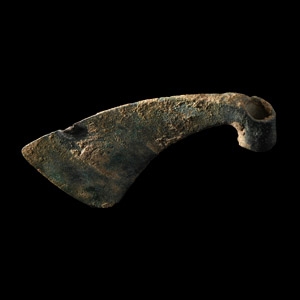
Luristan Votive Axehead
13th-7th century B.C.Sold for (Inc. bp): £70
A copper-alloy votive axehead with curved upper and lower edges and convex cutting edge, tubular socket. 67 grams, 10 cm
Fine condition.
Acquired before 1983. Ex London gallery, 1990s. -
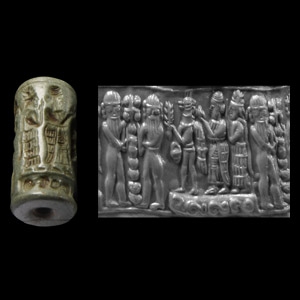
Akkadian Cylinder Seal with Presentation Scene
2nd millennium B.C.Sold for (Inc. bp): £1,690
A stone cylinder seal with incuse design between bands: two standing bearded figures facing extending one arm each to a column with cruciform head; behind them standing on a raised dais with domed ornament, a winged dog-headed figure with an ear of wheat, a bearded nobleman in a hatched garment, a crowned figure in similar garment. 8.5 grams, 28 mm
From an important family collection. Examined by Professor Wilfrid George Lambert FBA (1926-2011), historian, archaeologist, and specialist in Assyriology and Near Eastern archaeology, in the late 1980s and early 1990s.
