
Loading, please wait...
_900x900.jpg "Western Asiatic Gold Bull-Headed Pendants")
_200x200.jpg "Western Asiatic Gold Bull-Headed Pendants")
.jpg "Western Asiatic Gold Bull-Headed Pendants")
LOT 0274
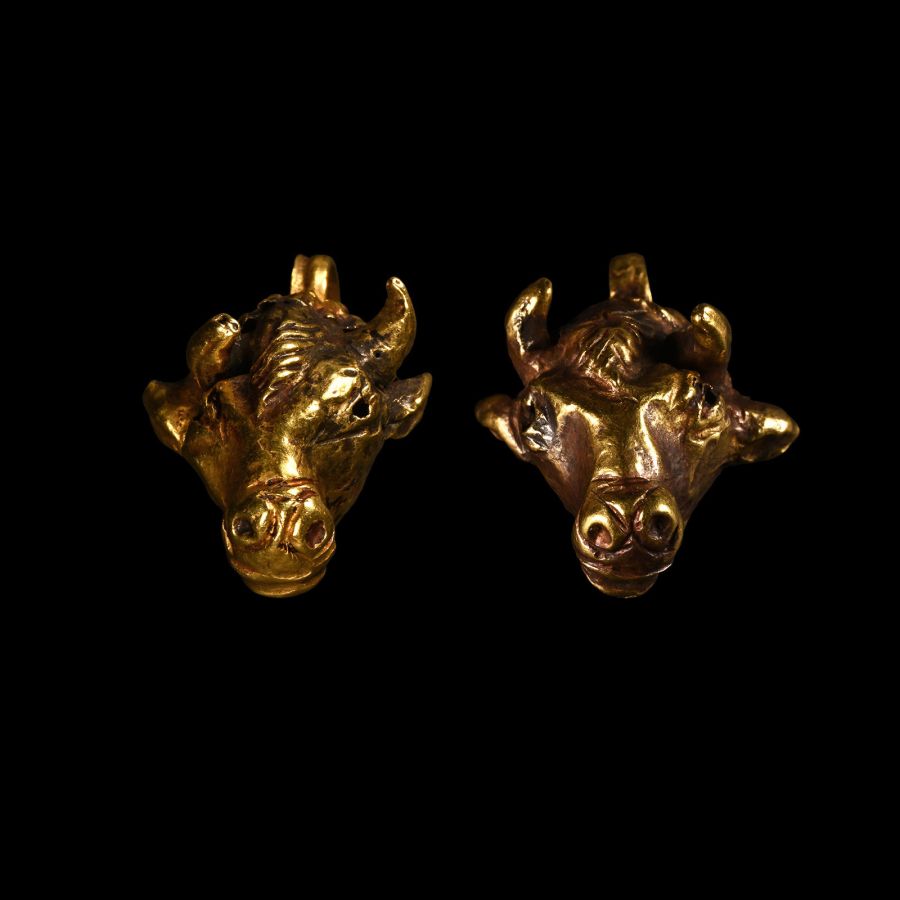
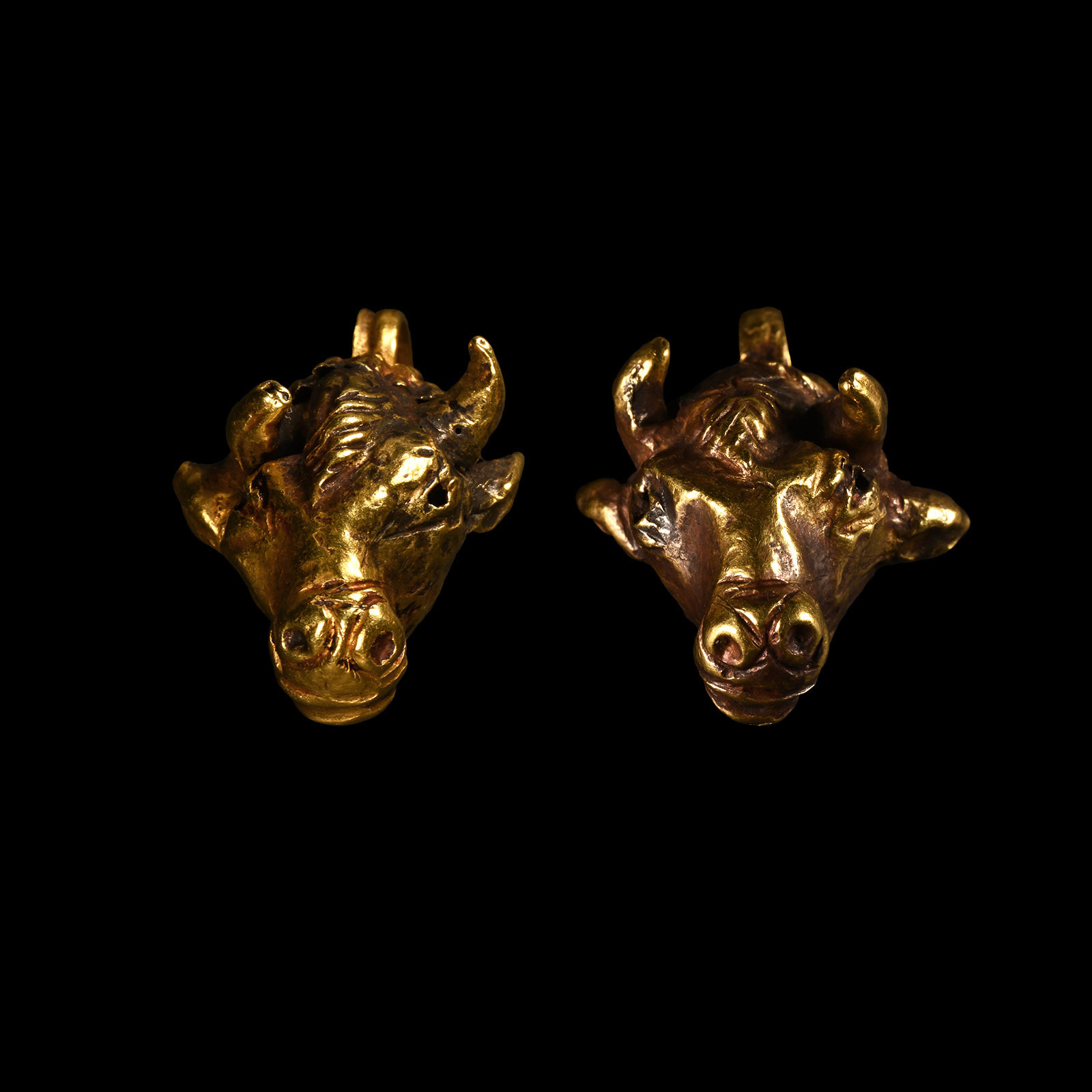
Western Asiatic Gold Bull-Headed Pendants
7TH-6TH CENTURY B.C.
1 in. (5.39 grams total, 23-24 mm).
Matched pair of hollow-formed gold pendants, each a bull's head modelled in the round with rosette to the rear and hoop. [2]
ProvenanceAcquired in the late 1980s-early 1990s.
with Taisei Gallery, Gold & Silver Auction, Part II, Ancient to Renaissance, 5 November 1992, The Conrad Salon, The Waldorf-Astoria, New York, lot 165.
From an important North West London collection.
This lot has been checked against the Interpol Database of stolen works of art and is accompanied by search certificate no.11969-210472.
TimeLine Auctions follows a vetting process to ensure the authenticity and legality of all items, reinforcing our commitment to integrity and responsible trading. Each antiquity, antique, and coin lot undergoes thorough examination by a vetting committee of at least ten external specialists, professional trade association members, scientists, and archaeologists: Our Vetting Process
AUCTIONS:
TimeLine is a leading auction house specialising in antiquities, ancient art, collectables, natural history, coins, medals, and books. Our auctions offer museums, collectors, historians, and enthusiasts the opportunity to acquire unique and historically significant pieces.
LOT 0274
Western Asiatic Gold Bull-Headed Pendants
Estimate £5,000 - 7,000€5,800 - 8,120 (for guidance only)$6,750 - 9,450 (for guidance only)
-
Jemdet Nasr Type Stone Animal Amulet Group
3100-2900 B.C.Sold for (Inc. bp): £390
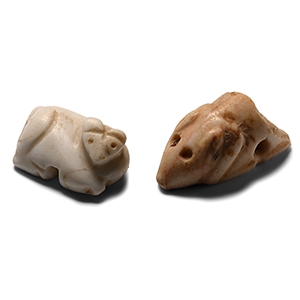
Comprising two chert figures: a bovine with engraved details to the face, legs tucked under the body, series of pecked dots to the base forming geometric patterns, pierced for suspension; a mouse with engraved details to the face, back legs absent, series of pecked dots to the base forming a human figure pattern, pierced through body for suspension. 28.7 grams, 30-39 mm
London, UK gallery, 1971-early 2000s. One with an old gallery sticker with inventory number 'ST66'. -
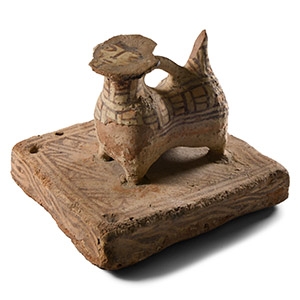
Western Asiatic Painted Ceramic Animal on Base
Circa 9th-12th century A.D.Estimate: £400 - 600 (+bp*)
Opening Bid: £200
Feline with stocky body, erect tail, thick neck developing to a flat head, loop handle from the shoulder to the rump; painted with bands of geometric designs, facial detailing to the head; mounted on a hollow rectangular block with painted hatching to the upper face and edges. 1.46 kg, 16.5 cm wide
From the Steel family collection, 1950s-late 1990s. -
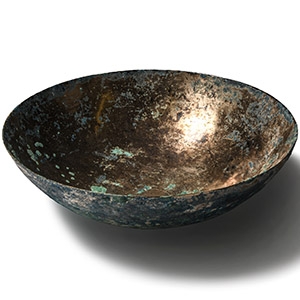
Achaemenid Tinned Bronze Bowl
Circa 7th-4th century B.C.Sold for (Inc. bp): £104
With high tin content, the body formed with a D-section wall and rounded base, cracked. 145 grams, 16 cm wide
Acquired 1980-2015. Ex Abelita family collection.
