
Loading, please wait...

LOT 1448
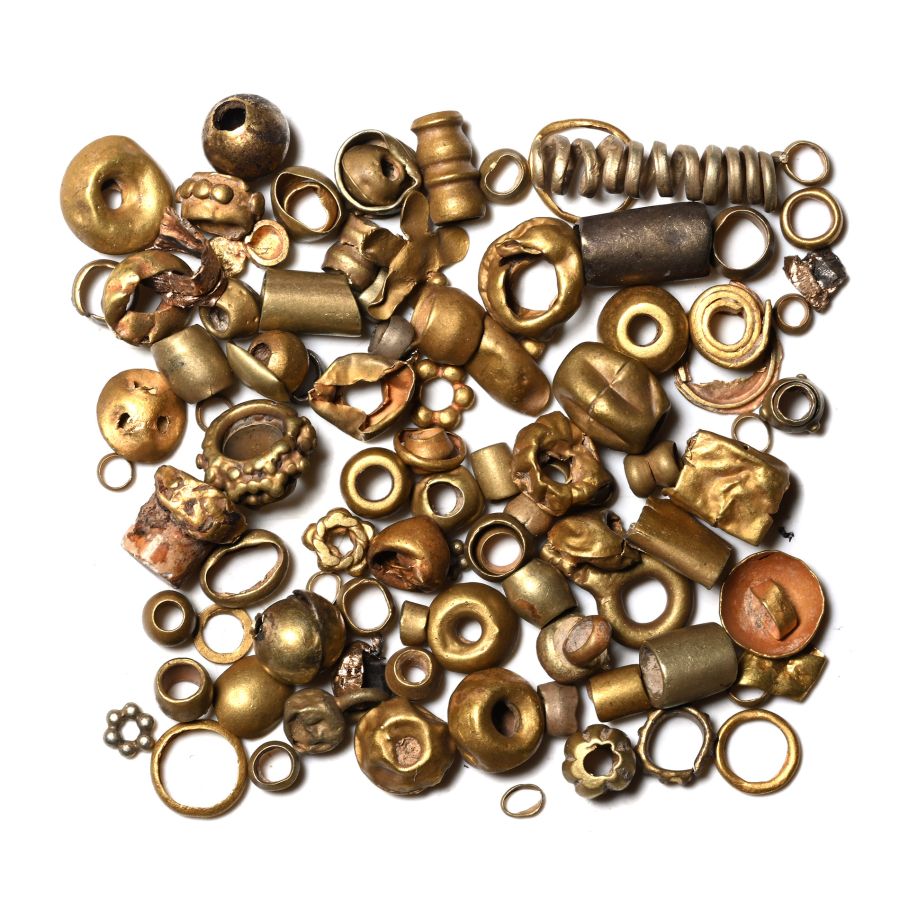
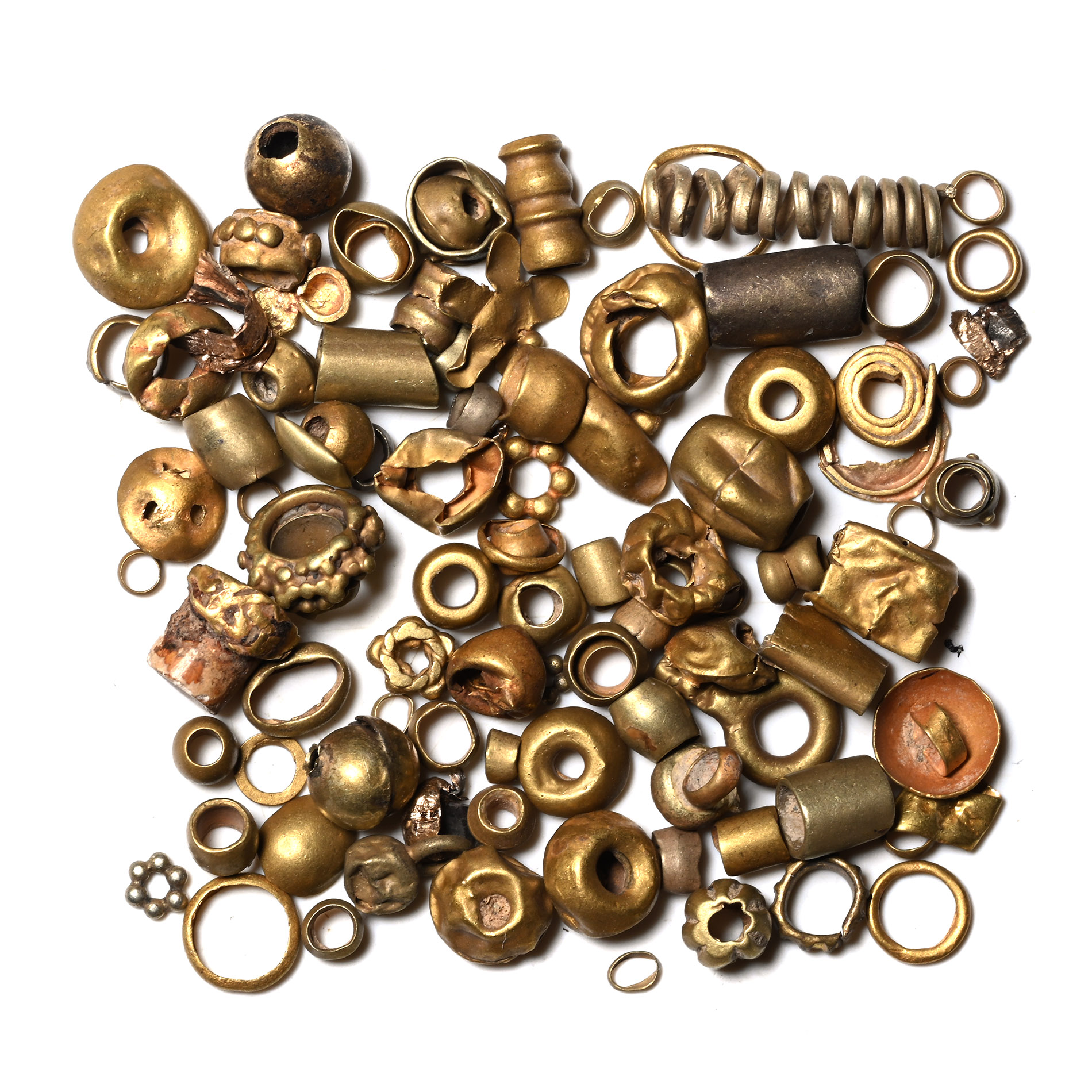
Western Asiatic Gold Bead Group
2ND-1ST MILLENNIUM B.C.
1/8 - 3/8 in. (4.42 grams total, 1-10 mm).
Mixed group of tubular and other beads, coils, end-caps and other items. [93]
ProvenanceFrom a late Japanese specialist collector, 1970-2000s.
This lot has been cleared against the Art Loss Register database, and is accompanied by an illustrated lot declaration signed by the Head of the Antiquities Department, Dr Raffaele D'Amato.
TimeLine Auctions follows a vetting process to ensure the authenticity and legality of all items, reinforcing our commitment to integrity and responsible trading. Each antiquity, antique, and coin lot undergoes thorough examination by a vetting committee of at least ten external specialists, professional trade association members, scientists, and archaeologists: Our Vetting Process
AUCTIONS:
TimeLine is a leading auction house specialising in antiquities, ancient art, collectables, natural history, coins, medals, and books. Our auctions offer museums, collectors, historians, and enthusiasts the opportunity to acquire unique and historically significant pieces.
-

Indo-Gangetic Copper Anthropomorphic Idol
India, circa 1500-1300 B.C.Sold for (Inc. bp): £41,600
A large flat-section figure with curled arms, spread legs, lobed head; mounted on a custom-made stand. 3.24 kg total, 36.3 cm wide
Private English collection, 1950s, and kept in England. Ex Atigh Gallery, pre-1986. with Aaron Gallery, acquired from the above. Accompanied by a copy of the 1986 invoice from Atigh Gallery. This lot has been checked against the Interpol Database of stolen works of art and is accompanied by search certificate no.12492-230324. This lot has been cleared against the Art Loss Register database, and is accompanied by an illustrated lot declaration signed by the Head of the Antiquities Department, Dr Raffaele D'Amato.
A cluster of copper artefacts dating to 1500-1000 B.C. was found in the Indo-Gangetic plains (region of Uttar Pradesh), including a number of anthropomorphic figures with downwards curving arms, dome-shaped heads, and spread legs. They were cast in moulds and then hammered with often discernible chisel marks. They can be divided in several distinct categories based on their characteristics, and it has been suggested that these idols functioned as protective guardian spirits. -

Achaemenid Bronze Cup
6th-4th century B.C.Sold for (Inc. bp): £91
Bulbous body and carinated shoulder extending to a cylindrical mouth. 80 grams, 77 mm
Acquired 1980-2015. Ex Abelita family collection. This lot has been cleared against the Art Loss Register database, and is accompanied by an illustrated lot declaration signed by the Head of the Antiquities Department, Dr Raffaele D'Amato. -

Mesopotamian Bronze Cylinder Seal with Double-Faced Demon Head
900-700 B.C.Sold for (Inc. bp): £572
Cylinder with attached cord and bead handle; accompanied by a copy of an old scholarly note, typed and signed by W.G. Lambert, late Professor of Assyriology, University of Birmingham, 1970-1993, which states: ' Cylinder-Stamp Seal of Bronze, 330x08.5 mm. The seal is surmounted by a suspension loop, beneath which is a double-faced demon head with large, animal-like ears and beards. The neck is decorated with horizontal lines at the fronts and vertical lines at the sides. This rests immediately on the seal proper. The design of the cylinder seal is put between double lines above and beneath. It shows a standing worshipper with raised hands before an incense burner, a group of seven dots, a lunar cresent [sic], a lozenge-shape and a slender tree. The base, the stamp seal, shows a winged solar disc. Such seals, which are quite rare, come from the mountainous area to the north of Mesopotamia, and date from c. 900-700 B.C. In this case the worshipper and the winged disc are borrowed from Assyrian art, but the combination of items before the worshipper is not Assyrian. The demon-head cannot be identified with certainty, though it may be a variety of the Mesopotamian Pazuzu.'; accompanied by museum-quality impressions. 7.82 grams total, 8.1-32.64 mm
UK private collection, acquired 1980-1983. Accompanied by a copy of a scholarly note, typed and signed by Professor Wilfrid George Lambert in September 1990. This lot has been cleared against the Art Loss Register database, and is accompanied by an illustrated lot declaration signed by the Head of the Antiquities Department, Dr Raffaele D'Amato.
