
Loading, please wait...

LOT 1142
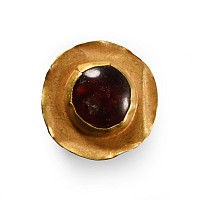
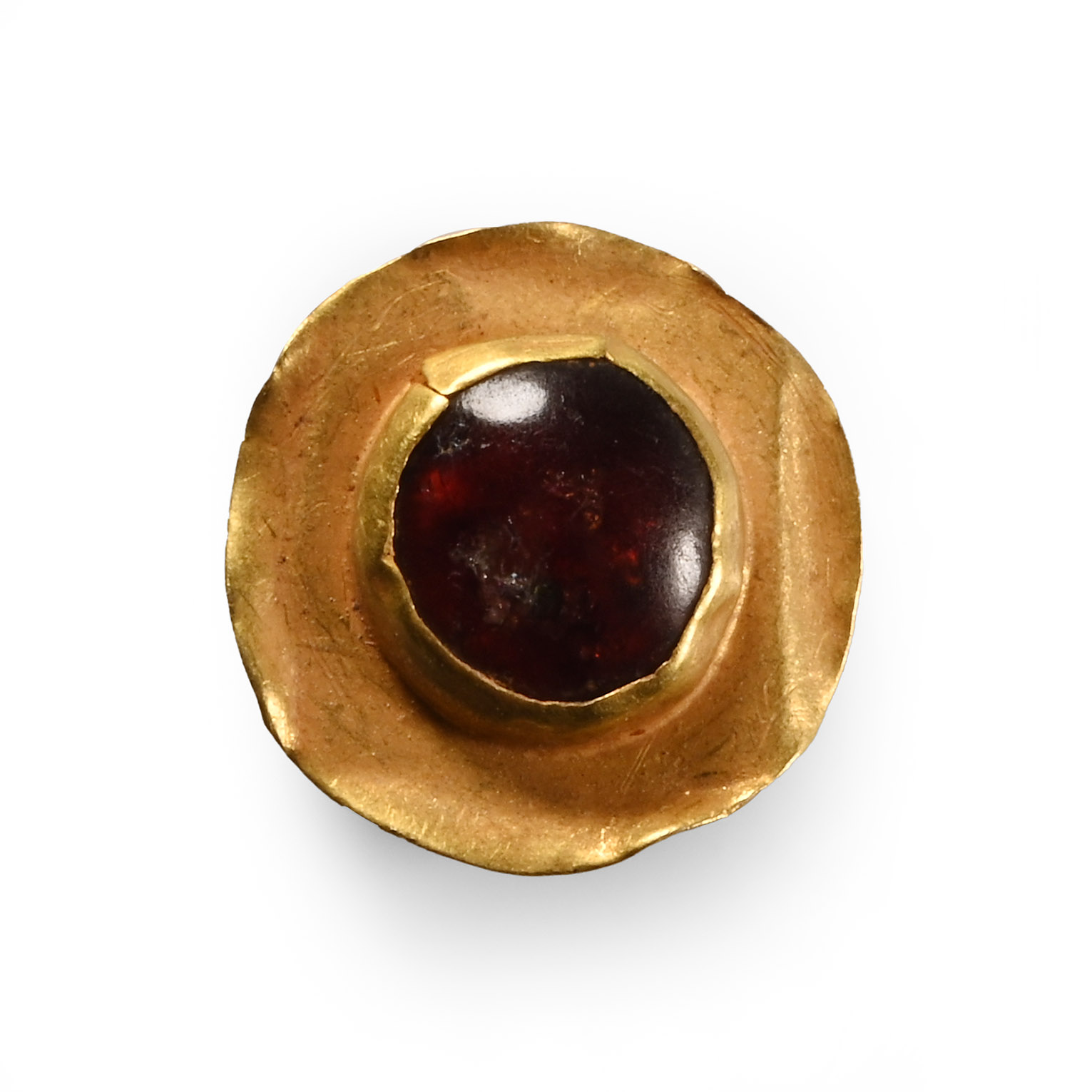
Western Asiatic Gold and Garnet Pendant
1ST MILLENNIUM B.C.
3/8 in. (0.38 grams, 9 mm).
Discoid in plan with central cell and inset garnet cabochon, two mounting tubes to reverse. [No Reserve]
ProvenanceEx property of a late Japanese collector, 1970-2000s.
CONDITIONTimeLine Auctions follows a vetting process to ensure the authenticity and legality of all items, reinforcing our commitment to integrity and responsible trading. Each antiquity, antique, and coin lot undergoes thorough examination by a vetting committee of at least ten external specialists, professional trade association members, scientists, and archaeologists: Our Vetting Process
AUCTIONS:
TimeLine is a leading auction house specialising in antiquities, ancient art, collectables, natural history, coins, medals, and books. Our auctions offer museums, collectors, historians, and enthusiasts the opportunity to acquire unique and historically significant pieces.
-
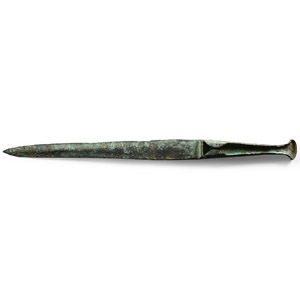
Luristan Bronze Dagger Blade
Circa 1000 B.C.Sold for (Inc. bp): £208
With lentoid section blade tapering to a point; the hilt hollowed both sides to accept an organic handle. 70 grams, 27.5 cm
Acquired 1980-2015. Ex Abelita family collection.
The dirk belongs to type I of the Medveskaya classification. This type of weapon is very common among daggers and dirks attributed to Luristan. According to Moorey, the typology was used in Western Iran at least from 13th century B.C. and remained in use at least until the late 9th century B.C. -
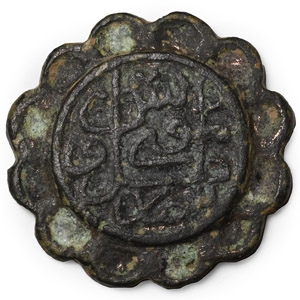
Western Asiatic Bronze Scalloped Dagger Pommel
10th-14th century A.D.Sold for (Inc. bp): £260
Discoid in plan with radiating cells hollowed to accept enamel; raised centre with reserved calligraphic text. 8.57 grams, 28 mm
From the collection of a gentleman, acquired on the London art market in the 1990s. -
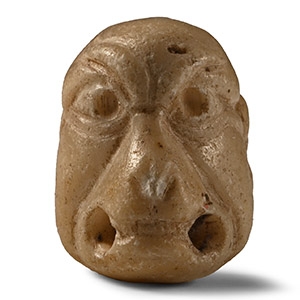
Mesopotamian Alabaster Grotesque Head Pendant
Circa 800-600 B.C.Estimate: £300 - 400 (+bp*)
Opening Bid: £150
Modelled in the round with animal-like features and grimacing expression, drilled eyes and string eyebrows, possibly depicting Huwawa; perforated through the head and mouth. 4.13 grams, 18 mm
Ex property of the late Mr S.M., London, UK, 1970-1990s, thence by descent. Accompanied by a previous typed cataloguing card.
