
Loading, please wait...
LOT 0985
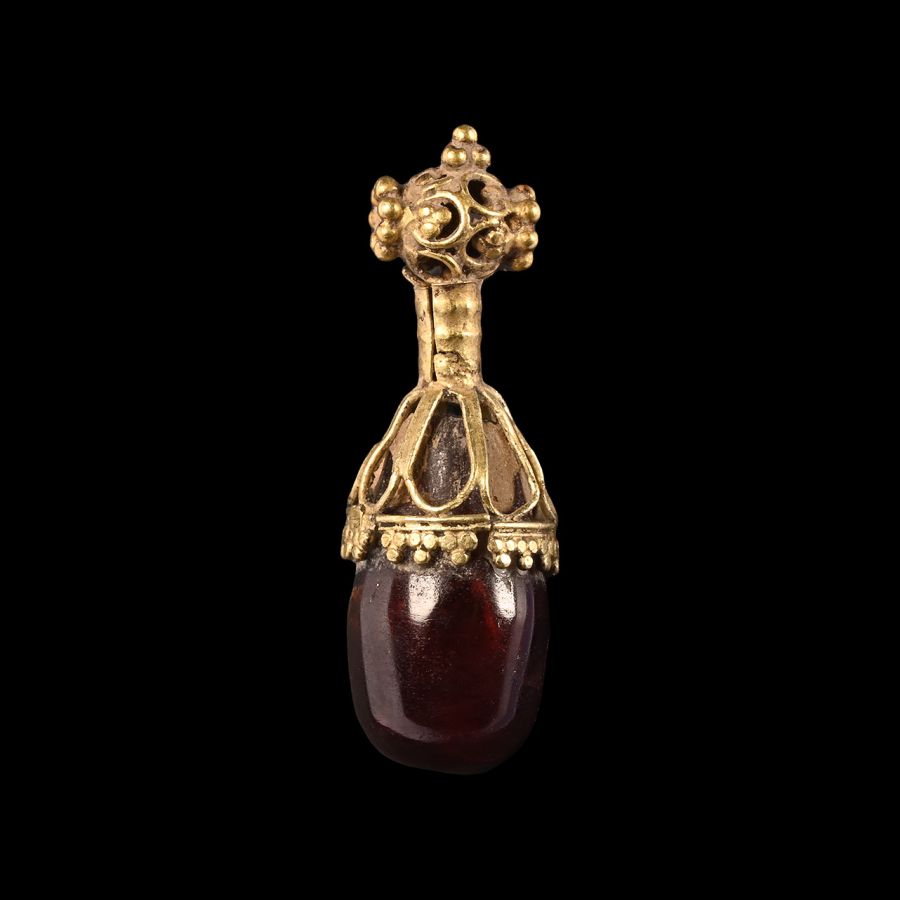
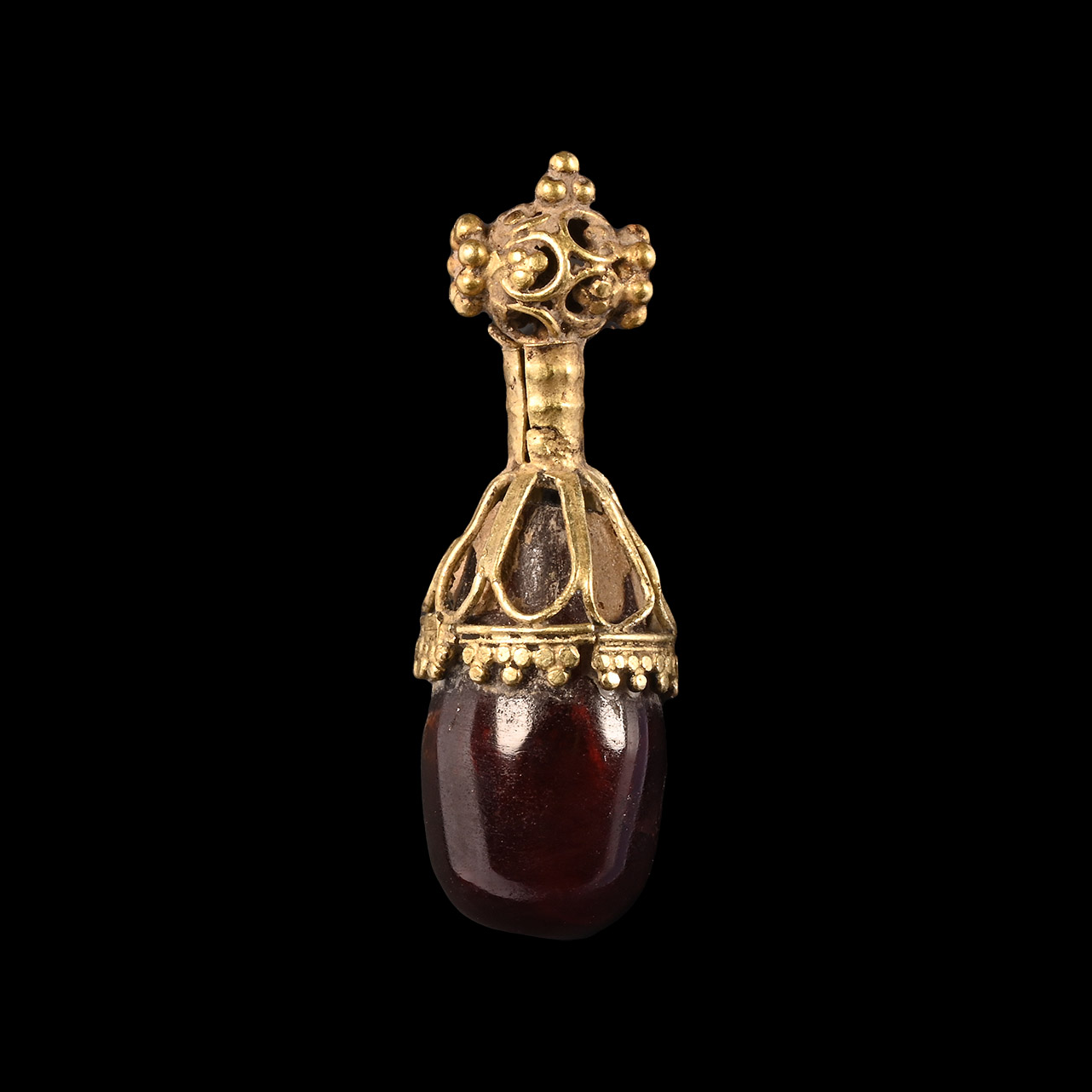
Western Asiatic Gold and Garnet Pendant
LATE 1ST MILLENNIUM B.C.
3/4 in. (1.74 grams, 21 mm).
A gold pendant with openwork filigree cell set with a capsule-shaped polished garnet, the pendant body with ribbed cylindrical neck and bulbous openwork loop embellished with granulated collars, pyramid granule finial.
ProvenanceAcquired 1980-2015.
Ex Abelita family collection.
TimeLine Auctions follows a vetting process to ensure the authenticity and legality of all items, reinforcing our commitment to integrity and responsible trading. Each antiquity, antique, and coin lot undergoes thorough examination by a vetting committee of at least ten external specialists, professional trade association members, scientists, and archaeologists: Our Vetting Process
AUCTIONS:
TimeLine is a leading auction house specialising in antiquities, ancient art, collectables, natural history, coins, medals, and books. Our auctions offer museums, collectors, historians, and enthusiasts the opportunity to acquire unique and historically significant pieces.
-
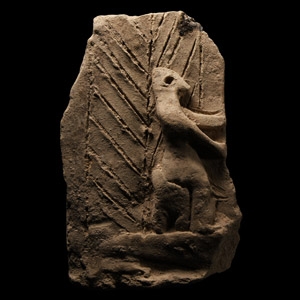
Western Asiatic Plaque with Seated Figure
2nd-1st millennium B.C.Sold for (Inc. bp): £195
A clay plaque fragment displaying a stylised incised tree of life and a figure seated right, depicted with pinched head, recessed eye and outstretched arms. 123 grams, 10 cm
Acquired early 1990s. Ex private American collection; thence by descent. Private collection since 1998. -
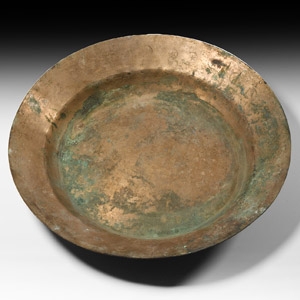
Western Asiatic Decorated Bowl
19th-20th century A.D. or earlierEstimate: £100 - 140 (+bp*)
Opening Bid: £50
A copper-alloy bowl raised from a single sheet of metal, with a squat tapering body and broad everted rim, the interior punch-decorated with a band of five-pointed stars within roundels to the rim and geometric floral motifs to the bowl, encircled by stylised flowerheads and circlets. 468 grams, 27 cm wide
Acquired 1980-2015. Ex Abelita family collection. -
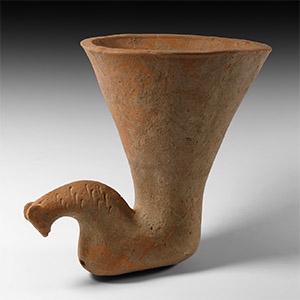
Western Asiatic Zoomorphic Terracotta Rhyton
3rd-1st millennium B.C.Estimate: £1,000 - 1,400 (+bp*)
Opening Bid: £400
A terracotta rhyton vessel with a flaring neck and zoomorphic spout, possibly a horse's head with circular spout in its chest. 668 grams, 18 cm high
with a London, UK gallery 1971-early 2000s. Accompanied by an original thermoluminescence analysis report no.281z11 from Oxford Authentication, 16 June 1981.
