
Loading, please wait...
LOT 1028
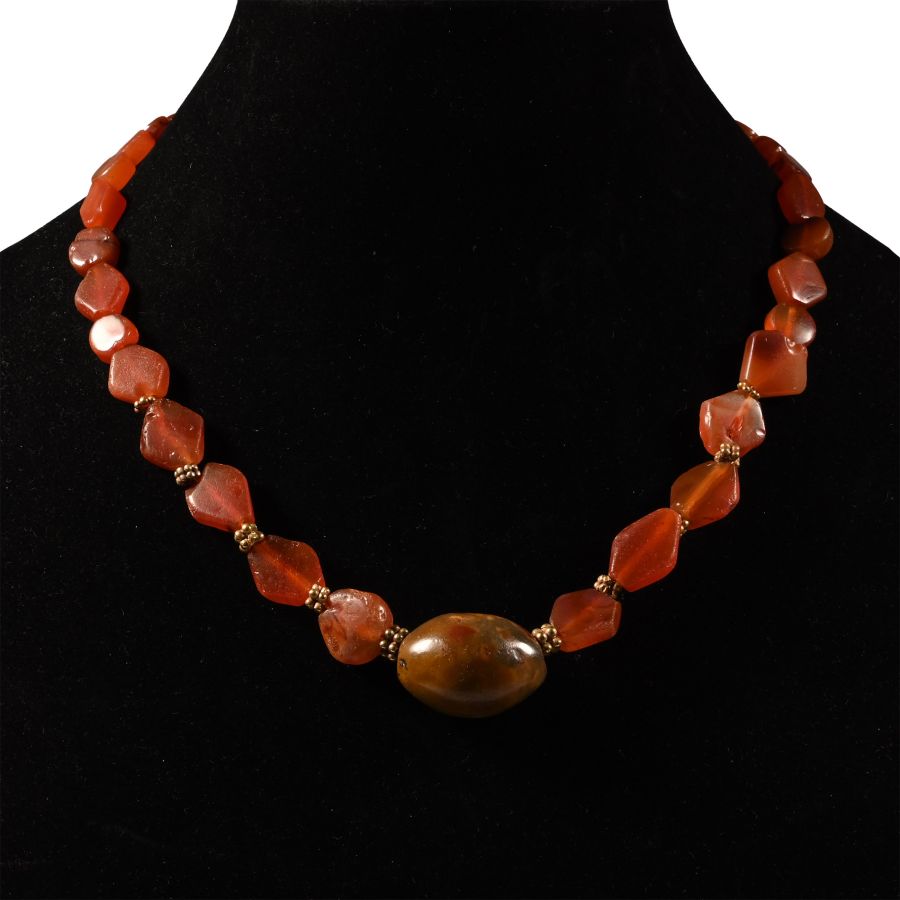
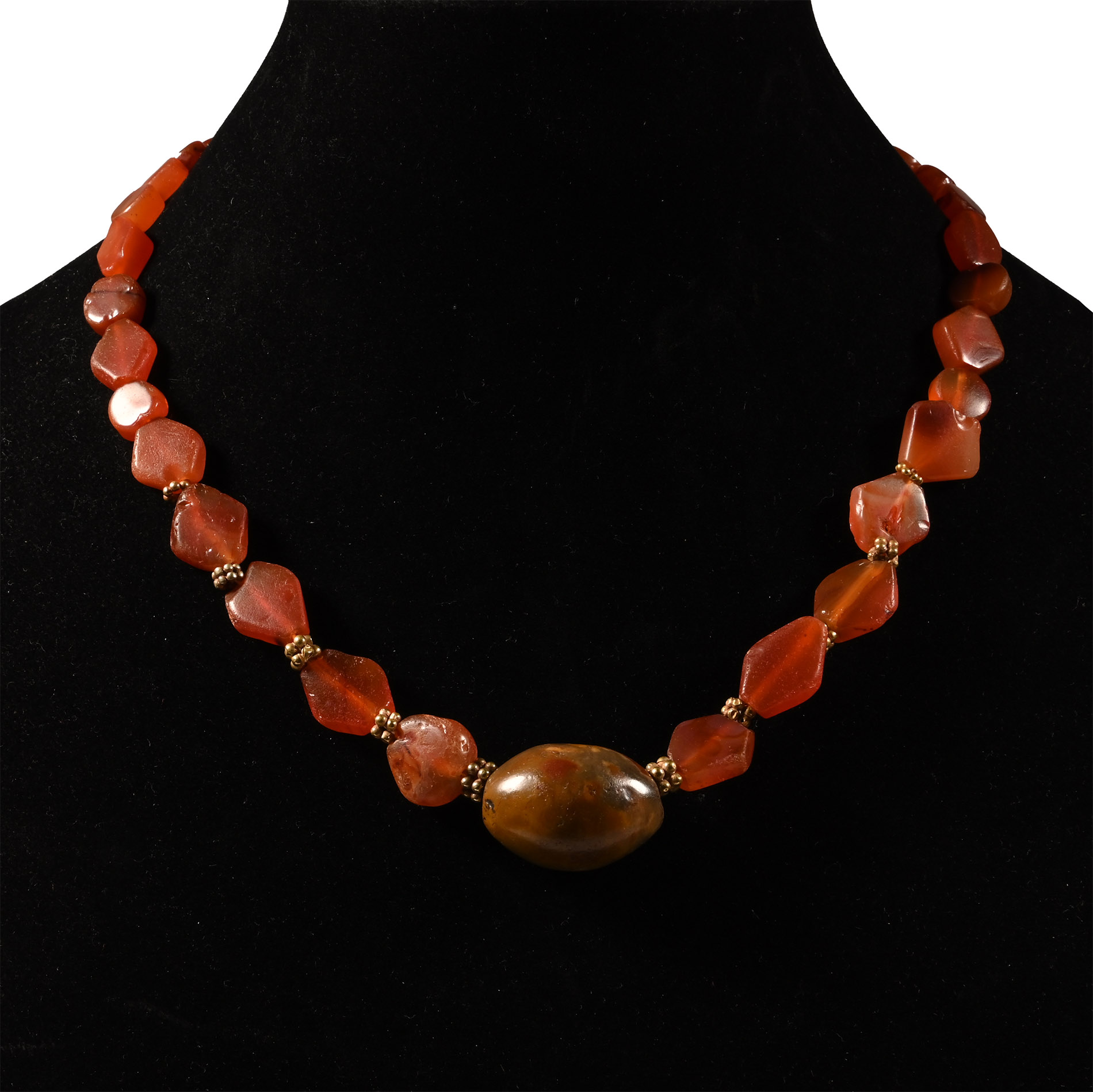
Western Asiatic Gold and Carnelian Bead Necklace
1ST MILLENNIUM B.C. AND LATER
16 3/4 in. (56.8 grams, 42.5 cm long).
Comprising a graduated group of tabular carnelian beads with interstitial collars of gold granulation and some moulded glass hexagonal tabular-shaped beads; centrepiece a biconvex oval with speckled surface; restrung.
ProvenanceEx property of the late Mr S.M., London, UK, 1970-1990s, thence by descent.
Accompanied by a previous cataloguing card.
TimeLine Auctions follows a vetting process to ensure the authenticity and legality of all items, reinforcing our commitment to integrity and responsible trading. Each antiquity, antique, and coin lot undergoes thorough examination by a vetting committee of at least ten external specialists, professional trade association members, scientists, and archaeologists: Our Vetting Process
AUCTIONS:
TimeLine is a leading auction house specialising in antiquities, ancient art, collectables, natural history, coins, medals, and books. Our auctions offer museums, collectors, historians, and enthusiasts the opportunity to acquire unique and historically significant pieces.
LOT 1028
Western Asiatic Gold and Carnelian Bead Necklace
Estimate £500 - 700€580 - 810 (for guidance only)$680 - 950 (for guidance only)
-
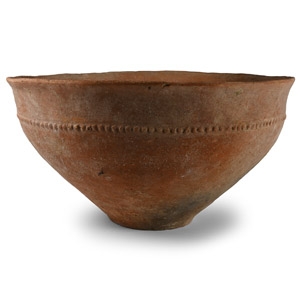
Large Western Asiatic Burnished Redware Terracotta Vessel
Early Bronze Age I, 2nd millennium B.C.Sold for (Inc. bp): £130
Bell-shaped in profile with everted rim, band of pellets to the shoulder. 1.7 kg, 31 cm
From an important collection of Near Eastern pottery, pre 1980s. -
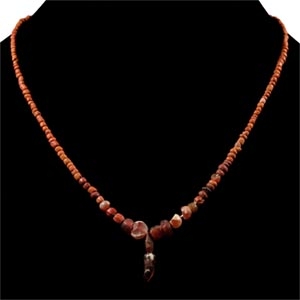
Western Asiatic Glass and Stone Bead Necklace String
1st millennium B.C. and laterSold for (Inc. bp): £33
Composed of mainly oblate beads with a central feature comprising a small amulet bead, restrung. 9.85 grams, 37.5 cm
Ex property of a late Japanese collector, 1970-2000s. -
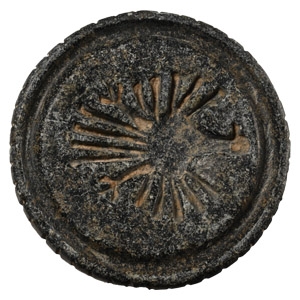
Anatolian Black Stone Stamp Seal
2nd-1st millennium B.C.Estimate: £150 - 200 (+bp*)
Opening Bid: £75
Discoid in plan with hatching to the rim and the pierce lug to the reverse; deep border and intaglio motif of a spread eagle with segmented wings and tail. 42 grams, 49 mm
From the collection of Mr S.M., London, UK, formed from 1979-1999.
