
Loading, please wait...
LOT 0971
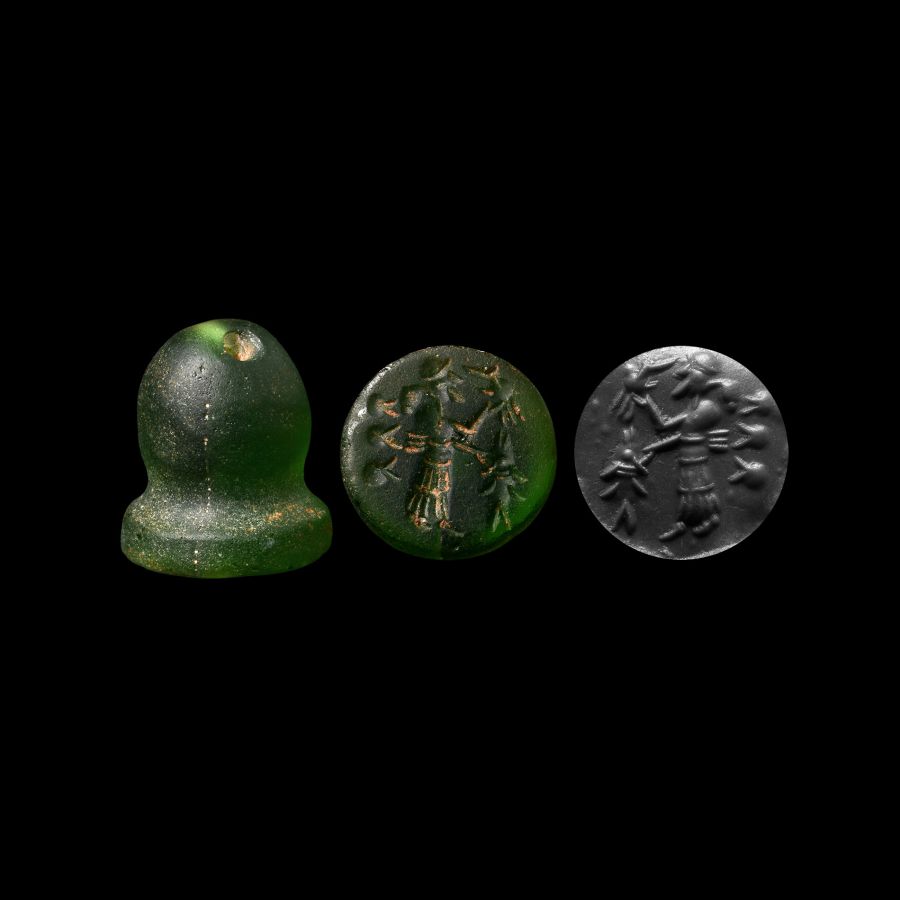
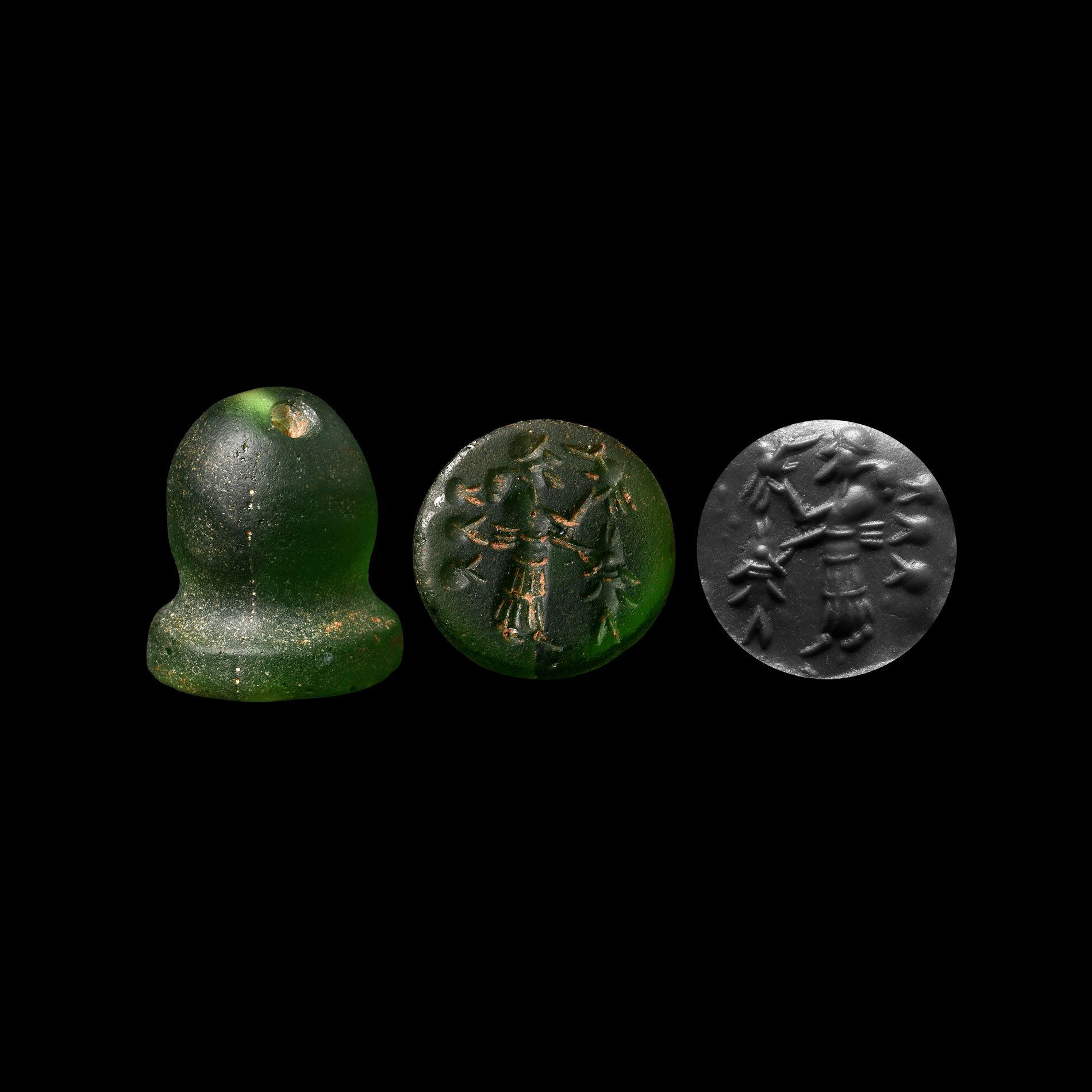
Western Asiatic Glass Stamp Seal with Master of Animals
MID 1ST MILLENNIUM B.C.
3/4 in. (8.5 grams, 21 mm high).
A green glass stamp seal pierced through the handle for suspension, circular matrix with incuse Master of Animals figure standing right, a bird perched on one hand, other animals surrounding him in the field.
ProvenanceAcquired 1969-1979.
London collection of the late Mr S.M., thence by descent.
TimeLine Auctions follows a vetting process to ensure the authenticity and legality of all items, reinforcing our commitment to integrity and responsible trading. Each antiquity, antique, and coin lot undergoes thorough examination by a vetting committee of at least ten external specialists, professional trade association members, scientists, and archaeologists: Our Vetting Process
AUCTIONS:
TimeLine is a leading auction house specialising in antiquities, ancient art, collectables, natural history, coins, medals, and books. Our auctions offer museums, collectors, historians, and enthusiasts the opportunity to acquire unique and historically significant pieces.
LOT 0971
Western Asiatic Glass Stamp Seal with Master of Animals
Sold for (Inc. bp): £191
-
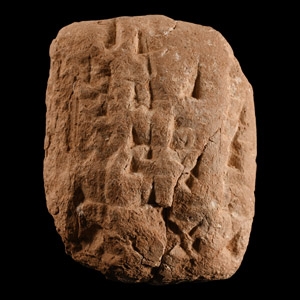
Ur III Cuneiform Tablet Fragment, a Note on a Quantity of Barley
2nd millennium B.C.Sold for (Inc. bp): £130
A clay tablet bearing cuneiform text to one face, roughly lentoid in cross-section, a note on a quantity of barley, possibly Paleo-Babylonian. 23 grams, 39 mm
Acquired in the 1980s. From the collection of a West London, UK, gentleman. -
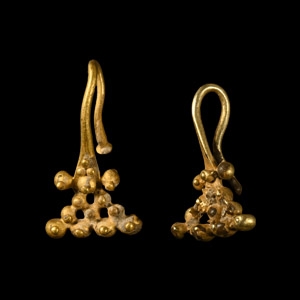
Bactrian Gold Earrings
1st millennium B.C.Estimate: £300 - 400 (+bp*)
Opening Bid: £150
A pair of gold earrings, each a bifacial triangular plaque composed of gold bulbs adorned with apex granules to both faces, tapering gold hook with conical boss to terminal, bulb to each side of the neck and granulated triangle between. 3.98 grams total, 19-21 mm
Acquired 1980-2015. Ex Abelita family collection. -
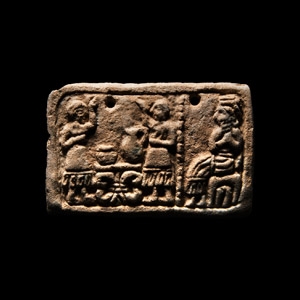
Sumerian Figural Plaque
3rd millennium B.C.Sold for (Inc. bp): £1,143
A rectangular faience plaque bearing figural scene composed of two figures beside a table, a seated figure behind them; pierced twice along one edge. 43.5 grams, 82 mm wide
Fine condition.
Acquired 1970-1999. London collection of the late Mr S.M., thence by descent.
