
Loading, please wait...
LOT 1463
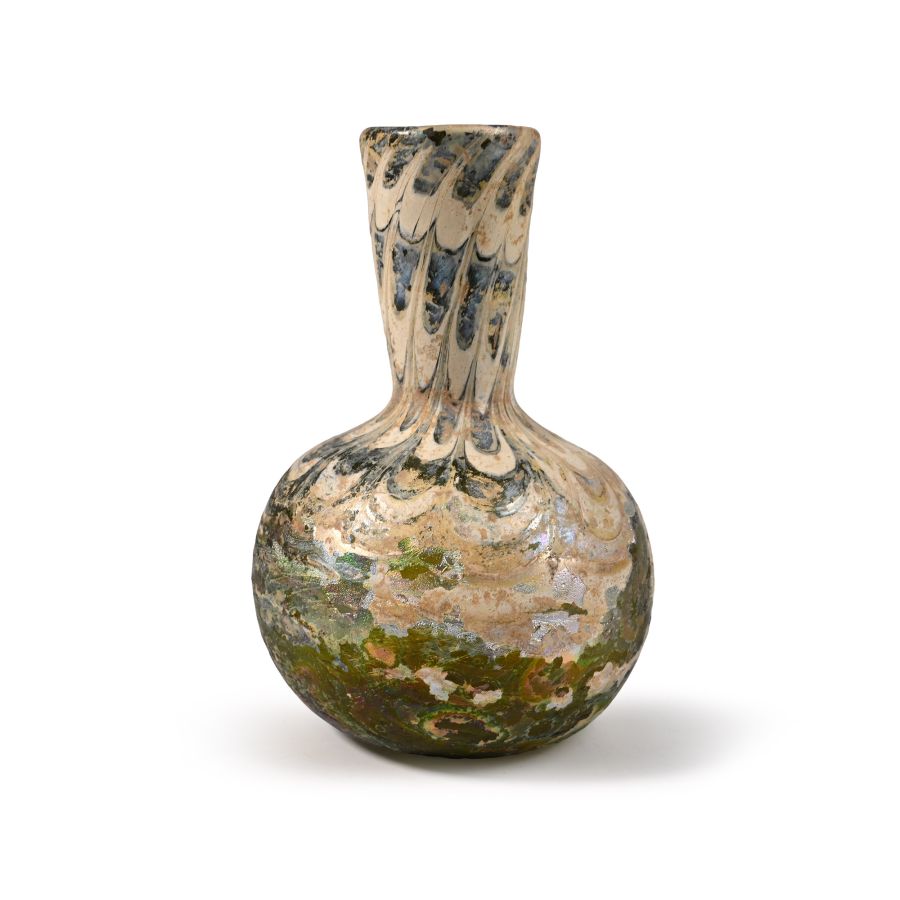
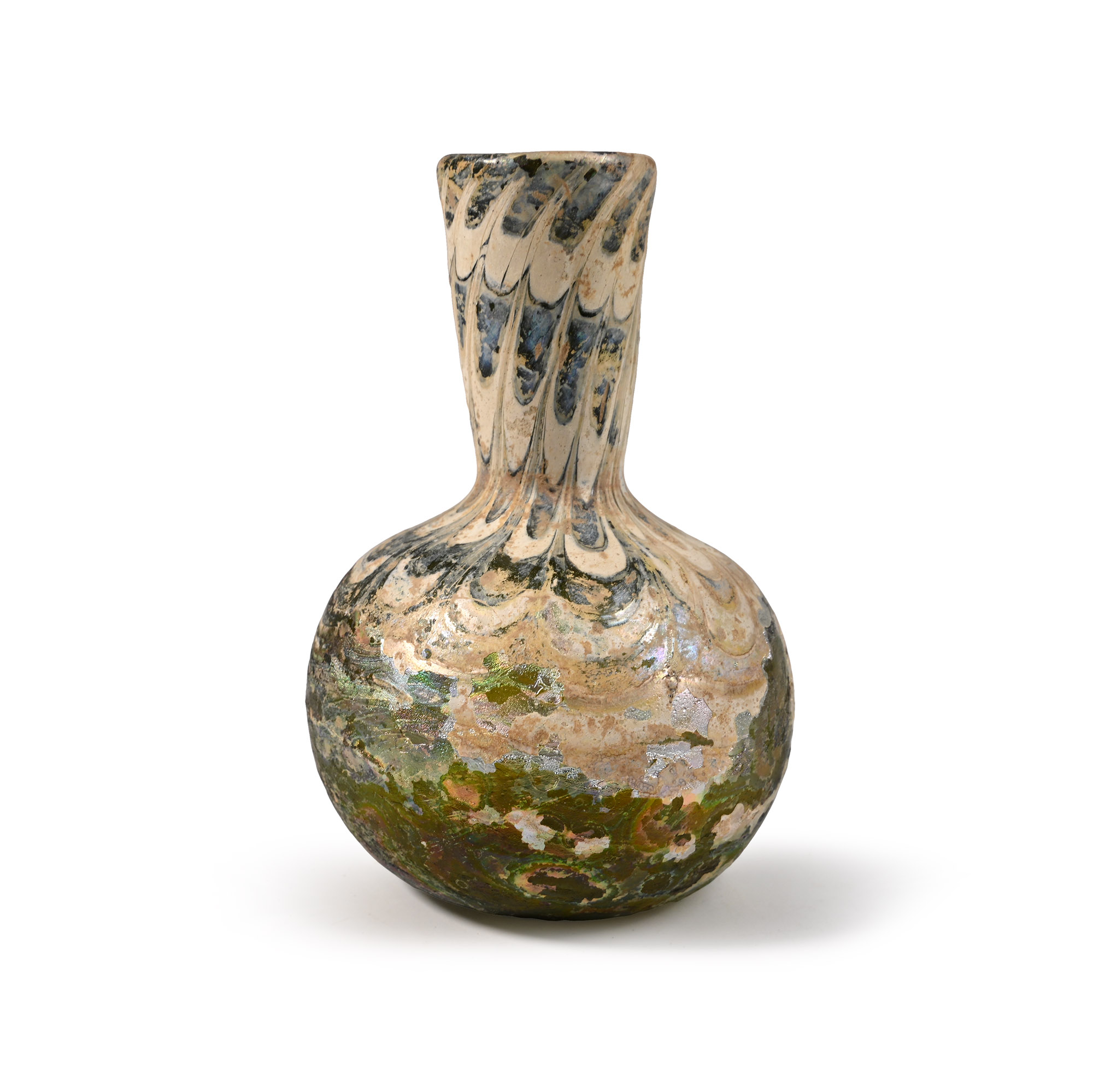
Western Asiatic Glass Bottle
10TH-11TH CENTURY A.D.
3 1/4 in. (36 grams, 83 mm).
In iridescent glass with squat body and hexagonal-section mouth; dragged trail detailing.
ProvenanceEx collection M.W.A., Germany.
Acquired in 1996.
Private collection, Switzerland, by descent.
See Whitehouse, D., Sassanian and Post-Sassanian Glass in The Corning Museum of Glass, New York, 2005, for discussion.
CONDITIONTimeLine Auctions follows a vetting process to ensure the authenticity and legality of all items, reinforcing our commitment to integrity and responsible trading. Each antiquity, antique, and coin lot undergoes thorough examination by a vetting committee of at least ten external specialists, professional trade association members, scientists, and archaeologists: Our Vetting Process
AUCTIONS:
TimeLine is a leading auction house specialising in antiquities, ancient art, collectables, natural history, coins, medals, and books. Our auctions offer museums, collectors, historians, and enthusiasts the opportunity to acquire unique and historically significant pieces.
-

Western Asiatic Agate Bead Collection
1st millennium B.C.Sold for (Inc. bp): £104
Comprising mainly biconical and tubular beads in various sizes. 54.56 grams total, 2.62-29.14 mm
From the private collection of a European gentleman (1942-2024), formed since the 1970s. -
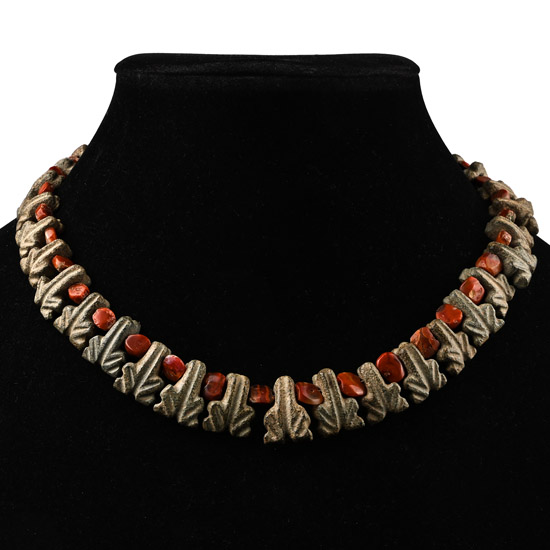
Mesopotamian Carved Stone Frog Bead Necklace
1500-1200 B.C.Estimate: £1,800 - 2,400 (+bp*)
Opening Bid: £900
Restrung group of frog-shaped dangles, each pierced at the neck, with interstitial irregular spacer beads. 56.39 grams, 36 cm
Acquired in the late 1980s-early 1990s. Private collection, London, UK. -
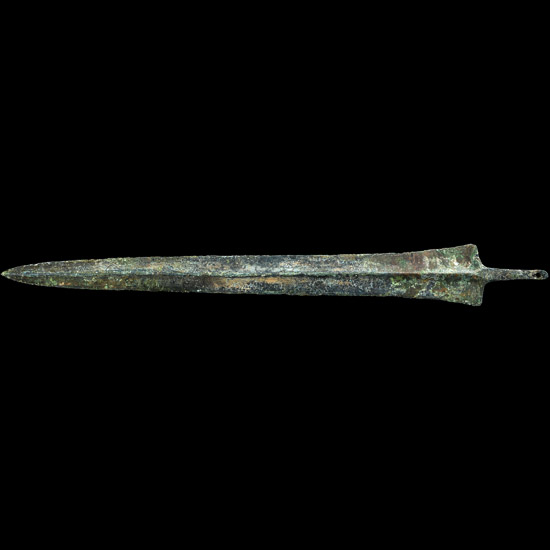
Luristan Bronze Tanged Dirk
Circa 1st millennium B.C.Sold for (Inc. bp): £221
Comprising a slender triangular blade with a raised midrib and a short rectangular-section pierced tang. 192 grams, 38.3 cm
Ex Abelita family collection, 1980s-2000s.
The Luri people produced a quantity of fine metalwork, which according to Dr. Khorasani, could be due to a settled period which arose as a result of the defeat of the Elamites by the Babylonians, leaving the Luristani people in relative peace for a period of time after 1200 B.C. According to Khorasani, 'A culture of innovation and experimentation flourished, and the repertoire of the Luristan smiths expanded in the period between 1150–1050 BC.'
