
Loading, please wait...

LOT 1399
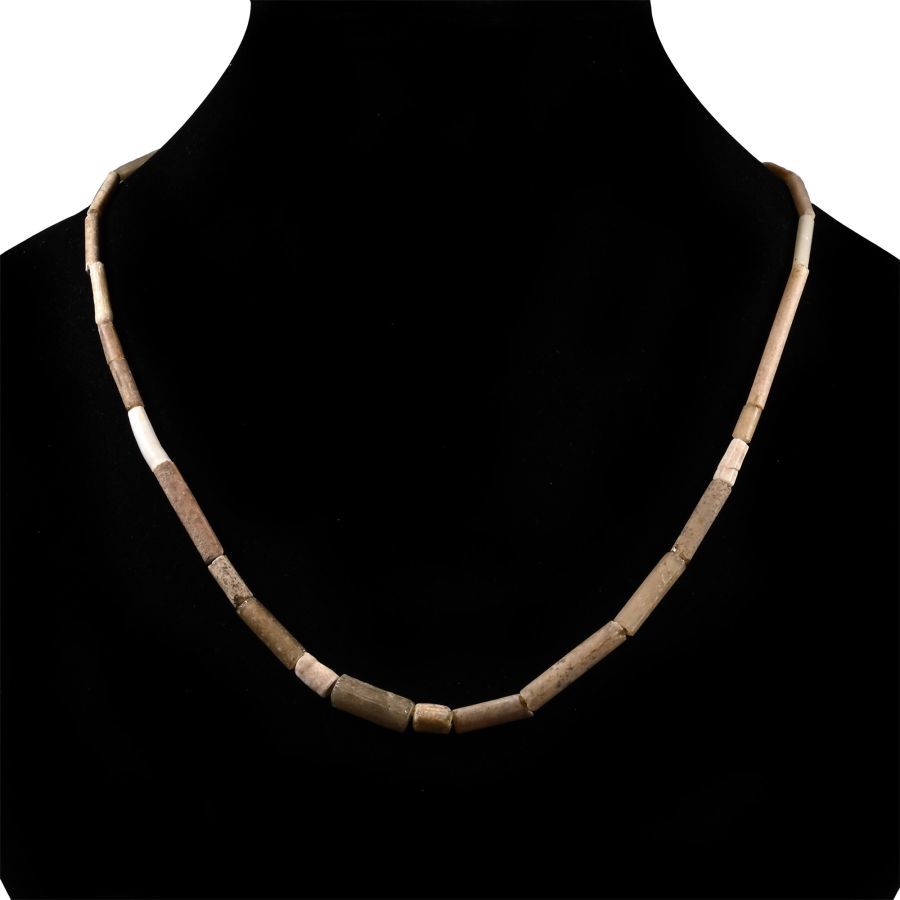
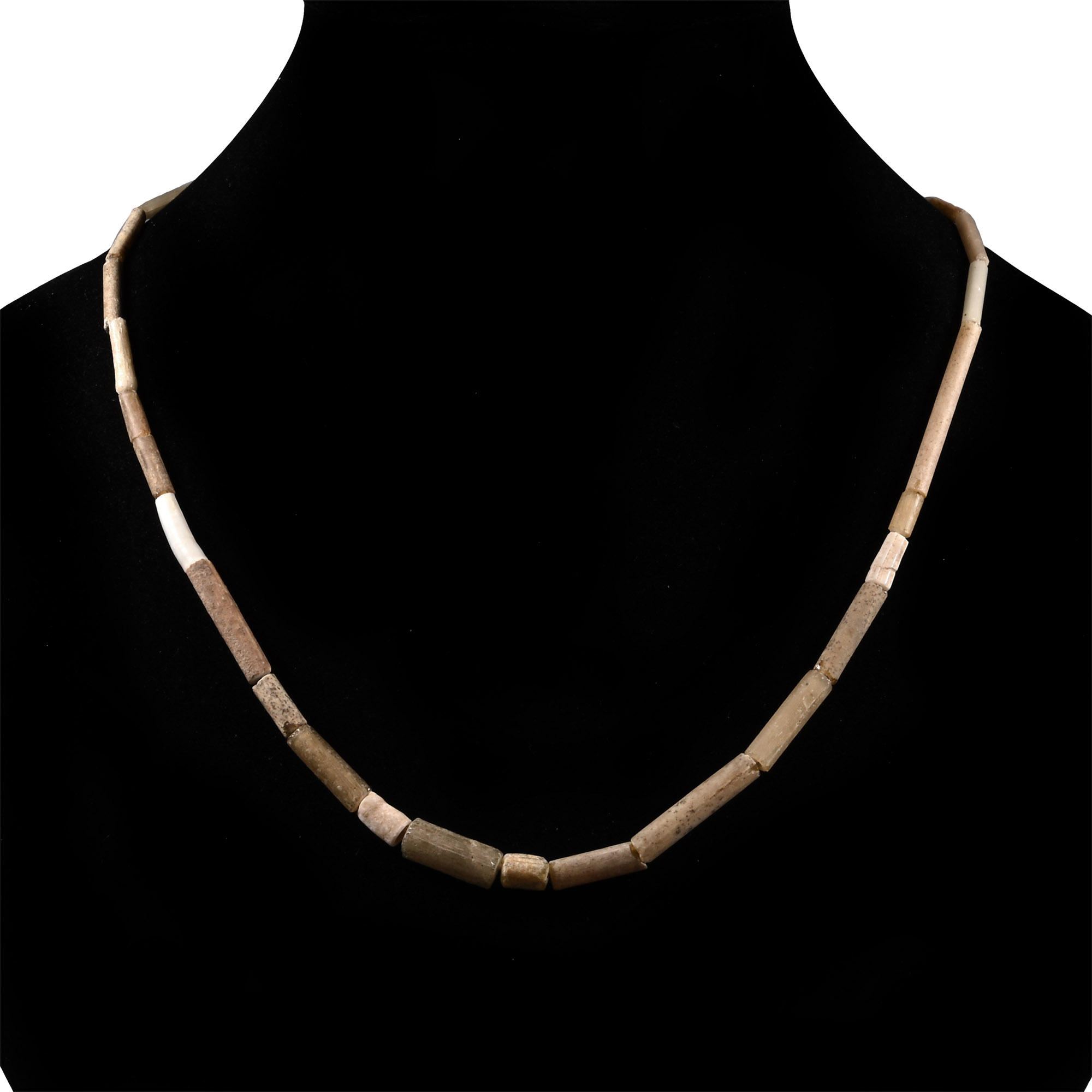
Western Asiatic Glass Bead Necklace String
1ST MILLENNIUM A.D. AND LATER
19 1/8 in. (14.3 grams, 48.5 cm).
Composed of tubular beads; restrung. [No Reserve]
ProvenanceAcquired 1980-2015.
Ex Abelita family collection.
This lot has been cleared against the Art Loss Register database, and is accompanied by an illustrated lot declaration signed by the Head of the Antiquities Department, Dr Raffaele D'Amato.
TimeLine Auctions follows a vetting process to ensure the authenticity and legality of all items, reinforcing our commitment to integrity and responsible trading. Each antiquity, antique, and coin lot undergoes thorough examination by a vetting committee of at least ten external specialists, professional trade association members, scientists, and archaeologists: Our Vetting Process
AUCTIONS:
TimeLine is a leading auction house specialising in antiquities, ancient art, collectables, natural history, coins, medals, and books. Our auctions offer museums, collectors, historians, and enthusiasts the opportunity to acquire unique and historically significant pieces.
-
.jpg)
Syro-Cappadocian Cylinder Seal with Animals and Figures
2nd millennium B.C.Sold for (Inc. bp): £650
Columnar in form with two beads and a cord forming handles; accompanied by a copy of an old scholarly note, typed and signed by W.G. Lambert, late Professor of Assyriology, University of Birmingham, 1970-1993, which states: 'Cylinder Seal of Soft Black Stone, 19x10.5mm. The engraved area is divided into two registers by a notched band. In the upper, narrower register there is a row of nine human heads. Below is a row of various items: a mace; a sitting animal; a recumbent bull with a bird above its back; a wedge; a standing human with one hand raised; a recumbent horned quadruped with head turned back with combined sun and lunar crescent above it. This seal is Syro-Cappadocian, from c. 2000 B.C. For comparable seals cf. Briggs Buchanan, catalogue of Ancient Near Eastern Seals in the Ashmolean Museum, I, no. 849 and idem, early Near Eastern Seals in the Yale Babylonian Collection, no.1180.'; supplied with a museum-quality impression. 4.95 grams, 38 mm long
UK private collection, acquired 1980-1983. Accompanied by a copy of a typed and signed scholarly note by the late W.G. Lambert, Professor of Assyriology at the University of Birmingham, 1970-1993, with reference no.1580. This lot has been cleared against the Art Loss Register database, and is accompanied by an illustrated lot declaration signed by the Head of the Antiquities Department, Dr Raffaele D'Amato. -
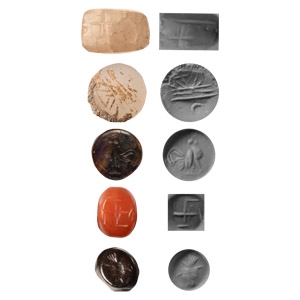
Sasanian Hardstone Stamp Seals
Circa 3rd-5th century A.D.Sold for (Inc. bp): £195
Plano-convex and other types with geometric, avian and other motifs. 25 grams total, 14-27 mm
Acquired 1980-2015. Ex Abelita family collection. This lot has been cleared against the Art Loss Register database, and is accompanied by an illustrated lot declaration signed by the Head of the Antiquities Department, Dr Raffaele D'Amato. -
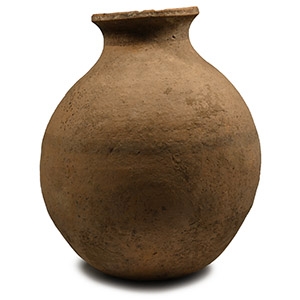
Western Asiatic Terracotta Jar
1st millennium B.C.Estimate: £150 - 200 (+bp*)
Opening Bid: £75
Globular in profile with broad flared mouth and chamfered rim. 4.25 kg, 31 cm
Acquired 1980-2015. Ex Abelita family collection. This lot has been cleared against the Art Loss Register database, and is accompanied by an illustrated lot declaration signed by the Head of the Antiquities Department, Dr Raffaele D'Amato.
