
Loading, please wait...
LOT 0975
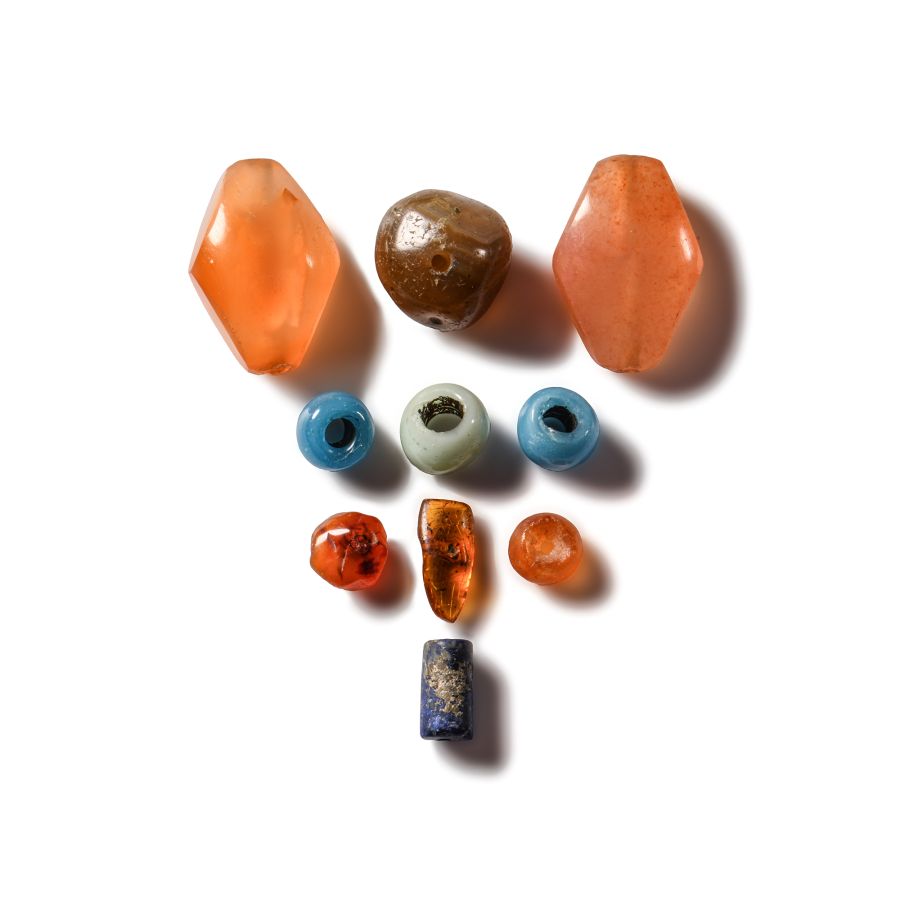
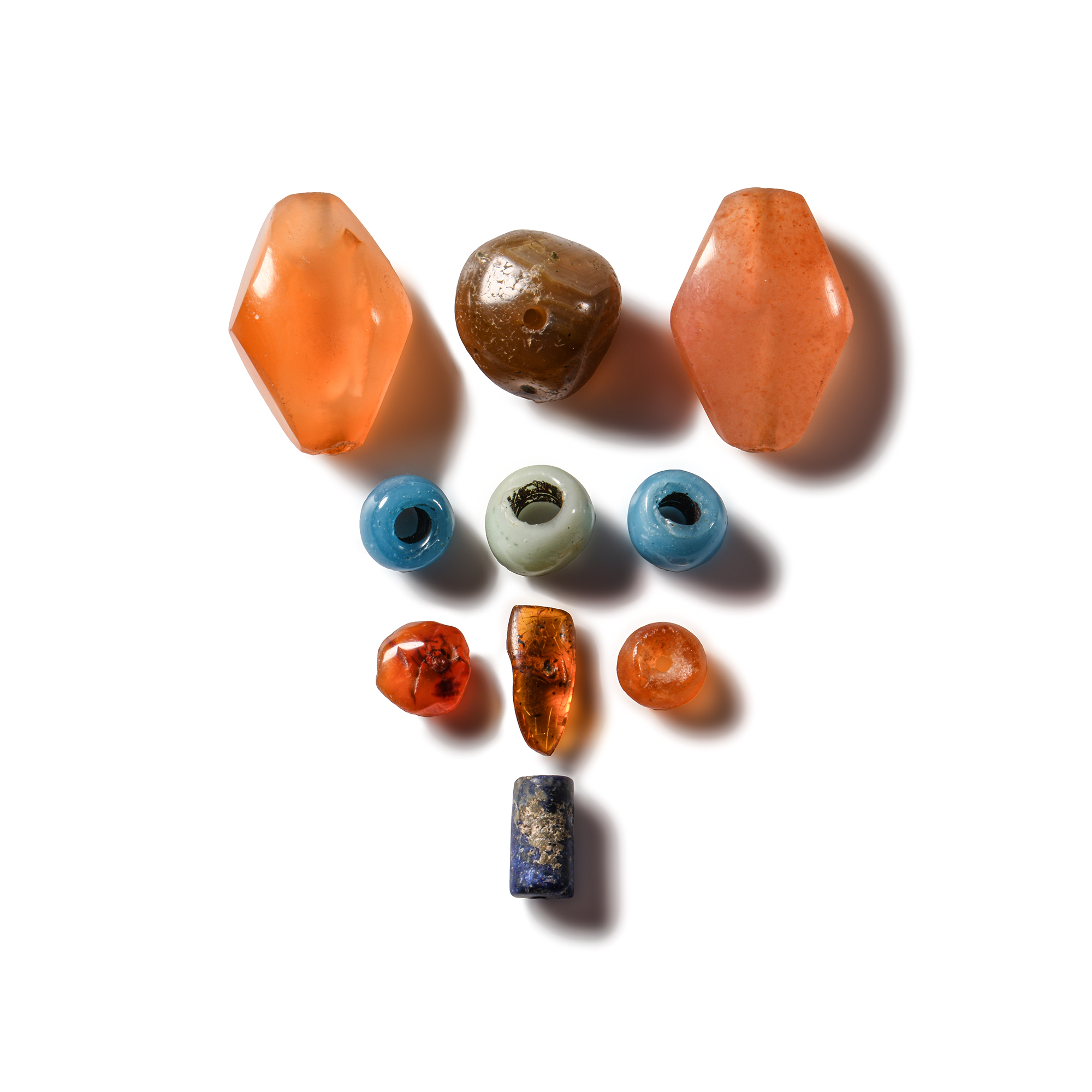
Western Asiatic Glass and Stone Bead Collection
1ST MILLENNIUM B.C. AND LATER
1/4 - 7/8 in. (17.8 grams total, 8-23 mm).
Comprising: two large lozenge-shaped carnelian beads; a cylindrical lapis lazuli bead; a later oblate agate bead; two roughly oblate carnelian beads; a teardrop-shaped unpierced amber specimen; and three later oblate beads in blue glass. [10, No Reserve]
ProvenanceUK private collection formed 1970s-1990s.
Property of an East Sussex, UK, gentleman.
TimeLine Auctions follows a vetting process to ensure the authenticity and legality of all items, reinforcing our commitment to integrity and responsible trading. Each antiquity, antique, and coin lot undergoes thorough examination by a vetting committee of at least ten external specialists, professional trade association members, scientists, and archaeologists: Our Vetting Process
AUCTIONS:
TimeLine is a leading auction house specialising in antiquities, ancient art, collectables, natural history, coins, medals, and books. Our auctions offer museums, collectors, historians, and enthusiasts the opportunity to acquire unique and historically significant pieces.
-
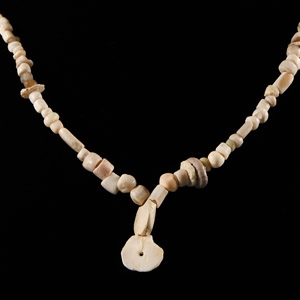
Western Asiatic Stone and Shell Bead Necklace
Circa 1st millennium B.C. and laterSold for (Inc. bp): £46
Restrung with two central feature beads; composed of graduated beads of various types of stone, glass and shell. 18.9 grams, 46 cm long
UK gallery, early 2000s.
Similar beads were found during the excavations of the royal tombs of Nimrud. Thousands of beads were discovered in the sarcophagi, including those of Nimrud’s Queens; they probably originally formed part of wide collars with multiple strands. -
.jpg)
Neo-Assyrian Winged Gryphon Bone Plaque
Circa 700 B.C.Estimate: £4,000 - 6,000 (+bp*)
Opening Bid: £2,000
Rectangular carved furniture panel with raised frame above and below the central figure modelled in the half-round; the figure an advancing gryphon with head raised and wings spread, hair falling in three locks to the shoulder, tail raised; the wing with raised rims to the feathers forming cells to accept an inlay in contrasting colour; remains of tenons above and below; Phoenician style; mounted on a custom-made stand. 274 grams total, 10 cm wide including stand
Ex Florida collection, purchased from Kelekian, New York, prior to 1970. Acquired by the current owner from the above. This lot has been checked against the Interpol Database of stolen works of art and is accompanied by search certificate no.11971-209611.
The figure is shown with the head raised; the example in the Metropolitan Museum of Art, which is very similar, is eating the flowers of a tiered papyrus plant. Many such plaques were manufactured in workshops at Nimrud, but some may have been plundered from the treasuries of defeated enemies. -
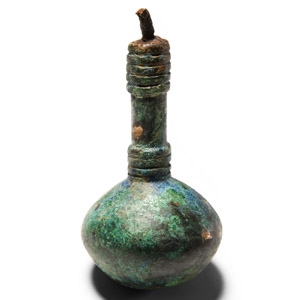
Bactrian Bronze Kohl Pot
1st millennium B.C.Estimate: £200 - 300 (+bp*)
Opening Bid: £100
With biconvex body and tall tubular neck, integral ribbed collars; applicator in situ. 275 grams, 95 mm
Ex old English collection. London art market, pre 2000. Property of a London, UK, gentleman.
