
Loading, please wait...

LOT 1349
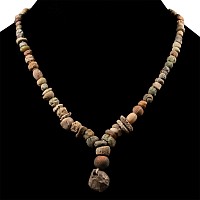
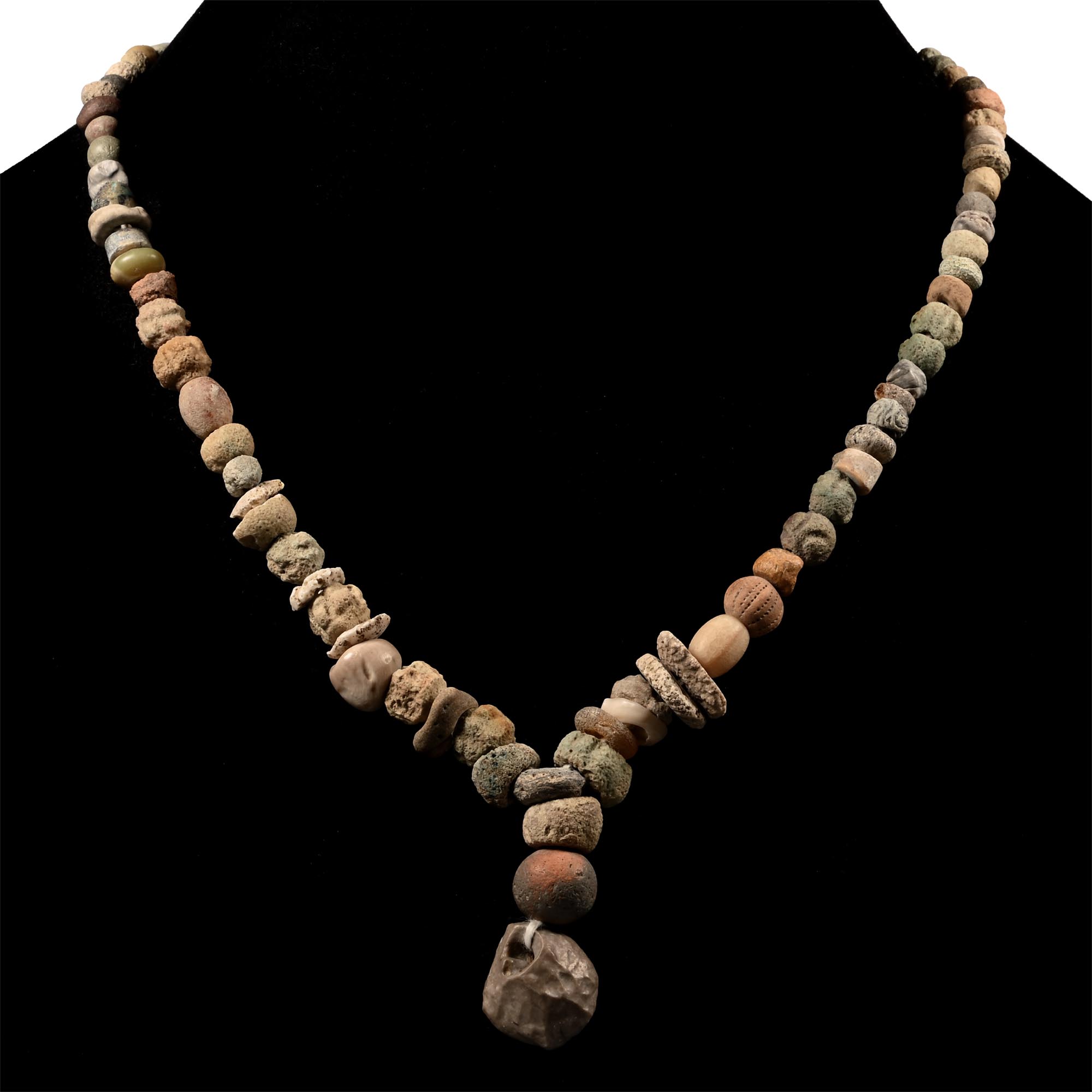
Western Asiatic Glass and Faience Bead Necklace String
1ST MILLENNIUM B.C. AND LATER
14 5/8 in. (36 grams, 37 cm).
Composed mainly of oblate and annular beads, restrung to a Y-shape with a central irregular pendant amulet. [No Reserve]
ProvenanceEx property of a late Japanese collector, 1970-2000s.
CONDITIONTimeLine Auctions follows a vetting process to ensure the authenticity and legality of all items, reinforcing our commitment to integrity and responsible trading. Each antiquity, antique, and coin lot undergoes thorough examination by a vetting committee of at least ten external specialists, professional trade association members, scientists, and archaeologists: Our Vetting Process
AUCTIONS:
TimeLine is a leading auction house specialising in antiquities, ancient art, collectables, natural history, coins, medals, and books. Our auctions offer museums, collectors, historians, and enthusiasts the opportunity to acquire unique and historically significant pieces.
-
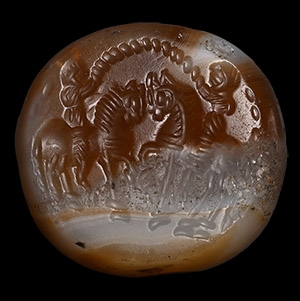
Sassanian Chalcedony Magical Seal with Figures
3rd-7th century A.D.Sold for (Inc. bp): £2,340
Plano-convex in profile with incuse scene of two horsemen each with an arm raised supporting a segmented banner; supplied with a museum-quality impression. 16.3 grams, 24 mm
UK private collection, 1980-1983. Private collection, London. -
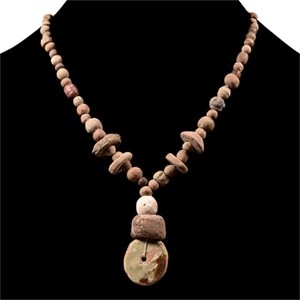
Western Asiatic Ceramic Bead Necklace String
1st millennium B.C. and laterSold for (Inc. bp): £26
Composed mainly of oblate, conical and melon beads, some with decoration, central feature a large green glazed discoid bead. 41 grams, 31 cm
Ex property of a late Japanese collector, 1970-2000s. -
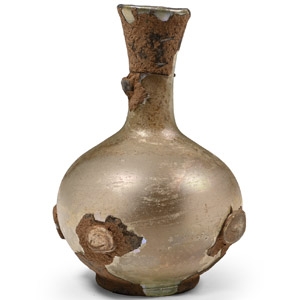
Sassanian Glass Bottle
3rd-7th century A.D.Estimate: £100 - 140 (+bp*)
Opening Bid: £50
With bulbous body and flared mouth, applied discs to the equator, some iridescence remaining. 15.3 grams, 85 mm
Formerly in North American collection, 1990s. From the collection of a London, UK, gentleman.
