
Loading, please wait...
LOT 2081
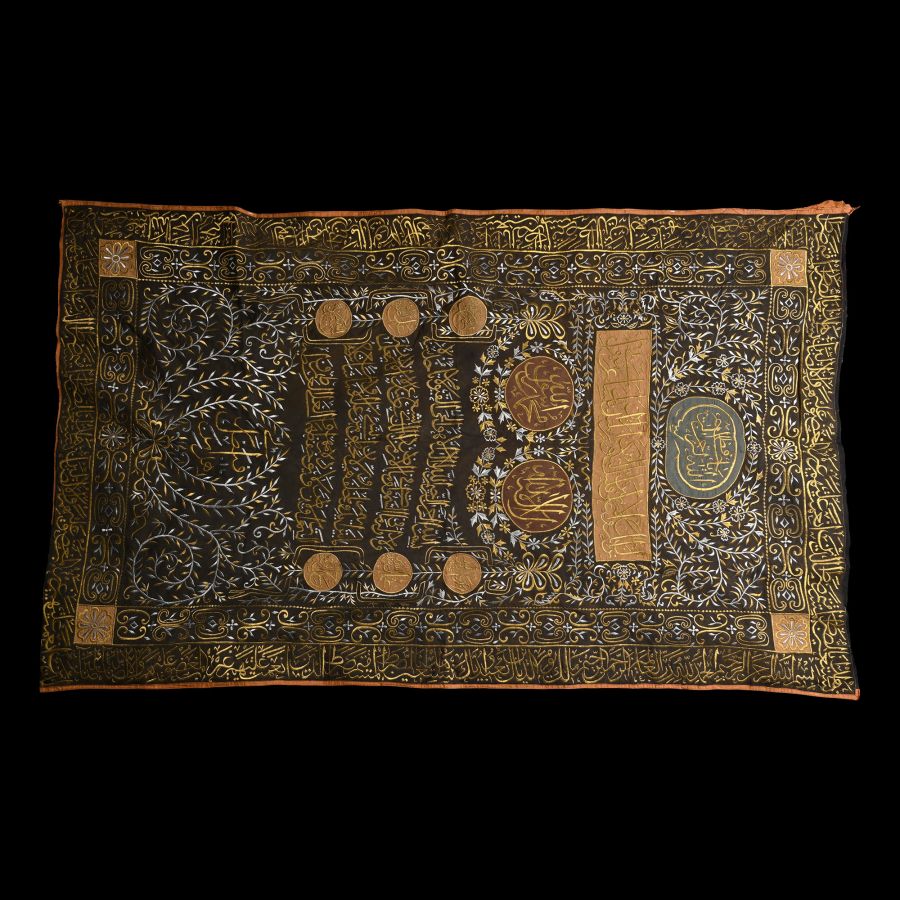
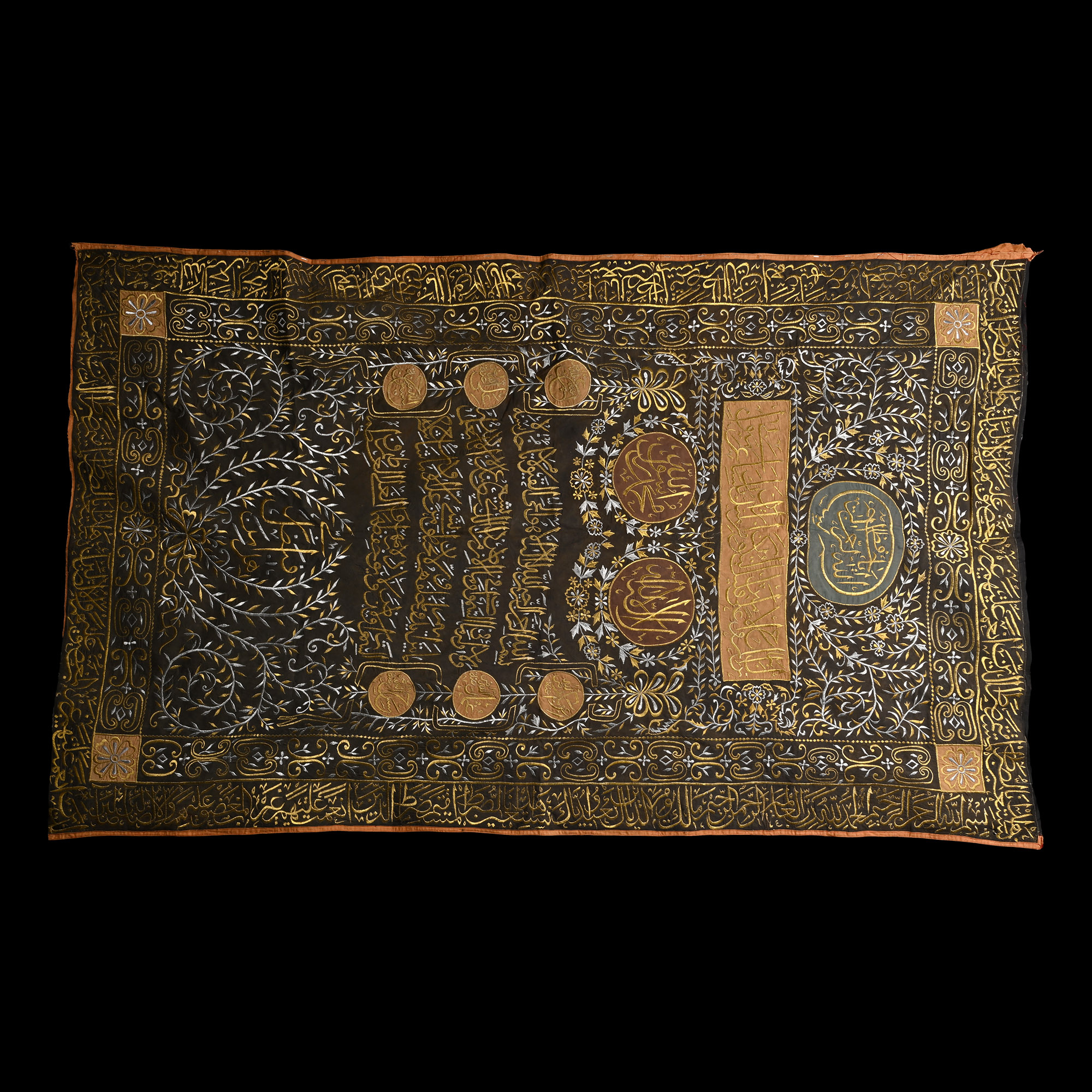
Western Asiatic Gilt and Silvered Wire Calligraphic Bed or Table Cover
20TH CENTURY A.D.
38 1/2 x 62 1/2 in. (470 grams, 98 x 159 cm).
Rectangular fabric cover with embroidered calligraphic text, bands of flowers and tendrils and other detailing, executed in gold- and silver-coloured threads. [No Reserve]
ProvenancePrivate collection, UK.
CONDITIONTimeLine Auctions follows a vetting process to ensure the authenticity and legality of all items, reinforcing our commitment to integrity and responsible trading. Each antiquity, antique, and coin lot undergoes thorough examination by a vetting committee of at least ten external specialists, professional trade association members, scientists, and archaeologists: Our Vetting Process
AUCTIONS:
TimeLine is a leading auction house specialising in antiquities, ancient art, collectables, natural history, coins, medals, and books. Our auctions offer museums, collectors, historians, and enthusiasts the opportunity to acquire unique and historically significant pieces.
LOT 2081
Western Asiatic Gilt and Silvered Wire Calligraphic Bed or Table Cover
Sold for (Inc. bp): £1,820
-
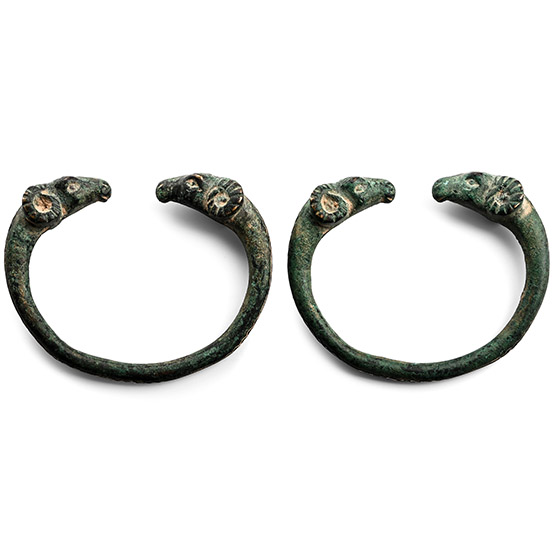
Western Asiatic Style Silver Inlaid Bronze Bracelet Pair
20th century A.D.Sold for (Inc. bp): £52
Each a round-section shank with ram's head finials. 328 grams total, 96-99 mm
Private collection, UK. -
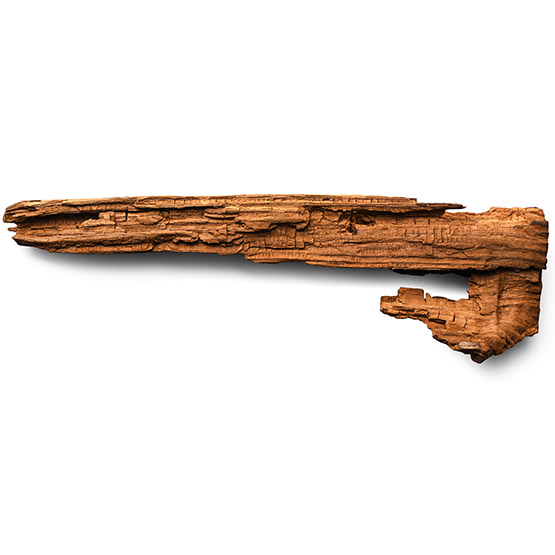
Original Timber Removed from HMS Victory in 1888 with Provenance Letter
Letter dated 5th June 1888 A.D.Sold for (Inc. bp): £312
Irregular fragment of timber, supplied with a handwritten provenance letter with wax seal; the letter states: 'Parish of Sidlow Bures Manor. Know all men, and if ladies particularly, by these presents, that of the fifth day of April 1888 the undersigned Poulteney Bigelow did in the company with an officer of H.M Service secure the accompanying piece of timber belonging to the ever famous frigate Victory, the same that fought at Trafalgar and received the precious life blood of the immortal Nelson on the 21st of October 1805. This piece of timber was cut out of the Hull of the Victory while undergoing repairs on the dry dock of Portsmouth. It is herewith presented to Miss Mabel Nicholson as a precious heirloom for distant generations of such as may love liberty and cherish the memory of valiant men. Witness the annexed signature seal, Poulteney Bigelow, Bures Manor, June 5 1888.' 141 grams total, 15.6-26.5 cm
From the collection of a Sussex noble lady, by descent from 1888, directly from the gifting of the item, as stated in the letter.
The HMS Victory underwent various refits throughout her long service, but a significant one occurred in 1888, when she was converted for use as a training ship. This refit included modifications to her structure and interior to accommodate her new role, although she was primarily preserved as a historic vessel. The hull and internal structures were reinforced to address wear and tear from years of service. The HMS Victory is currently the oldest British naval vessel still in commission, with 248 years of service as of 2026. -
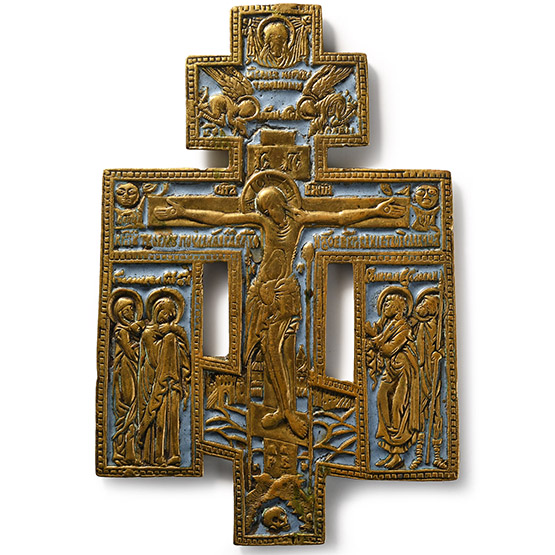
Russian Orthodox Enamelled Bronze Travel Icon with Christ Flanked by Mary, Maria, and Saint John
19th century A.D.Estimate: £250 - 350 (+bp*)
Opening Bid: £135
Representing the Saviour on the cross, the titulum inscribed with the letters 'ΙC ΧΡ' (Jesus Christ); Cyrillic inscriptions over the sun (Солнце) and the moon (Луна), flanking Jesus and above the heads of the figures: Mary of Magdala (Мария Магдала), the Mother of God ('ΜΡ ϴΥ'), Saint John the Theologian (Св Иоанн) and Saint Longinus (Св Лонгин); on the background the symbols of the Passion (sponge on reed, spear and a skull set on stones marking the site as Golgotha, twisted cords or wire, skan) and the city of Jerusalem; on the upper part of the cross the Archangels Michael and Gabriel with cloth-covered hands, the Mandylion above them. 270 grams, 16.6 cm
Acquired from Chris Martin-Zakheim, Iconastas, 5 Piccadilly Arcade, London SW1. From the private collection of a West London, UK, gentleman, formed since the early 2000s.
Orthodox travel icons were used by the faithful to carry a sacred representation with them during their journeys, offering protection and a constant spiritual connection. The icon features meticulous craftsmanship with intricate details of the Passion and Death of the Saviour, according to the Byzantine iconography.
