
Loading, please wait...
LOT 0842
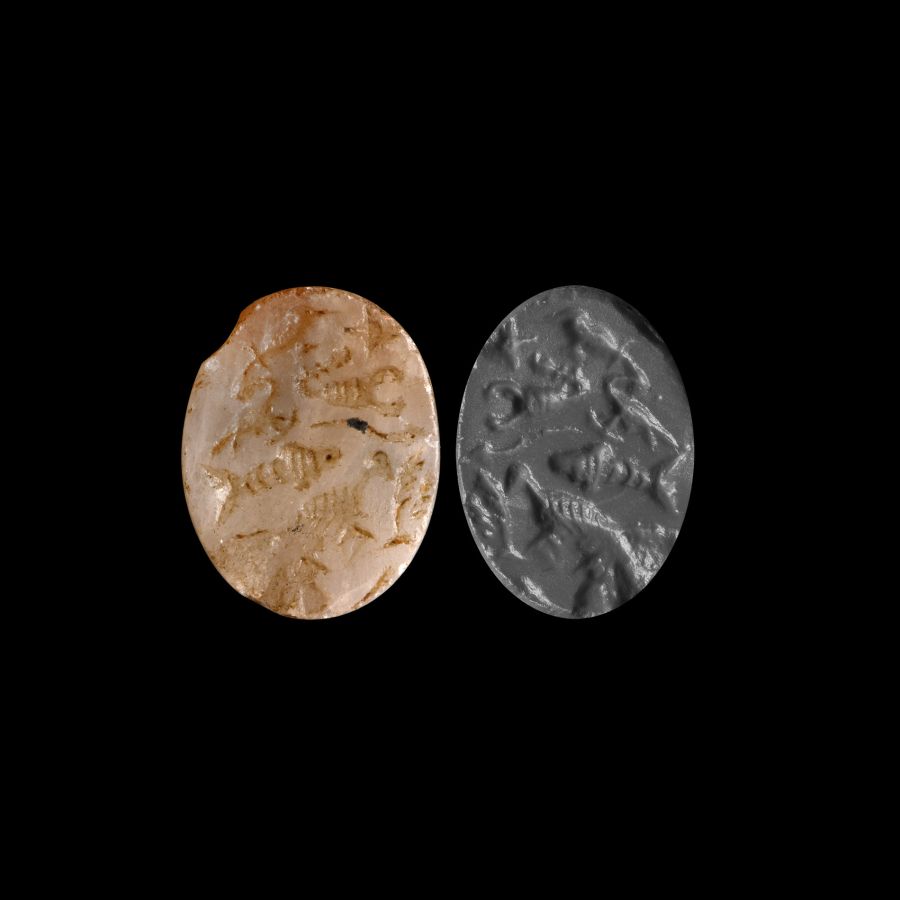
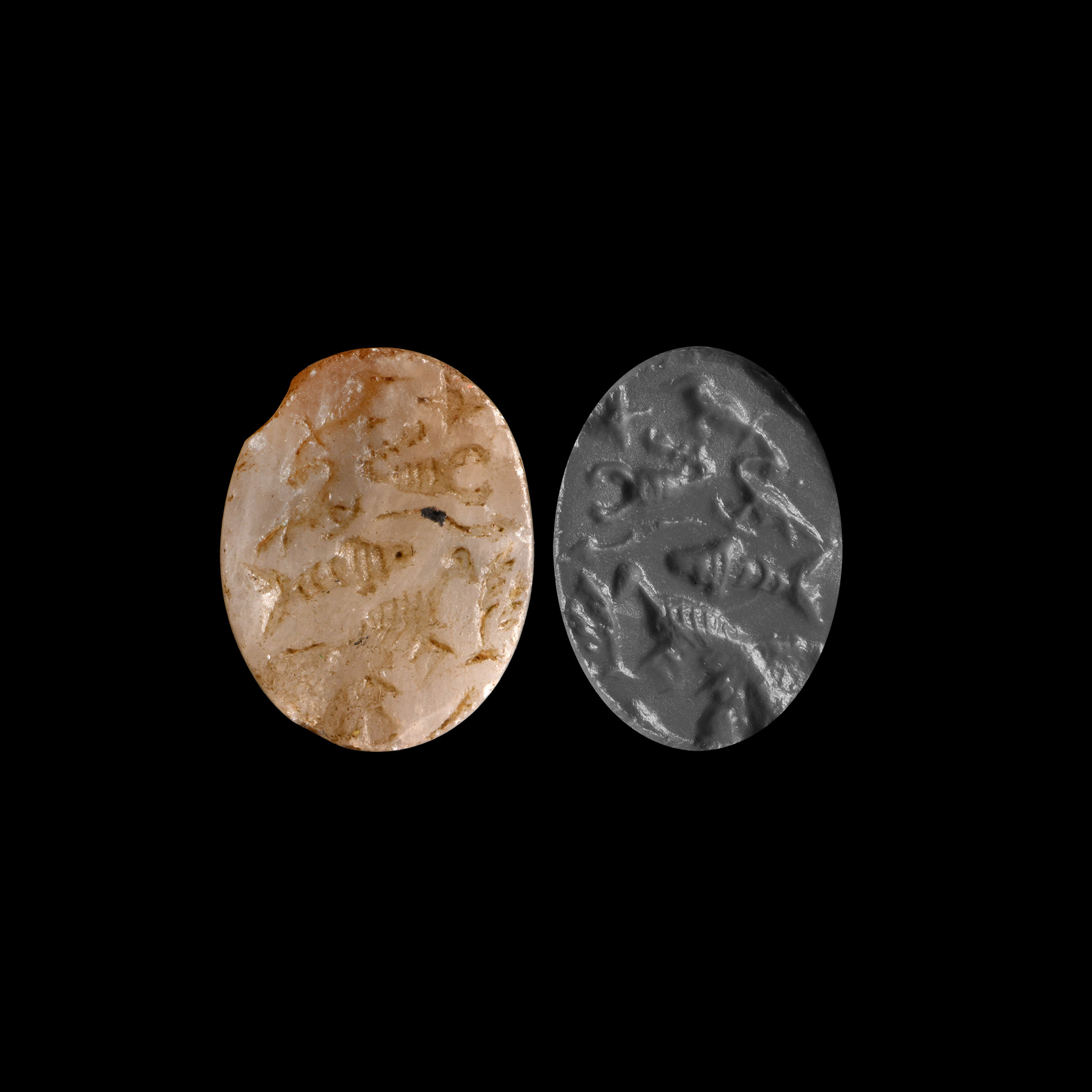
Western Asiatic Gemstone with Myriad of Animals
LATE 1ST MILLENNIUM B.C.
3/4 in. (4.5 grams, 21 mm).
A plano-convex chalcedony engraved with fish, birds, a scorpion and other animals to base, together with a lone star and possible bust; accompanied by a museum-quality impression.
ProvenanceAcquired 1980-2000s.
Important collection of a London gentleman.
TimeLine Auctions follows a vetting process to ensure the authenticity and legality of all items, reinforcing our commitment to integrity and responsible trading. Each antiquity, antique, and coin lot undergoes thorough examination by a vetting committee of at least ten external specialists, professional trade association members, scientists, and archaeologists: Our Vetting Process
AUCTIONS:
TimeLine is a leading auction house specialising in antiquities, ancient art, collectables, natural history, coins, medals, and books. Our auctions offer museums, collectors, historians, and enthusiasts the opportunity to acquire unique and historically significant pieces.
LOT 0842
Western Asiatic Gemstone with Myriad of Animals
Estimate £180 - 240€210 - 280 (for guidance only)$240 - 320 (for guidance only)
-
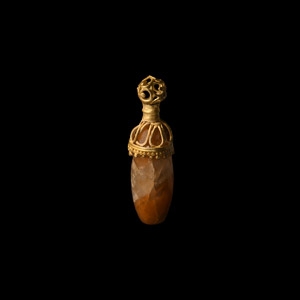
Western Asiatic Gold Pendant with Carnelian
1st-2nd century A.D.Estimate: £100 - 140 (+bp*)
Opening Bid: £56
A gold pendant with openwork domed filigree cell set with a capsule-shaped banded carnelian stone bead, ribbed collar and openwork bulb above for suspension. 1.42 grams, 23 mm
Fine condition.
Acquired 1970-2010. Collection of a late Japanese gentleman. -
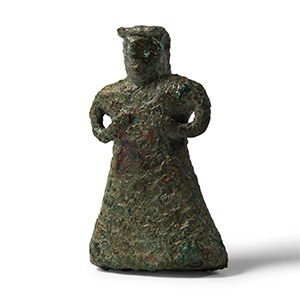
Bactrian Female Figured Kohl Pot
Mid 2nd millennium B.C.Estimate: £3,000 - 4,000 (+bp*)
Opening Bid: £1,500
An early copper-alloy kohl pot formed as a stylised female figure wearing a floor-length garment which splays outwards towards her feet, her arms placed on her hips to form loop handles, stylised facial detailing; circular recess to top of head. 110 grams, 80 mm
with a London, UK gallery 1971-early 2000s. This lot has been checked against the Interpol Database of stolen works of art and is accompanied by search certificate no.11642-199679. -
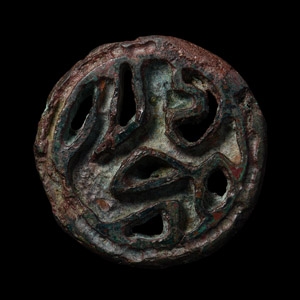
Central Asian Seal Pendant with Monkey
23rd-20th century B.C.Sold for (Inc. bp): £78
A bronze stamp seal featuring an openwork stylised monkey design; suspension loop to reverse; accompanied by a typed and signed scholarly note by W.G. Lambert, the late Professor of Assyriology at the University of Birmingham, 1970-1993, which states: '...This is round, with flat face and flat back, on which there is a small loop for suspension. The design consists of a depiction within a plain outer band. It shows a sitting monkey with tail up and front paws raised, perhaps holding something. This comes from west central Asia and dates to c.2300-2000 B.C. There is some wear and damage to the outer edge of the seal, but the design remains clear. The metal has been conserved.' 10 grams, 33 mm
1980s-early 1990s collection, UK. Accompanied by an original typed and signed scholarly note issued by the late Professor W.G. Lambert.
