
Loading, please wait...
LOT 1223
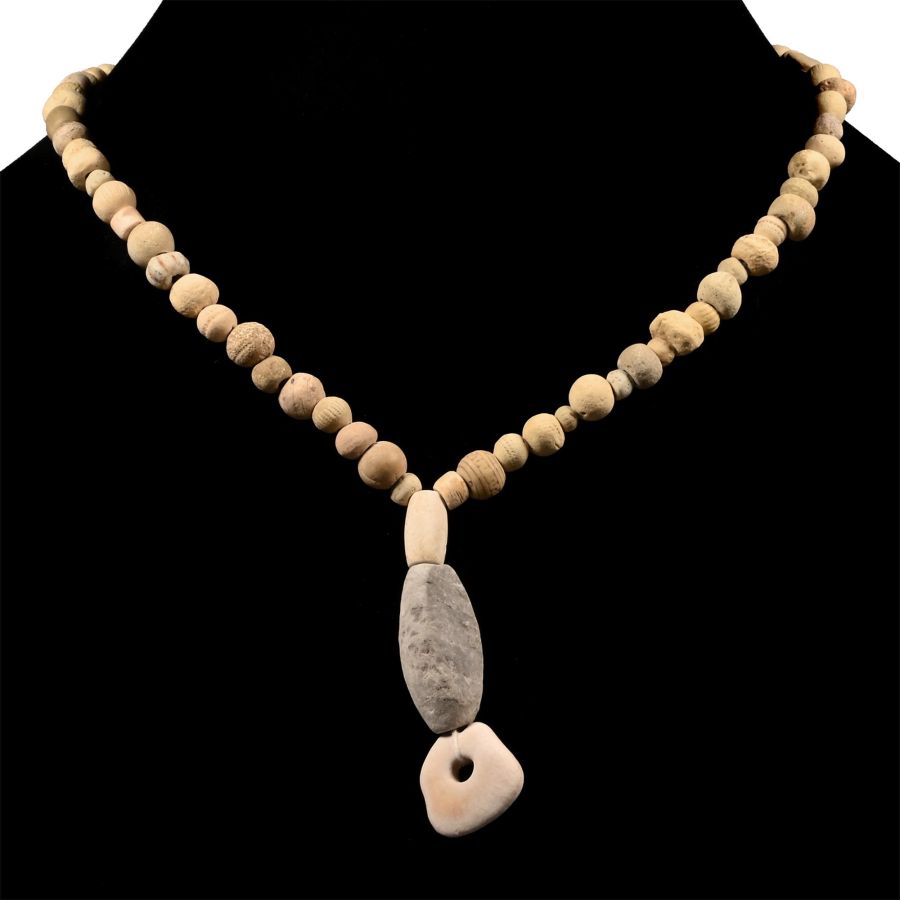
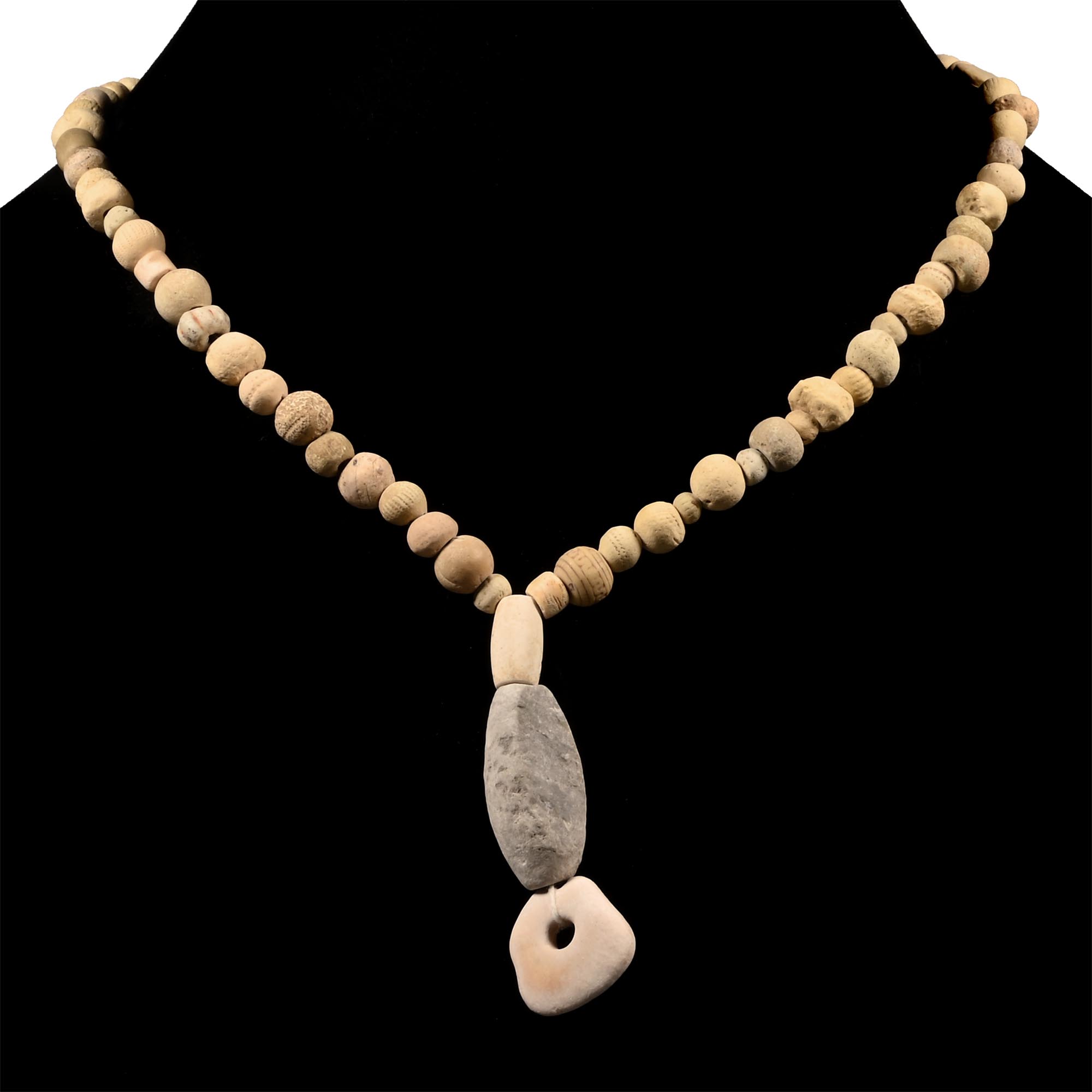
Western Asiatic Faience Bead Necklace String
1ST MILLENNIUM B.C. AND LATER
11 5/8 in. (23 grams, 29.5 cm).
Composed of spherical and oblate beads, restrung to a Y-shape with a discoid pendant. [No Reserve]
ProvenanceEx property of a late Japanese collector, 1970-2000s.
CONDITIONTimeLine Auctions follows a vetting process to ensure the authenticity and legality of all items, reinforcing our commitment to integrity and responsible trading. Each antiquity, antique, and coin lot undergoes thorough examination by a vetting committee of at least ten external specialists, professional trade association members, scientists, and archaeologists: Our Vetting Process
AUCTIONS:
TimeLine is a leading auction house specialising in antiquities, ancient art, collectables, natural history, coins, medals, and books. Our auctions offer museums, collectors, historians, and enthusiasts the opportunity to acquire unique and historically significant pieces.
-
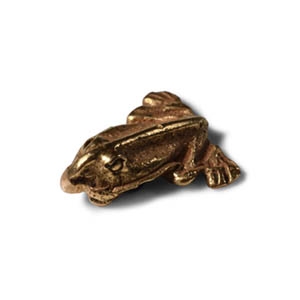
Old Babylonian Gold Frog Amulet
2000-1800 B.C.Sold for (Inc. bp): £598
The frog modelled in the round with anatomical detailing, pierced at the middle. 0.34 grams, 6 mm
Acquired in Switzerland, 1999. Private collection, Europe. -
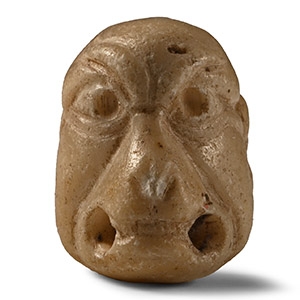
Mesopotamian Alabaster Grotesque Head Pendant
Circa 800-600 B.C.Estimate: £300 - 400 (+bp*)
Opening Bid: £150
Modelled in the round with animal-like features and grimacing expression, drilled eyes and string eyebrows, possibly depicting Huwawa; perforated through the head and mouth. 4.13 grams, 18 mm
Ex property of the late Mr S.M., London, UK, 1970-1990s, thence by descent. Accompanied by a previous typed cataloguing card. -
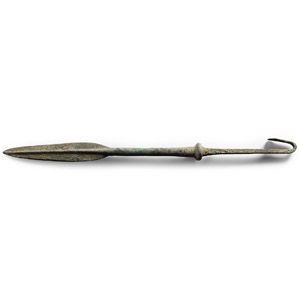
Mesopotamian Bronze Javelin Head
3rd-2nd millennium B.C.Sold for (Inc. bp): £156
With foliate blade, rhomboidal in section, raised mid-rib, medium length stem widening at its base and forming a small stop, rectangulat-section tang with bent terminal. 198 grams, 36 cm
Acquired 1980-2015. Ex Abelita family collection.
The specimen belongs to the category of tripartite spears with long pointed biconvex blade and single bevelled tang. They seem to be a Mesopotamian and Susian (Elamite) variant, and this type also includes decorated blades, like the spear from Tello with the inscription 'King of Kish'.
