
Loading, please wait...
LOT 0935
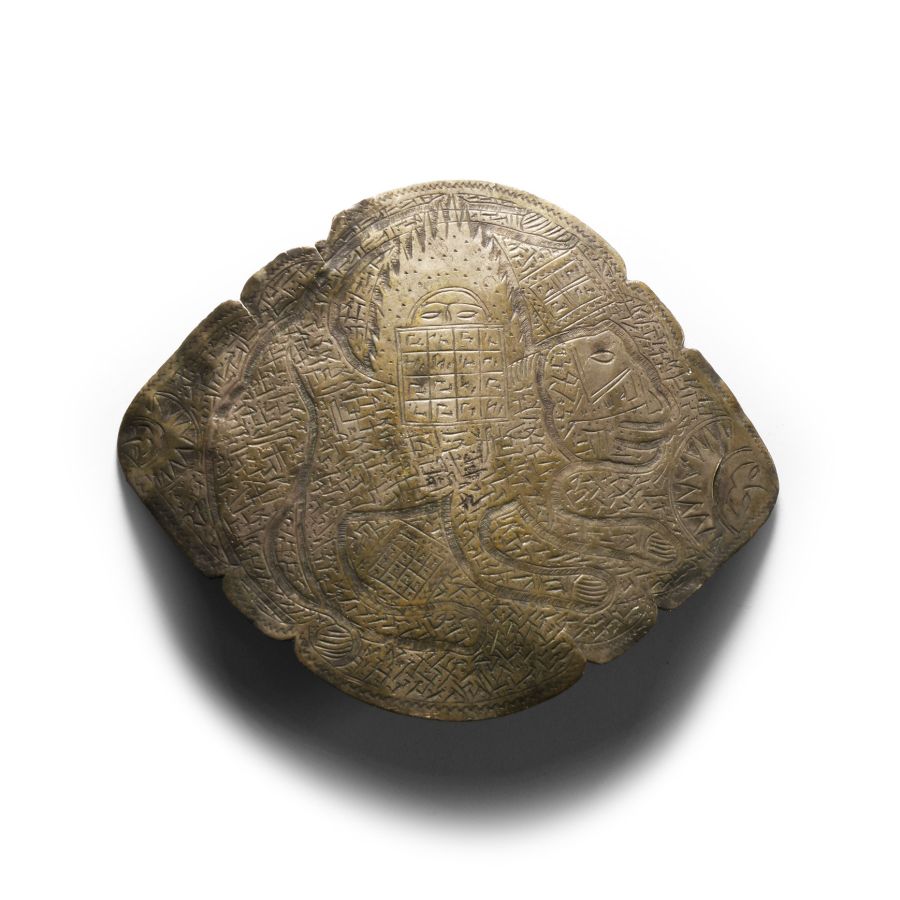
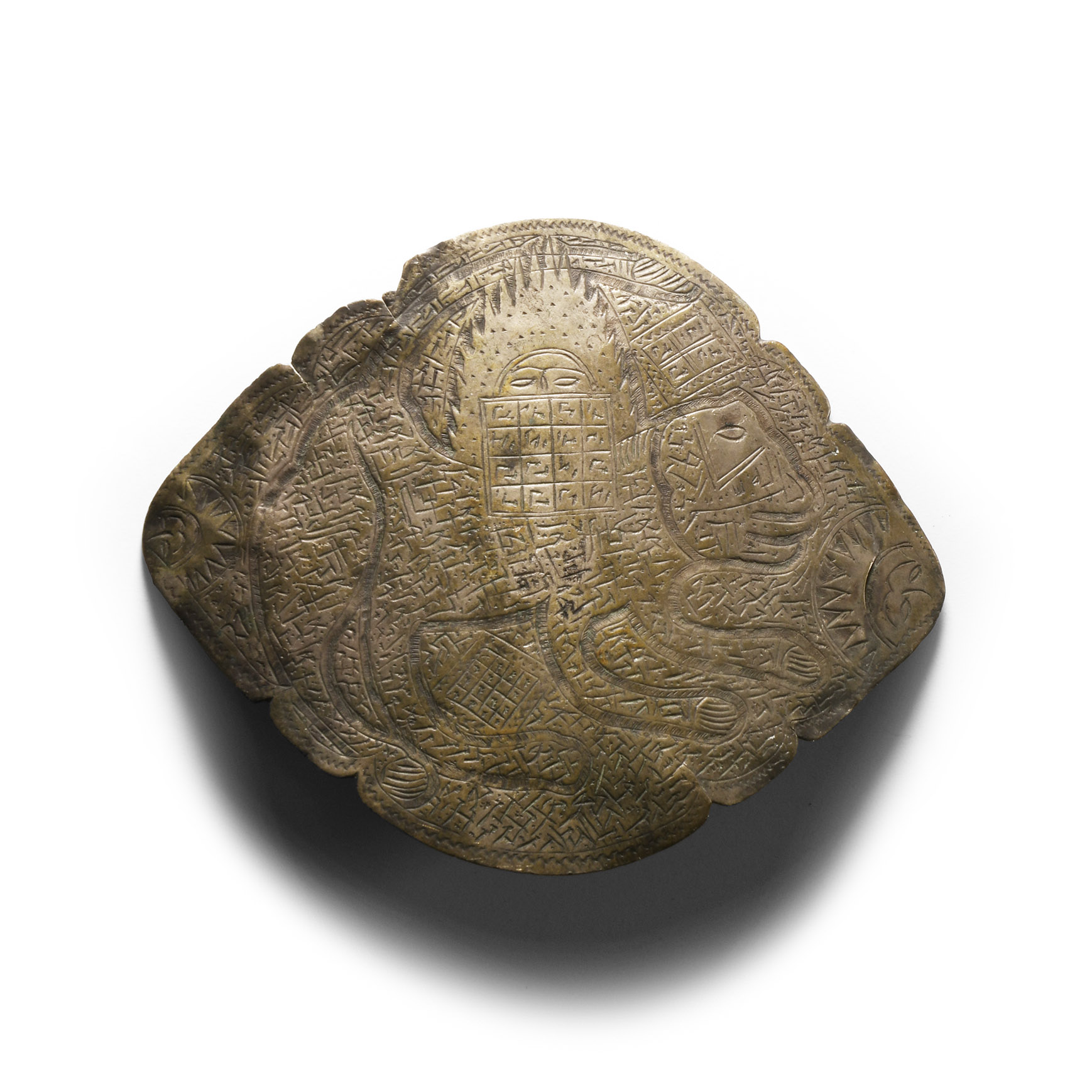
Western Asiatic Epigraphic Animal Plaque
18TH-19TH CENTURY A.D.
3 3/4 in. (22.8 grams, 94 mm).
Lentoid in plan and curved with two attachment loops to the reverse; low-relief image of a lion with tail arched over the back; solar masl to each and another above the lion's back; the whole surface with dense hatching and grids with text. [No Reserve]
ProvenanceFrom a UK private collection, before 1980.
CONDITIONTimeLine Auctions follows a vetting process to ensure the authenticity and legality of all items, reinforcing our commitment to integrity and responsible trading. Each antiquity, antique, and coin lot undergoes thorough examination by a vetting committee of at least ten external specialists, professional trade association members, scientists, and archaeologists: Our Vetting Process
AUCTIONS:
TimeLine is a leading auction house specialising in antiquities, ancient art, collectables, natural history, coins, medals, and books. Our auctions offer museums, collectors, historians, and enthusiasts the opportunity to acquire unique and historically significant pieces.
-
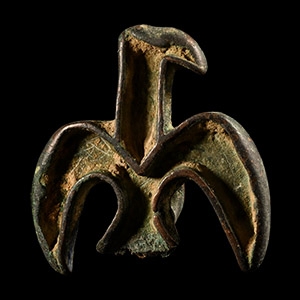
Central Asian Bronze Compartmented Eagle Seal Matrix
Circa 2300-2000 B.C.Sold for (Inc. bp): £208
Accompanied by a typed and signed scholarly note written by Professor Wilfrid George Lambert FBA (1926-2011), historian, archaeologist, and specialist in Assyriology and Near Eastern archaeology, in the late 1980s and early 1990s, which states: 'This bears the shape of the design, with flat compartmented face and flat back, on which a handle of inverted V-shape is mounted. The design consists of a heraldic eagle, with head sideways at the top, body beneath, and wings spread and curving downwards. This comes from west central Asia and dates to c. 2300-2000 B.C. it is a fine design and in very good condition save that the lower part of the body is missing.' 17.2 grams, 38 mm high
Ex S Collection, London, UK, 1970-1990s. Accompanied by a typed scholarly note signed by Professor Wilfrid George Lambert FBA (1926-2011), historian, archaeologist, and specialist in Assyriology and Near Eastern archaeology, in the late 1980s and early 1990s with reference no.V-619. -
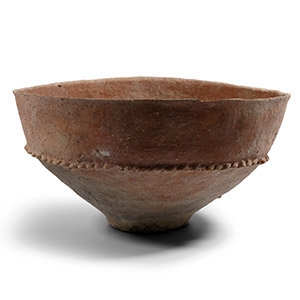
Trans Jordan Terracotta Bowl
Early Bronze Age, 3rd millennium B.C.Sold for (Inc. bp): £117
Large with conical body and narrow base, applied fluted strip to the vertical shoulder, narrow rim. 1.07 kg, 26.5 cm wide
Ex London, UK, collection, 1988. -
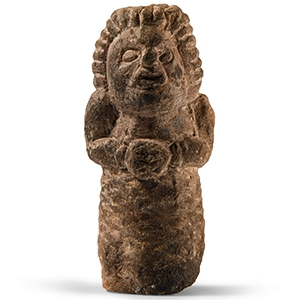
Nabataean Standing Stone Figure
Circa 1st century B.C.-1st century A.D. or laterSold for (Inc. bp): £286
The figure depicted with kyphosis and emphasised head; dressed hair and stylised facial features with high forehead and open mouth with full lips; arms held at waist level with crossed hands; dressed in a textured tunic. 149 grams, 97 mm
Acquired in the 1970s, thence by descent 2012. Private UK collection, Cambridge, UK. Property of an East Sussex, UK, gentleman. Old collection label to the base inscribed 'Petra'.
