
Loading, please wait...
LOT 1585
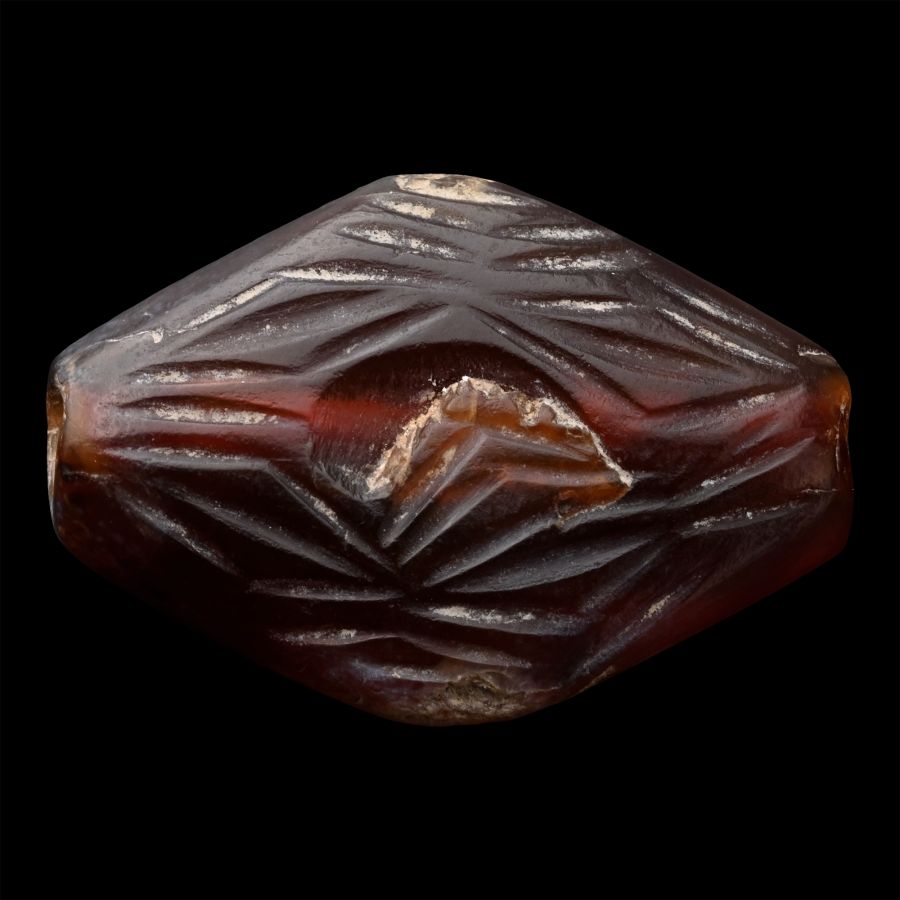
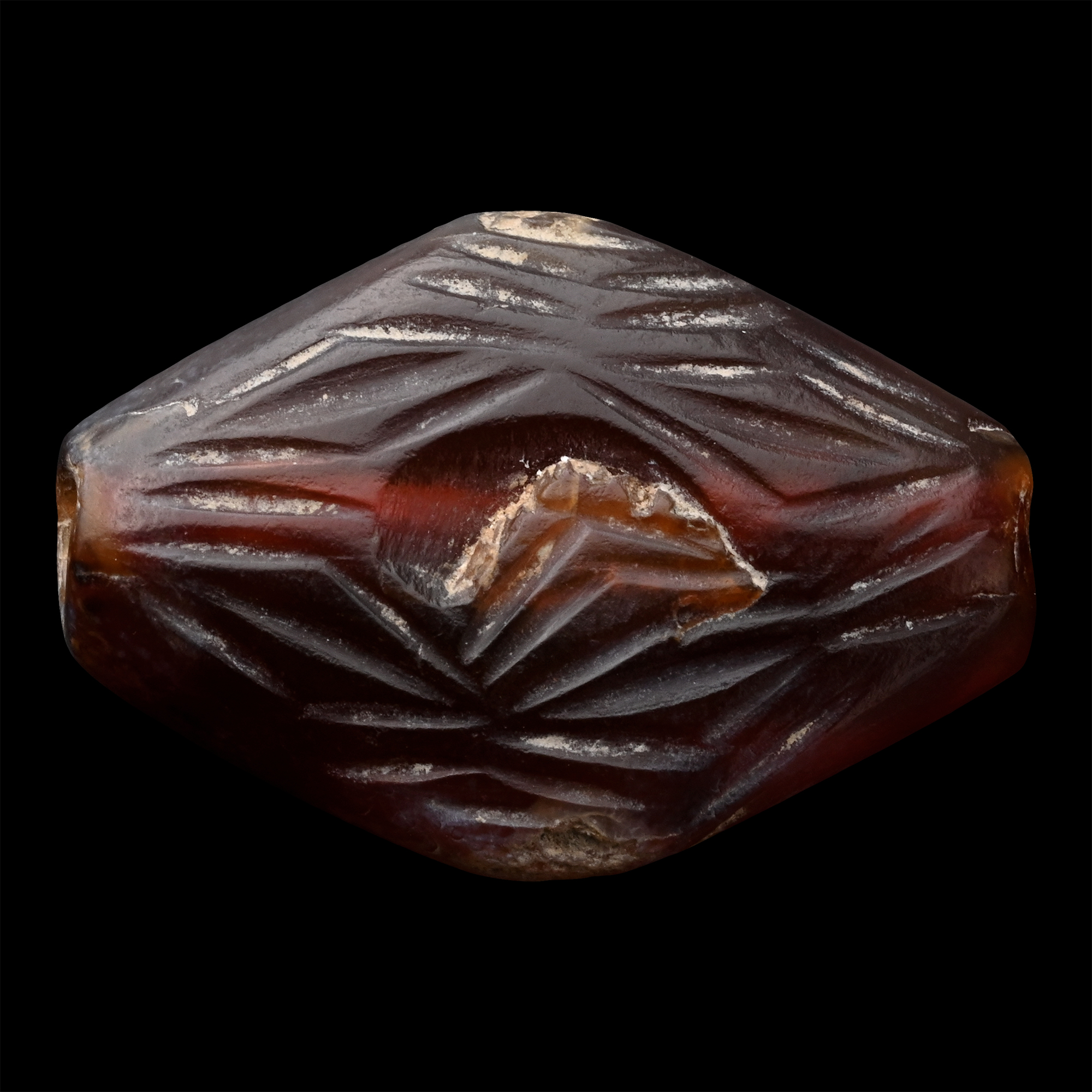
Western Asiatic Decorated Carnelian Bead
1ST MILLENNIUM B.C.
1 in. (5.49 grams, 27.39 mm).
Lozengiform in plan, with a dense, grooved geometric pattern. [No Reserve]
ProvenanceFrom the private collection of a European gentleman (1942-2024), formed since the 1970s.
CONDITIONTimeLine Auctions follows a vetting process to ensure the authenticity and legality of all items, reinforcing our commitment to integrity and responsible trading. Each antiquity, antique, and coin lot undergoes thorough examination by a vetting committee of at least ten external specialists, professional trade association members, scientists, and archaeologists: Our Vetting Process
AUCTIONS:
TimeLine is a leading auction house specialising in antiquities, ancient art, collectables, natural history, coins, medals, and books. Our auctions offer museums, collectors, historians, and enthusiasts the opportunity to acquire unique and historically significant pieces.
-
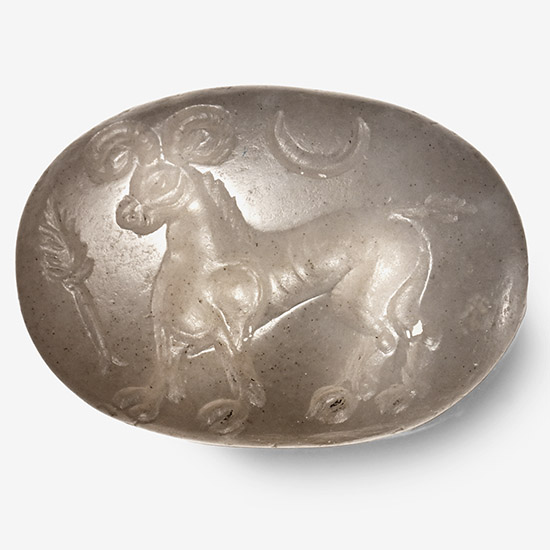
Neo-Babylonian Chalcedony Stamp Seal with Horned Ibex
6th-4th century B.C.Estimate: £400 - 600 (‡+bp*)
Opening Bid: £222
Tongue-shaped in profile with incuse image of an advancing ram beneath a crescent moon, arrow in the field. 4.40 grams, 18.46 mm
Acquired in the mid 1980s-1990s. Private collection, Switzerland, thence by descent. Private collection, since the late 1990s.
The ibex, a wild mountain goat with distinctive curved horns, was a popular and meaningful motif in ancient Near Eastern art. It often appears in Mesopotamian and Persian imagery, where it could symbolise strength, agility, and a connection to the natural and divine worlds. In some contexts, the ibex is linked with fertility and abundance, particularly through its association with flowing water and vegetation. Its elegant form also made it well suited to small-scale objects such as seals, where its image could serve both a decorative and symbolic purpose, reflecting the beliefs and environment of the cultures that produced them. -
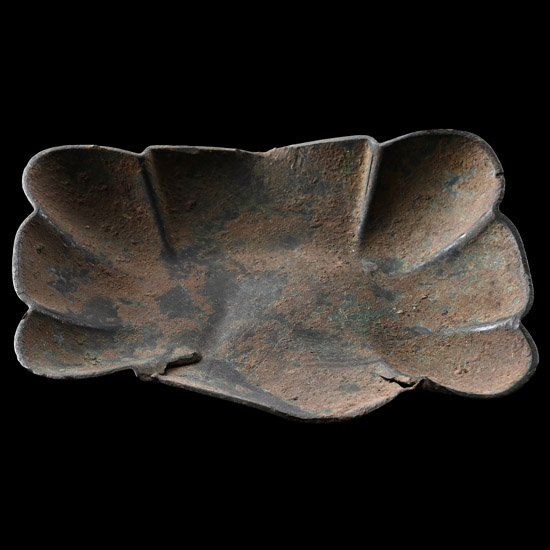
Sasanian Bronze Petalled Dish
3rd-7th century A.D.Sold for (Inc. bp): £20
Formed as a rectangle with each side formed into three lobes and slightly dished. 64 grams, 99.27 mm
From the private collection of a European gentleman (1942-2024), formed since the 1970s. -
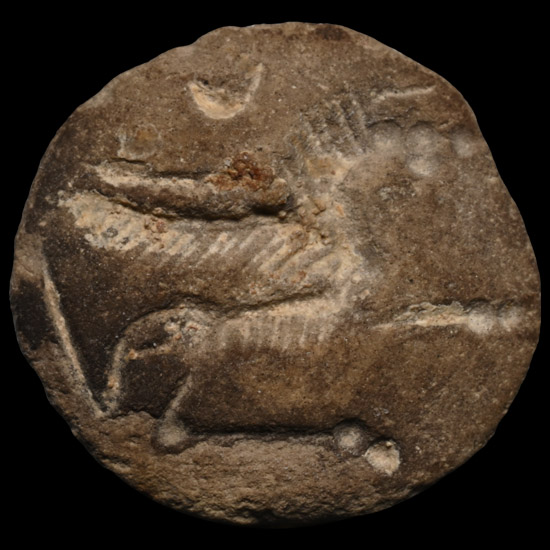
Western Asiatic Stone Stamp Seal with Engraved Design
1st millennium B.C.Estimate: £300 - 400 (+bp*)
Opening Bid: £150
Bell-shaped body with a ribbed suspension loop above, underside with a winged beast with a crescent above; supplied with a museum-quality impression. 6.77 grams, 24 mm
Acquired before 1983. Ex London gallery, 1990s. Private collection, London, UK.
