
Loading, please wait...
LOT 1022
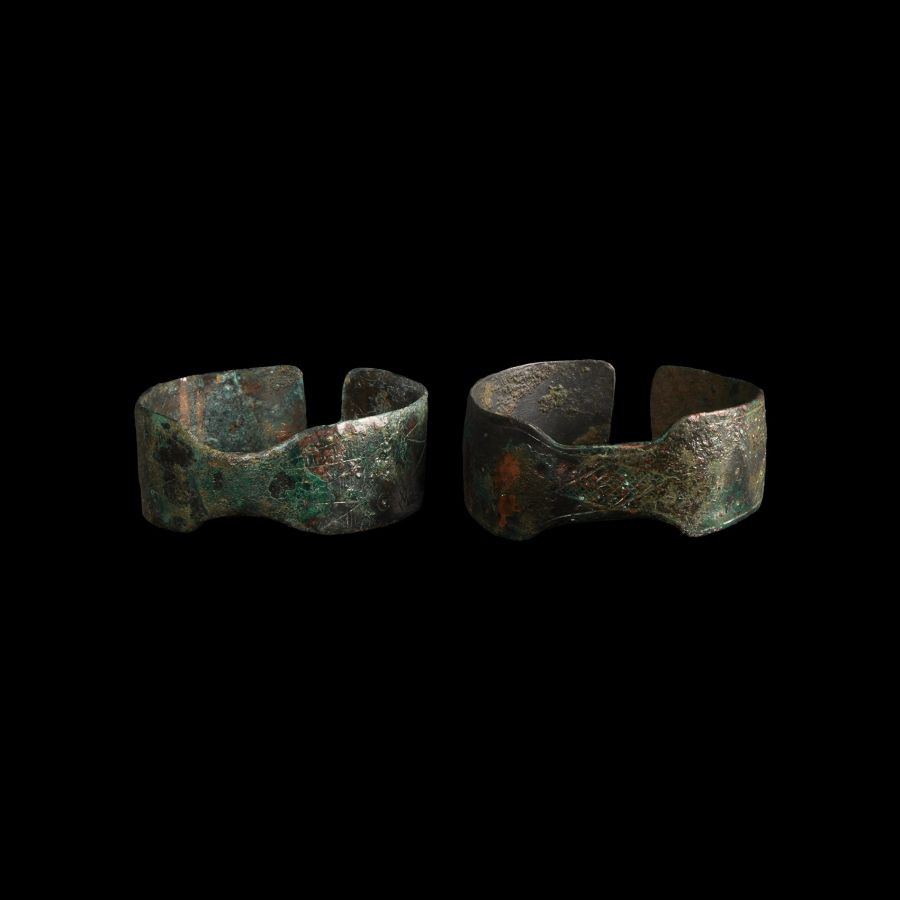
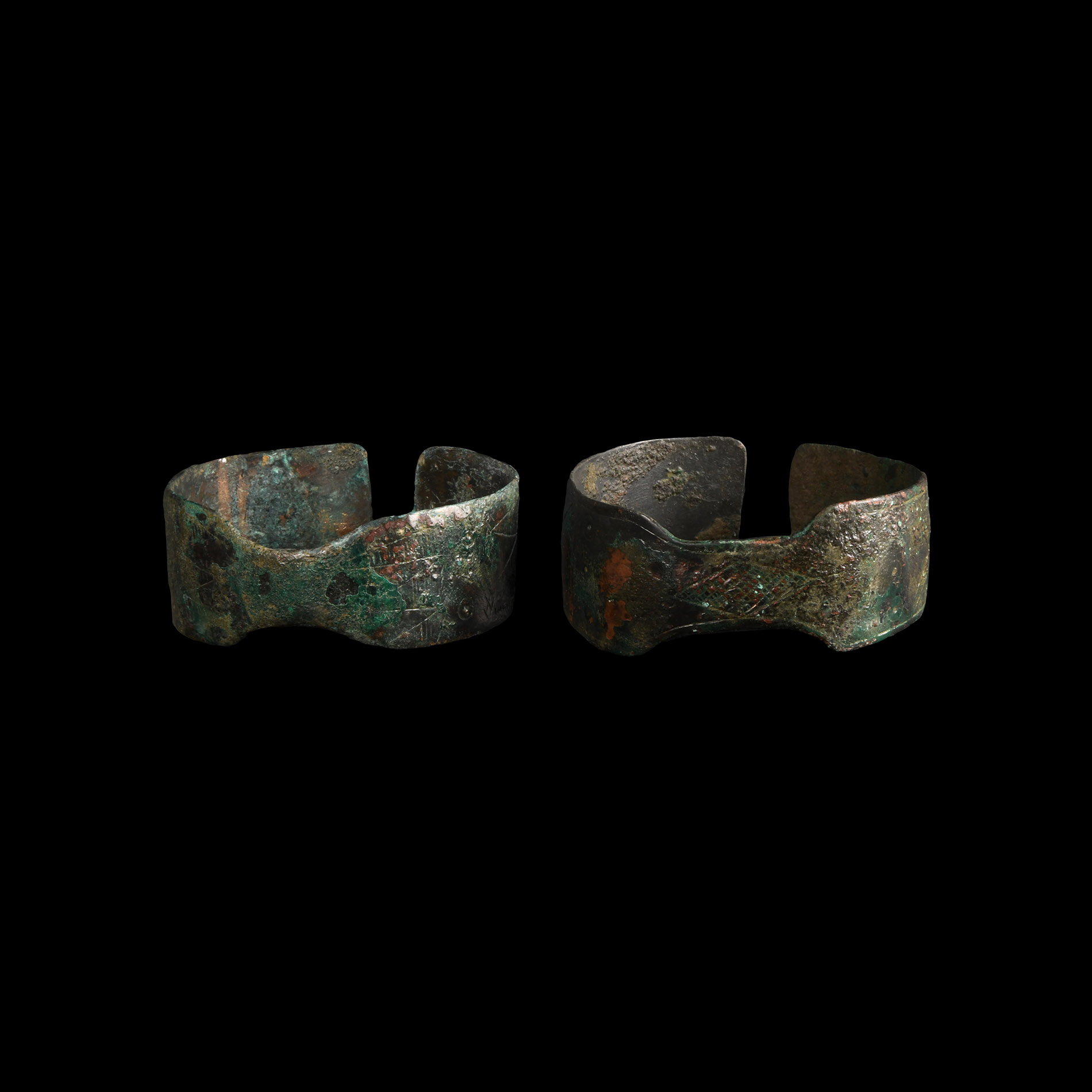
Western Asiatic Decorated Bracelet Pair
1ST MILLENNIUM B.C. OR LATER
2 3/8 - 2 1/2 in. (94 grams total. 59-62 mm).
A pair of penannular copper-alloy bracelets with waisted bezels: one decorated with an incised central lozenge with hatched fill, flanked by punched ring-and-dot, chevron, X and other geometric motifs; one with clusters of triangles, ring-and-dot motifs and zones of hatching. [2, No Reserve]
ProvenanceEarly 1990s London collection.
Acquired on the UK art market.
From a private collection, Lancashire, UK.
TimeLine Auctions follows a vetting process to ensure the authenticity and legality of all items, reinforcing our commitment to integrity and responsible trading. Each antiquity, antique, and coin lot undergoes thorough examination by a vetting committee of at least ten external specialists, professional trade association members, scientists, and archaeologists: Our Vetting Process
AUCTIONS:
TimeLine is a leading auction house specialising in antiquities, ancient art, collectables, natural history, coins, medals, and books. Our auctions offer museums, collectors, historians, and enthusiasts the opportunity to acquire unique and historically significant pieces.
-
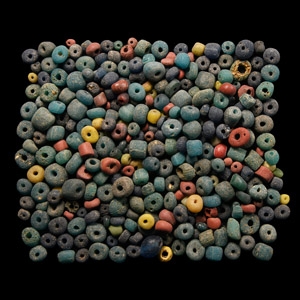
Western Asiatic Mixed Bead Group
Circa 1st millennium B.C.Sold for (Inc. bp): £117
A mixed group of mainly drawn opaque coloured glass beads. 122 grams total, 2-12 mm
Acquired 1970-2010. Collection of a late Japanese gentleman. -
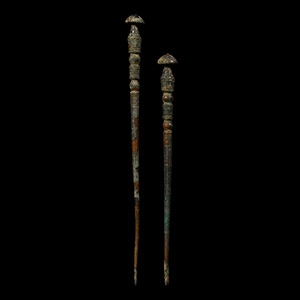
Luristan Decorated Pin Pair
13th-6th century B.C.Sold for (Inc. bp): £39
A pair of bronze pins composed of tapering round-section stems and balustered upper bodies and domed heads; one pin tip lost in antiquity. 54 grams total, 14.3-16.7 cm
UK private collection before 2000. UK art market. Property of a London gentleman. -
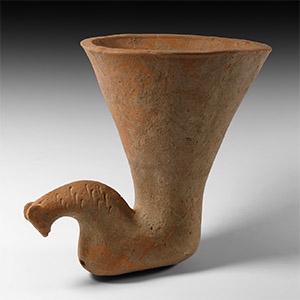
Western Asiatic Zoomorphic Terracotta Rhyton
3rd-1st millennium B.C.Estimate: £1,000 - 1,400 (+bp*)
Opening Bid: £400
A terracotta rhyton vessel with a flaring neck and zoomorphic spout, possibly a horse's head with circular spout in its chest. 668 grams, 18 cm high
with a London, UK gallery 1971-early 2000s. Accompanied by an original thermoluminescence analysis report no.281z11 from Oxford Authentication, 16 June 1981.
