
Loading, please wait...
LOT 0881
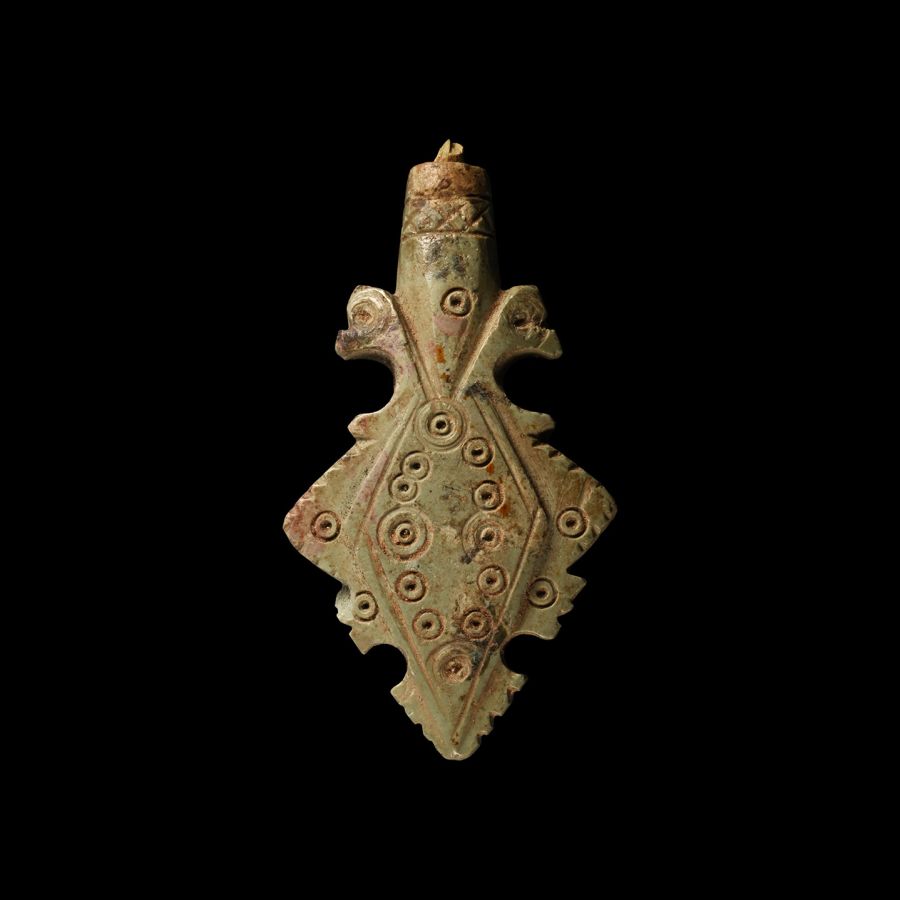
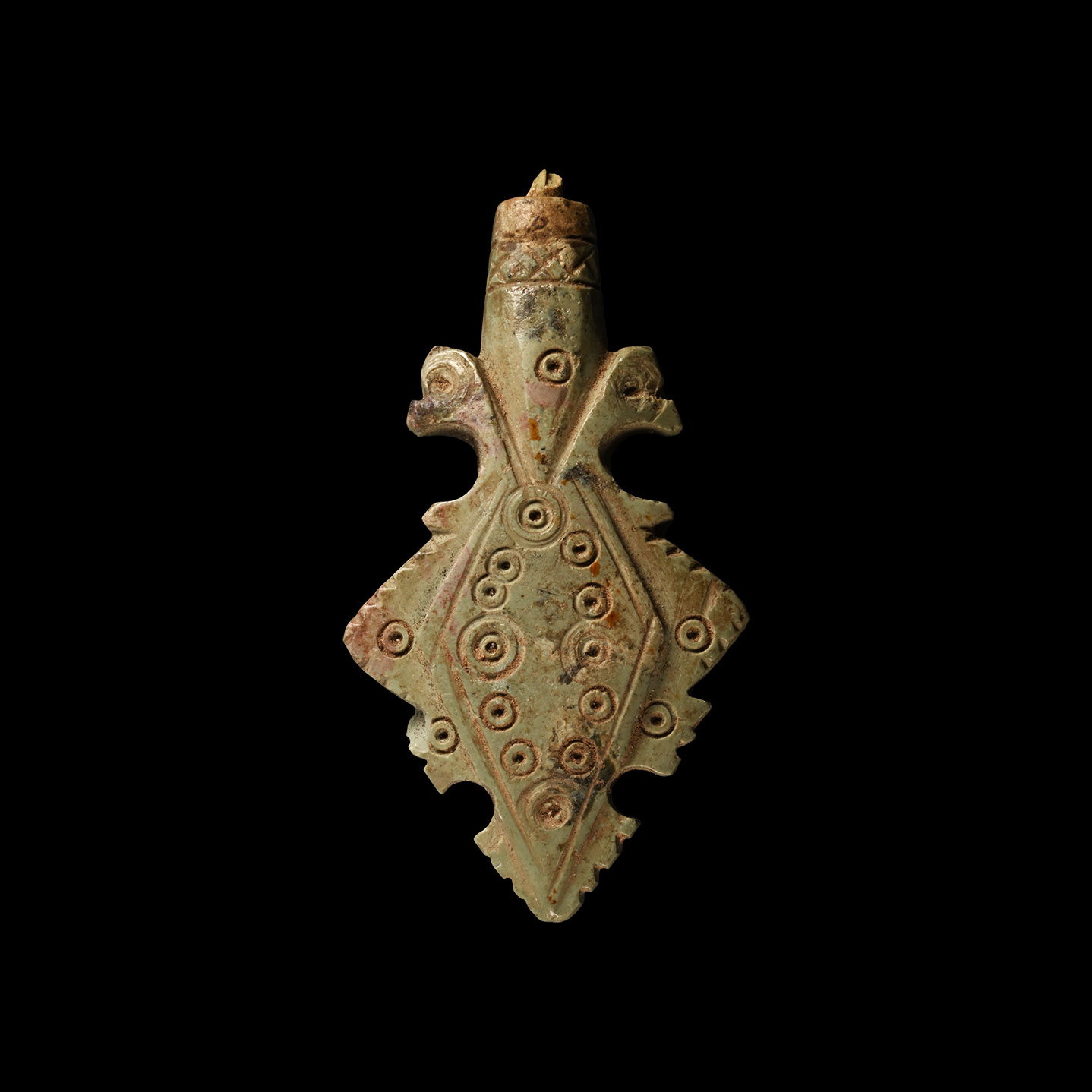
Western Asiatic Decorated Bone Handle
CIRCA MID 1ST MILLENNIUM A.D.
2 3/8 in. (13.7 grams, 61 mm).
A carved bone finial for a knife or other utensil, a lozengiform head with shaped flourishes to three sides, neck of oval cross-section, bifacial geometric decoration composed of ring-and-dot motifs and hatching; green colouration. [No Reserve]
ProvenanceAcquired 1990s.
Ex French collection.
TimeLine Auctions follows a vetting process to ensure the authenticity and legality of all items, reinforcing our commitment to integrity and responsible trading. Each antiquity, antique, and coin lot undergoes thorough examination by a vetting committee of at least ten external specialists, professional trade association members, scientists, and archaeologists: Our Vetting Process
AUCTIONS:
TimeLine is a leading auction house specialising in antiquities, ancient art, collectables, natural history, coins, medals, and books. Our auctions offer museums, collectors, historians, and enthusiasts the opportunity to acquire unique and historically significant pieces.
-
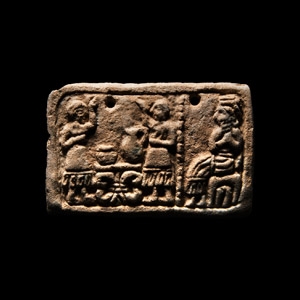
Sumerian Figural Plaque
3rd millennium B.C.Sold for (Inc. bp): £1,143
A rectangular faience plaque bearing figural scene composed of two figures beside a table, a seated figure behind them; pierced twice along one edge. 43.5 grams, 82 mm wide
Fine condition.
Acquired 1970-1999. London collection of the late Mr S.M., thence by descent. -
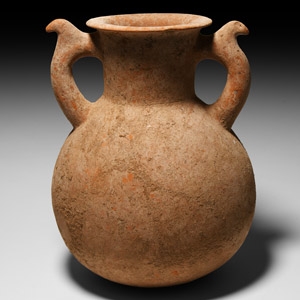
Amlash Terracotta Amphora
2nd-1st millennium B.C.Sold for (Inc. bp): £229
A finely modelled red terracotta amphora featuring a globular body rising from a flat base, a short neck, and a wide, flaring rim; two applied handles extending from the shoulder to the rim with bird-head detailing. 1 kg, 22 cm high
Fine condition.
Acquired 1970s-1990s. Ex Pars Gallery, Mayfair, London, UK. From a specialist collection of pottery. -
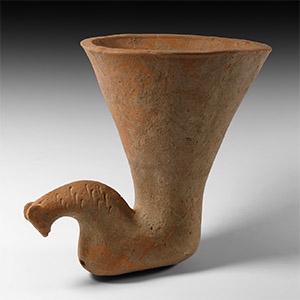
Western Asiatic Zoomorphic Terracotta Rhyton
3rd-1st millennium B.C.Estimate: £1,000 - 1,400 (+bp*)
Opening Bid: £400
A terracotta rhyton vessel with a flaring neck and zoomorphic spout, possibly a horse's head with circular spout in its chest. 668 grams, 18 cm high
with a London, UK gallery 1971-early 2000s. Accompanied by an original thermoluminescence analysis report no.281z11 from Oxford Authentication, 16 June 1981.
