
Loading, please wait...
LOT 0183
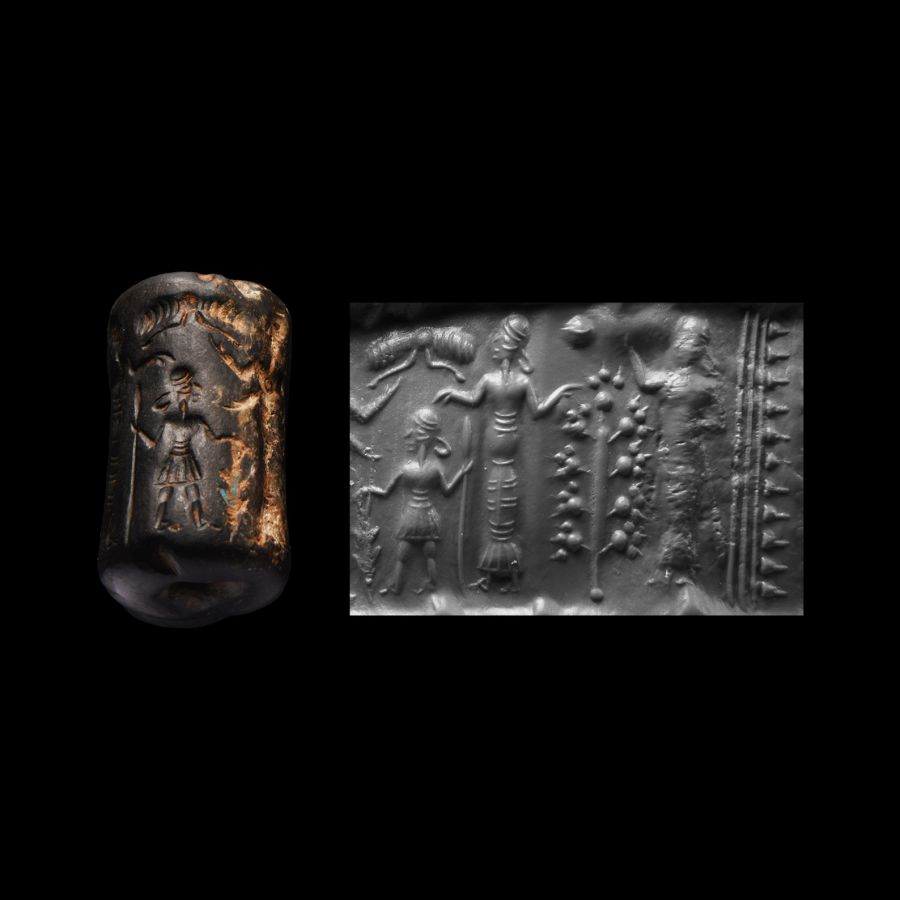
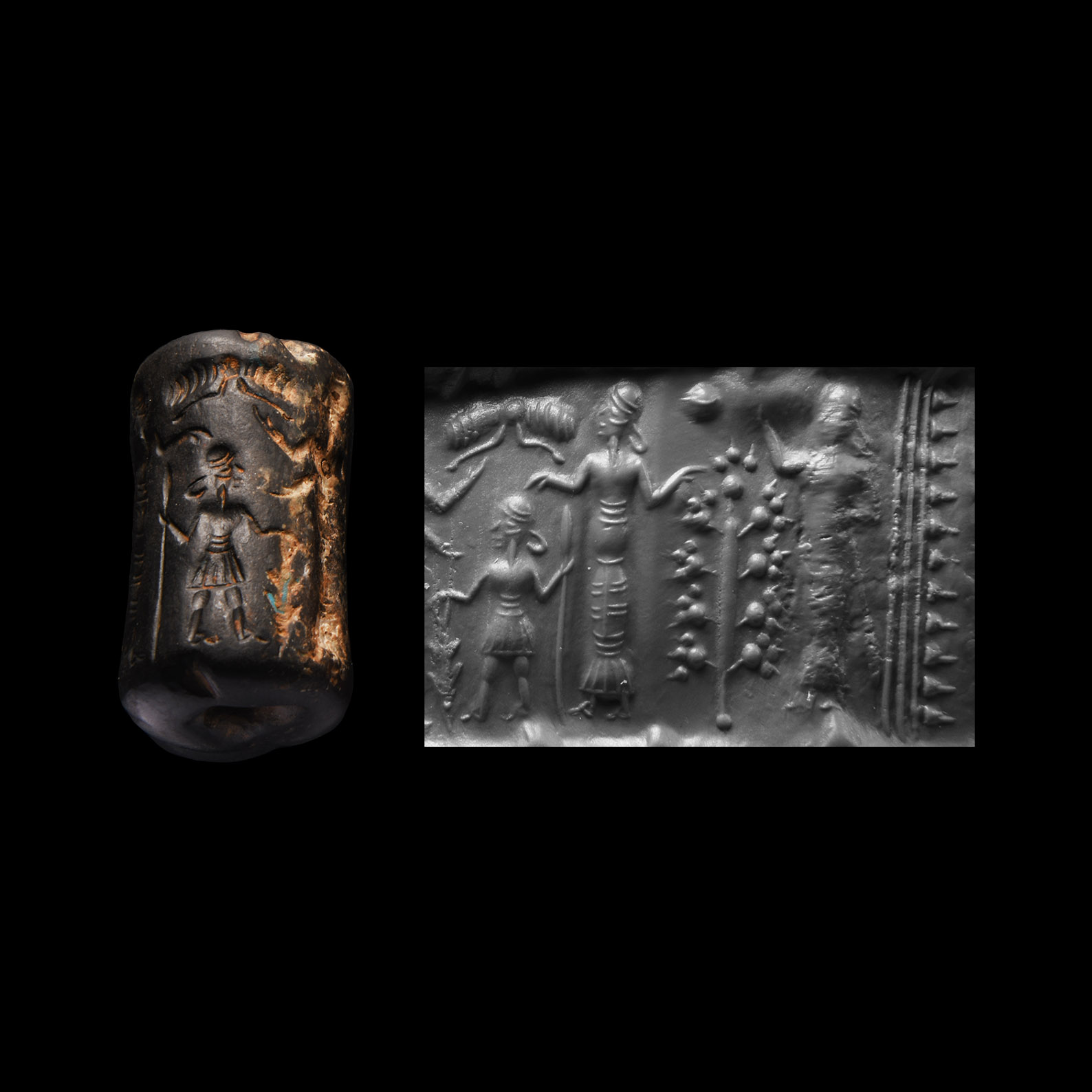
Western Asiatic Cylinder Seal with Figural Scene
1ST MILLENNIUM B.C.
1 1/2 in. (33.8 grams, 39 mm).
A cylinder seal of black stone with rounded edges, incuse frieze depicting a standing female in slim dress, a tree with radiating fruit and leaves, second similar female extending an arm over a small figure with a spear, winged sun-disc (faravahar) above.
ProvenanceFrom an important family collection.
Examined by Professor Wilfrid George Lambert FBA (1926-2011), historian, archaeologist, and specialist in Assyriology and Near Eastern archaeology, in the late 1980s and early 1990s.
TimeLine Auctions follows a vetting process to ensure the authenticity and legality of all items, reinforcing our commitment to integrity and responsible trading. Each antiquity, antique, and coin lot undergoes thorough examination by a vetting committee of at least ten external specialists, professional trade association members, scientists, and archaeologists: Our Vetting Process
AUCTIONS:
TimeLine is a leading auction house specialising in antiquities, ancient art, collectables, natural history, coins, medals, and books. Our auctions offer museums, collectors, historians, and enthusiasts the opportunity to acquire unique and historically significant pieces.
LOT 0183
Western Asiatic Cylinder Seal with Figural Scene
Estimate £800 - 1,000€930 - 1,160 (for guidance only)$1,080 - 1,350 (for guidance only)
-
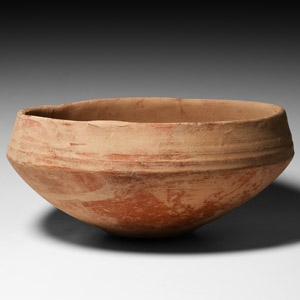
Western Asiatic Bowl with Fluted Rim
2nd-1st millennium B.C.Sold for (Inc. bp): £46
A carinated ceramic bowl with inverted neck and rim, remains of a foot underneath. 895 grams, 23 cm wide
Acquired 1990s. English private collection. Property of an Essex gentleman. -
.jpg)
Bactrian Manuscript of an Order to Meyam's Servant
5th-8th century A.D.Sold for (Inc. bp): £468
A possibly complete document written on leather, recto with four lines of Avestan cursive script; verso blank; wide bottom margin with diamond-shaped hole to accept seal string; likely an order rather than a letter due to lack of formal address. 1.16 grams, 77 mm
Fair condition.
David Lindahl, Sweden, 2001. Collection of Bruce Ferrini, USA Central London gallery. Property of a UK collector. For UK buyers only. -
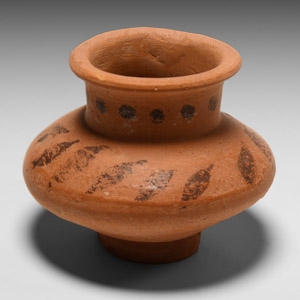
Nabataean cosmetic Jar
1st century B.C.-1st century A.D.Estimate: £150 - 200 (+bp*)
Opening Bid: £83
A miniature ceramic jar with a squat body, broad neck with everted rim and plinth foot, painted band of dots around the neck and stylised leaf motif around the shoulder. 36 grams, 56 mm wide
Fine condition.
From an important collection of Holy Land pottery formed pre 1988, thence by descent.
