
Loading, please wait...
LOT 0931
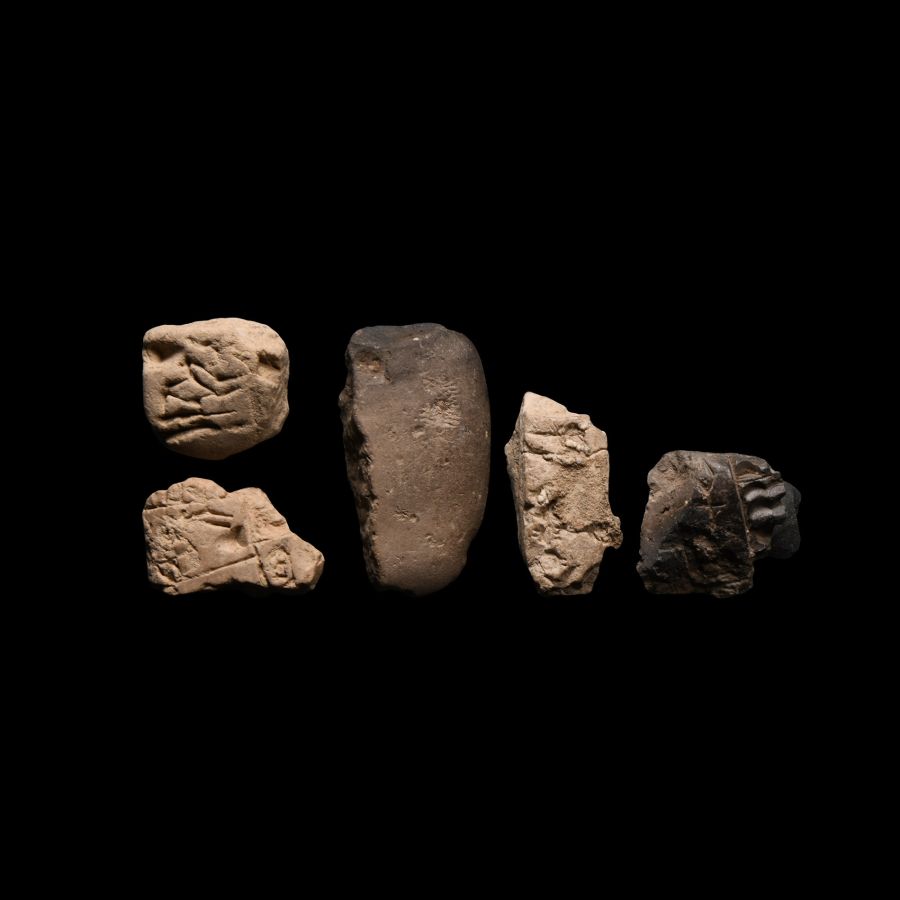
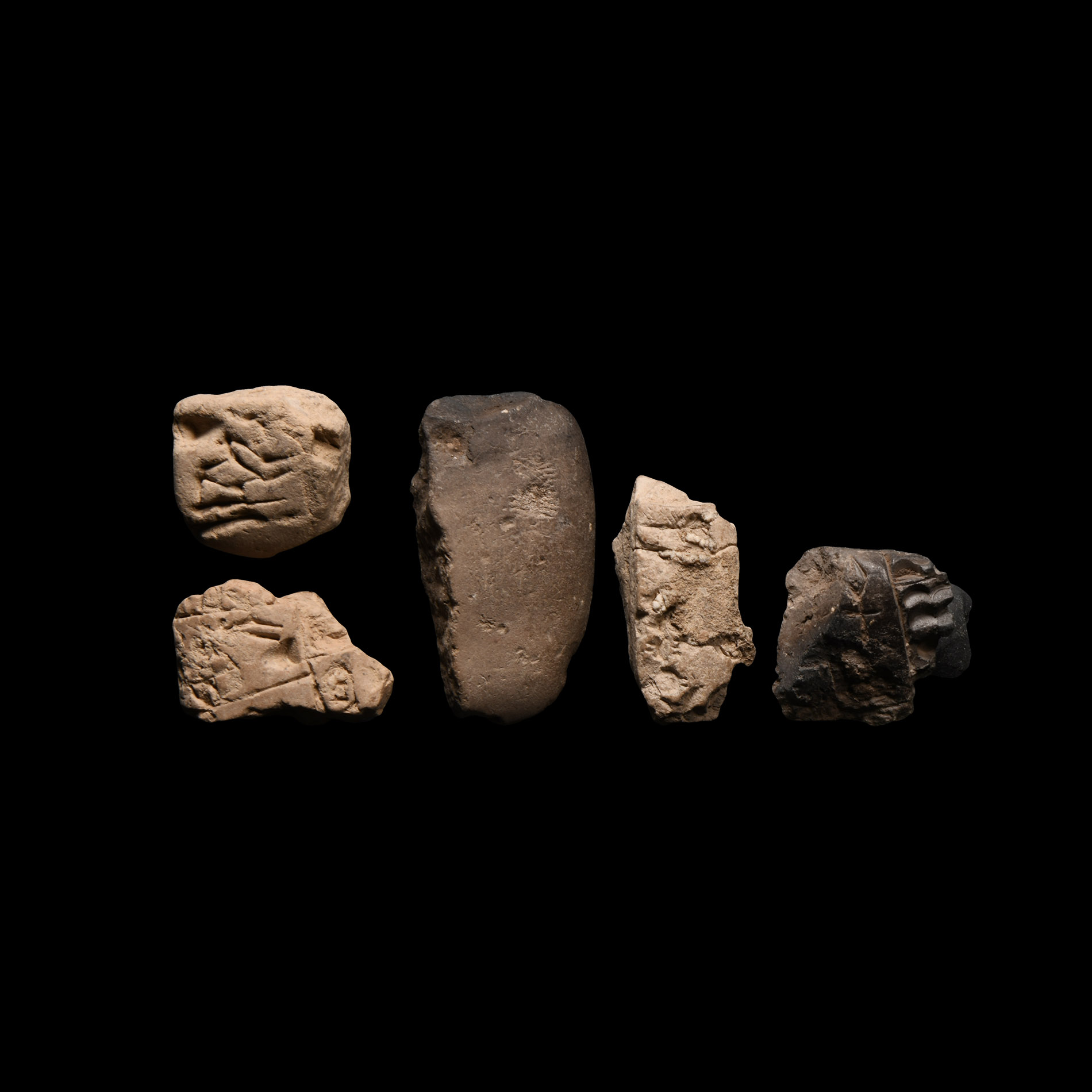
Western Asiatic Cuneiform Tablet Fragment Group
2ND MILLENNIUM B.C.
1 - 1 7/8 in. (59 grams total, 24-47 mm).
A mixed group of five ceramic tablet fragments, four bearing cuneiform text and/or pictograms to at least one face. [5, No Reserve]
ProvenanceSpecialised collection of cuneiform texts, the property of a London gentleman and housed in London before 1992.
Thence by descent to family members.
Examined by Professor Wilfrid George Lambert FBA (1926-2011), historian, archaeologist, and specialist in Assyriology and Near Eastern archaeology, in the late 1980s and early 1990s.
This small collection is exceptional for the variety of types, including some very rare and well preserved examples.
TimeLine Auctions follows a vetting process to ensure the authenticity and legality of all items, reinforcing our commitment to integrity and responsible trading. Each antiquity, antique, and coin lot undergoes thorough examination by a vetting committee of at least ten external specialists, professional trade association members, scientists, and archaeologists: Our Vetting Process
AUCTIONS:
TimeLine is a leading auction house specialising in antiquities, ancient art, collectables, natural history, coins, medals, and books. Our auctions offer museums, collectors, historians, and enthusiasts the opportunity to acquire unique and historically significant pieces.
-
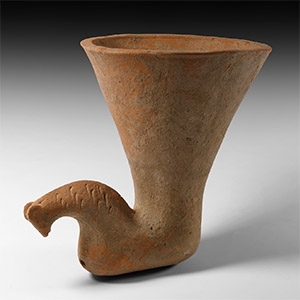
Western Asiatic Zoomorphic Terracotta Rhyton
3rd-1st millennium B.C.Estimate: £1,000 - 1,400 (+bp*)
Opening Bid: £400
A terracotta rhyton vessel with a flaring neck and zoomorphic spout, possibly a horse's head with circular spout in its chest. 668 grams, 18 cm high
with a London, UK gallery 1971-early 2000s. Accompanied by an original thermoluminescence analysis report no.281z11 from Oxford Authentication, 16 June 1981. -
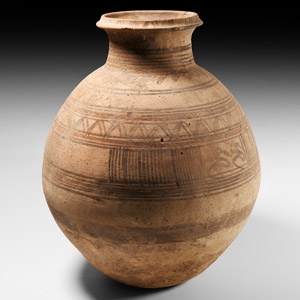
Western Asiatic Jar with Birds
3rd-2nd millennium B.C.Estimate: £350 - 450 (+bp*)
Opening Bid: £194
An ovoid ceramic jar with waisted neck and collared rim, decorated with polychrome geometric motifs including circumferential bands of chevrons, plain bands and hatching. 3.4 kg, 32.5 cm high
Fine condition.
Acquired 1970s-1990s. Ex Pars Gallery, Mayfair, London, UK. From a specialist collection of pottery. -

Bactrian Armband with Animal Terminals
2nd millennium B.C.Estimate: £5,000 - 7,000 (+bp*)
Opening Bid: £2,500
A copper-alloy penannular armband with shallow D-section hoop and terminals formed as stylised ram-heads each with exaggerated coiled horns, circular eyes set with cream-coloured beads and shallow semi-circular muzzles; transverse bands of geometric motifs along the neck. 620 grams, 10.4 cm wide
with a London, UK gallery 1971-early 2000s. This lot has been checked against the Interpol Database of stolen works of art and is accompanied by search certificate no.11643-199677.
The bracelet is a product of the Bactria-Margiana Archaeological Complex ('BMAC', also developed from the 'Oxus Civilization') which was the dominant culture in the 3rd and 2nd millennium (often dated to c. 2250–1700 B.C.) in that area, corresponding roughly to modern Tajikistan and Afghanistan. The members of the group practised animal husbandry and a limited form of agriculture, with wheeled carts from the 4th millennium B.C . Its craftsmen were proficient at working metals and alloys including bronze, copper, silver, and gold. Fortified sites with multiple walls are another notable development.
