
Loading, please wait...
LOT 1056
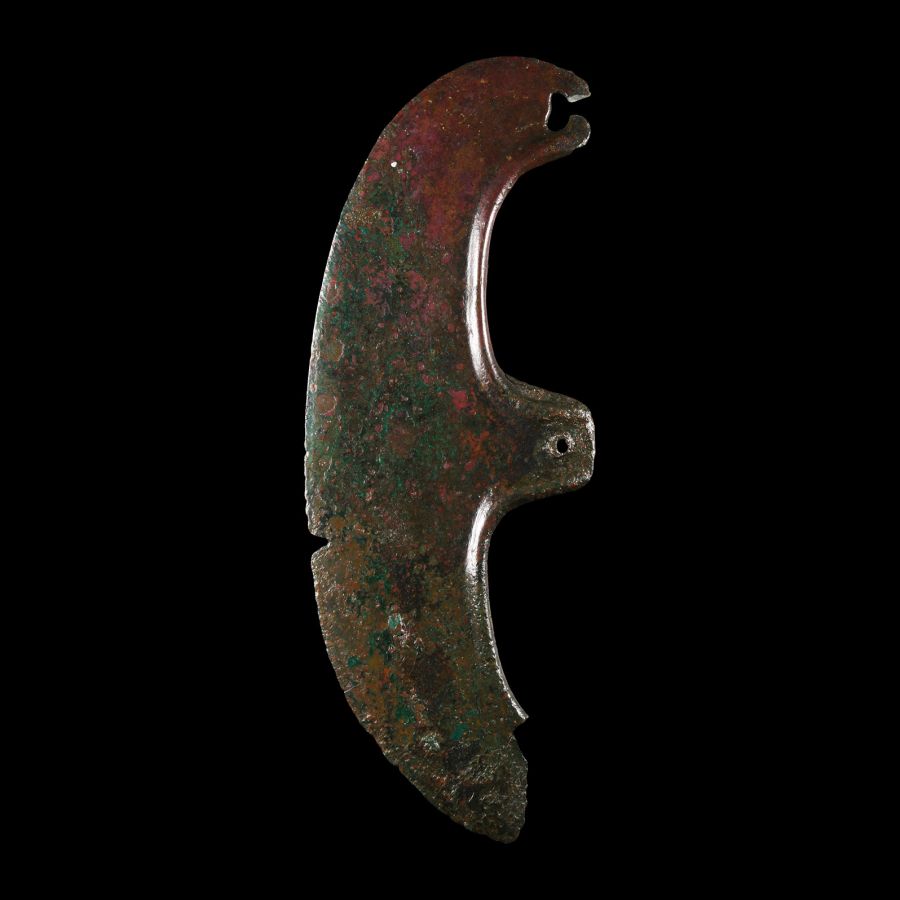
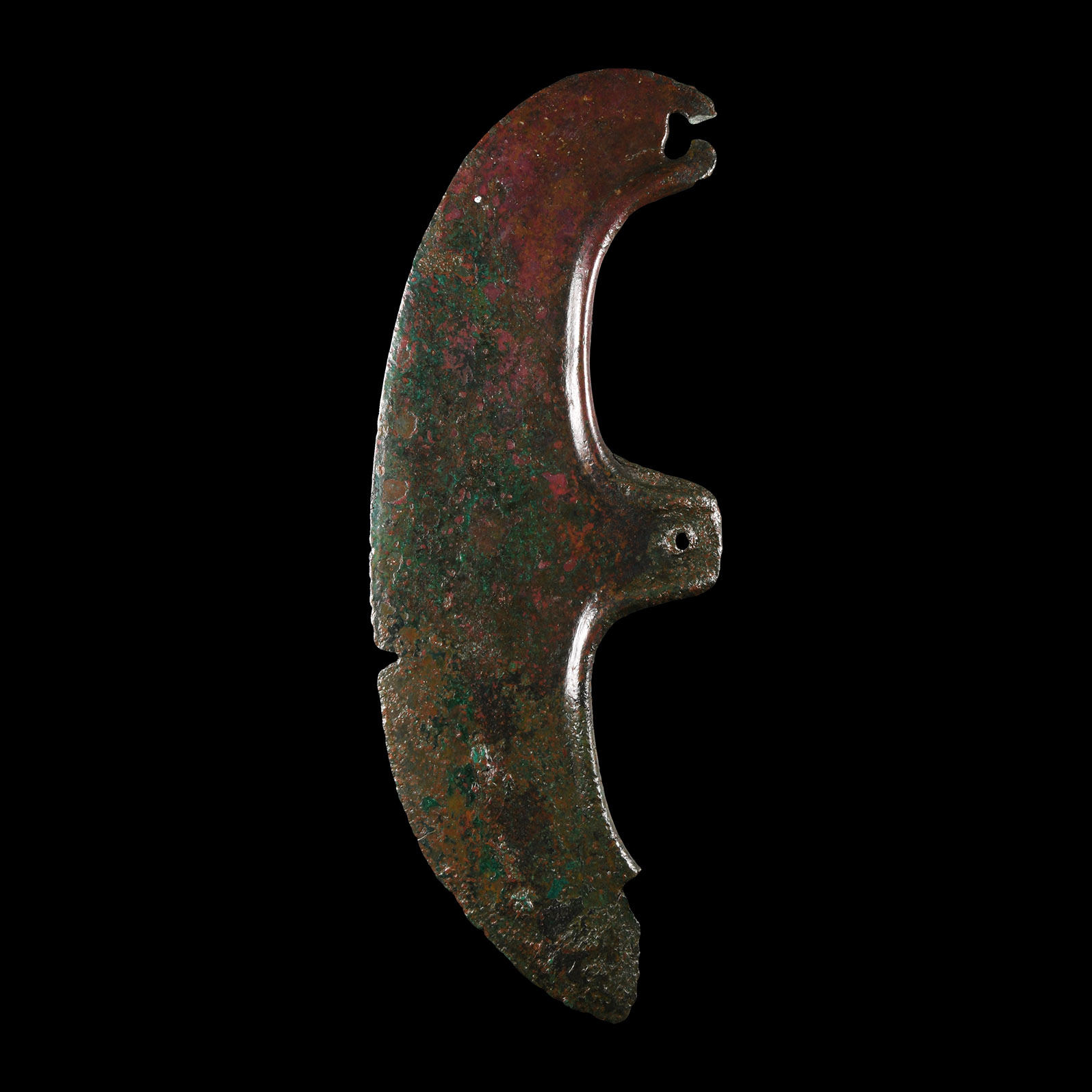
Western Asiatic Crescentic Axehead
1ST MILLENNIUM B.C.
7 1/2 in. (146 grams, 19 cm).
A copper-alloy crescentic axehead, both faces with raised border to the upper edge, central pierced arm for attachment to haft; ancient nick to blade; one terminal lost in antiquity.
ProvenanceAcquired 1980-2015.
Ex Abelita family collection.
TimeLine Auctions follows a vetting process to ensure the authenticity and legality of all items, reinforcing our commitment to integrity and responsible trading. Each antiquity, antique, and coin lot undergoes thorough examination by a vetting committee of at least ten external specialists, professional trade association members, scientists, and archaeologists: Our Vetting Process
AUCTIONS:
TimeLine is a leading auction house specialising in antiquities, ancient art, collectables, natural history, coins, medals, and books. Our auctions offer museums, collectors, historians, and enthusiasts the opportunity to acquire unique and historically significant pieces.
-
Viking Period Bearded Axehead
Circa 9th-11th century A.D.Sold for (Inc. bp): £169
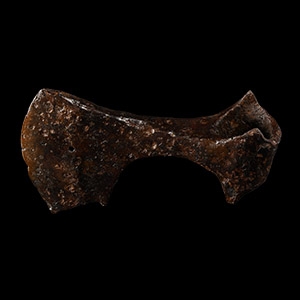
A hand-forged iron axehead with triangular-section narrow blade widening to a broad bevelled edge with square chin, socket with lateral flanges and rectangular panel to the rear. 422 grams, 15.2 cm
Acquired 1971-1972. From the collection of the vendor's father. Property of a London, UK, collector.
The axe appears to belong to the typology of Viking side axes of Wheeler type B (Wheeler III / Rygh 559). Usually these bearded axeheads (skeggöks) had a longer edge, designed to split tree trunks into planks and beams, or heads during the battle. Some of the bearded axes were known as halfÞynna öx, the neck on such 'half thin axe' was thinly forged, to make it lighter. -
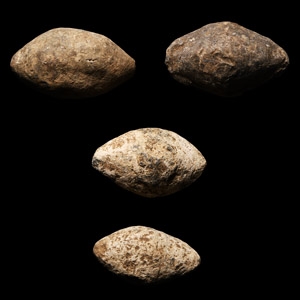
Roman Sling Shot Group
1st-4th century A.D.Sold for (Inc. bp): £72
A lentoid-section lead slingshot (glans) specimen group. 185 grams total, 29-34 mm
Found Roding, Essex, UK. Acquired on the UK antiques market between 1974-1985. Albert Ward collection, Essex, UK.
Similar shots were used in the civil war among Pompey and Caesar, and in all of Caesar's wars. The funditores of Caesa's age were part of the light infantry. Caesar speaks of his Balearic slingers during the conquest of Gaul. They wore a short tunic, with leather or rope sandals to the feet, and a warm overcoat which could also have been used to store projectiles. They also used a satchel to carry very deadly lead-like stones or bullets. -
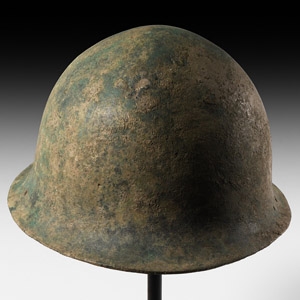
Villanovan Bronze Helmet
8th century B.C.Estimate: £20,000 - 30,000 (‡+bp*)
Opening Bid: £7,500
A bronze 'pot' helmet with rounded bowl and flared rim; three sets of paired piercings for attachment of leather cheek-flaps; cracked; accompanied by a custom-made display stand. 1.7 kg, 30.5 cm wide
Bowl pierced and cracked.
Acquired early 1990s. Ex private American collection; thence by descent. Private Swiss collection since 1998. Accompanied by an academic report by Dr Raffaele D'Amato. This lot has been checked against the Interpol Database of stolen works of art and is accompanied by searcher certificate no.11573-199009.
The ‘pot’ or ‘bell’ helmet, found as early as in an 8th century coffer grave (ad arca) from the Esquiline (Rome) and other graves (Coussin, 1926, p.88, fig.23; Sekunda, Northwood,1995, p.6, grave 94) was made from a single piece of bronze, while later Italic variants were fashioned from jointed plates (Connolly, 1981, p.102, figs.2-2a; Egg, 1988, p.223, variant Vetulonia). The skull was somewhat spherical and with a flared rim: this in some Etruscan and Italic specimens, was rivetted for strength (Egg, 1988, fig.18, p.240, from Picenum, and Murlo and Trestina variants, p.232, fig.10 and p.234, fig.12; Connolly, 2006, p.102, figs.2-2a, from Sesto Calende). The smooth surface of these types of helmets was intended to deflect blows. The ‘calotte’ helmets (Egg, 1988, pl.57) from Rome, as the helmet here, appear to be variants of a similar helmet from Montegiorgio Piceno and from Montelparo (ex Zschille collection). Some of them, like the helmet found in the necropolis of Tolentinum, were decorated with rich engravings. These practical helmets were probably furnished with a leather chinstrap, even though a similar Galea, found in the Tomba del Duce at Vetulonia, (Fossati, 1987, p.50; Egg, 1988, pp.223-224, fig.3, p.231, fig.12) dated to the first half of the 7th century B.C., still had the remains of what was probably a bronze cheek-piece.
