
Loading, please wait...
LOT 1246
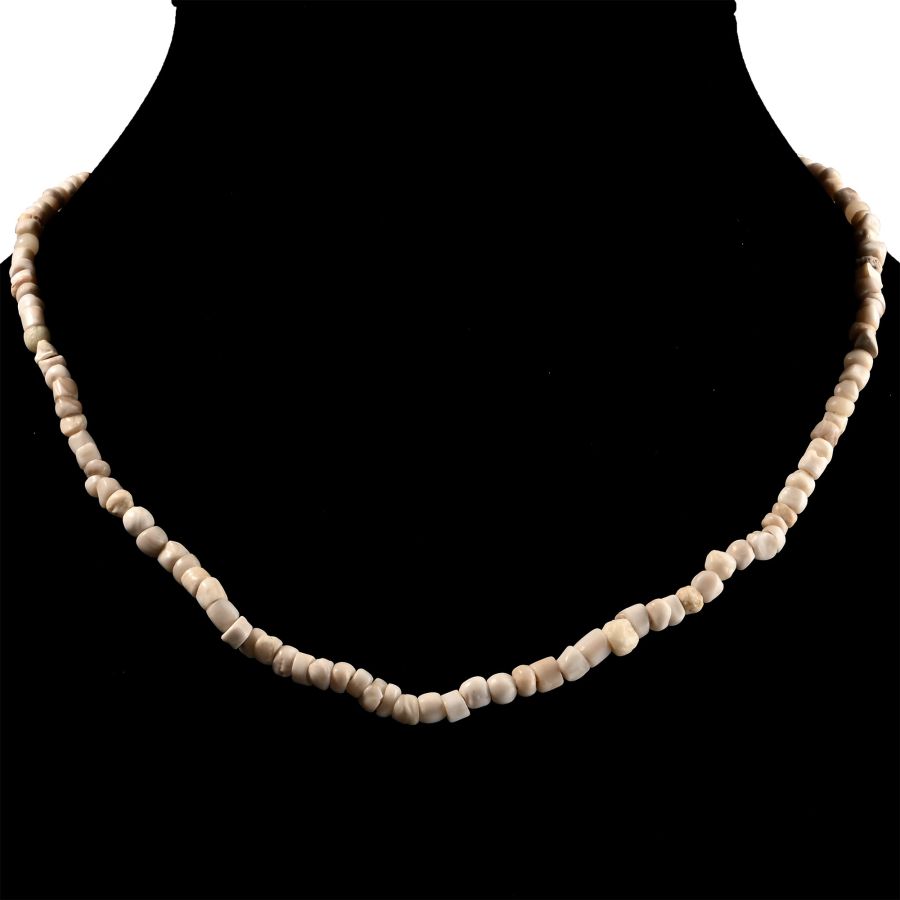
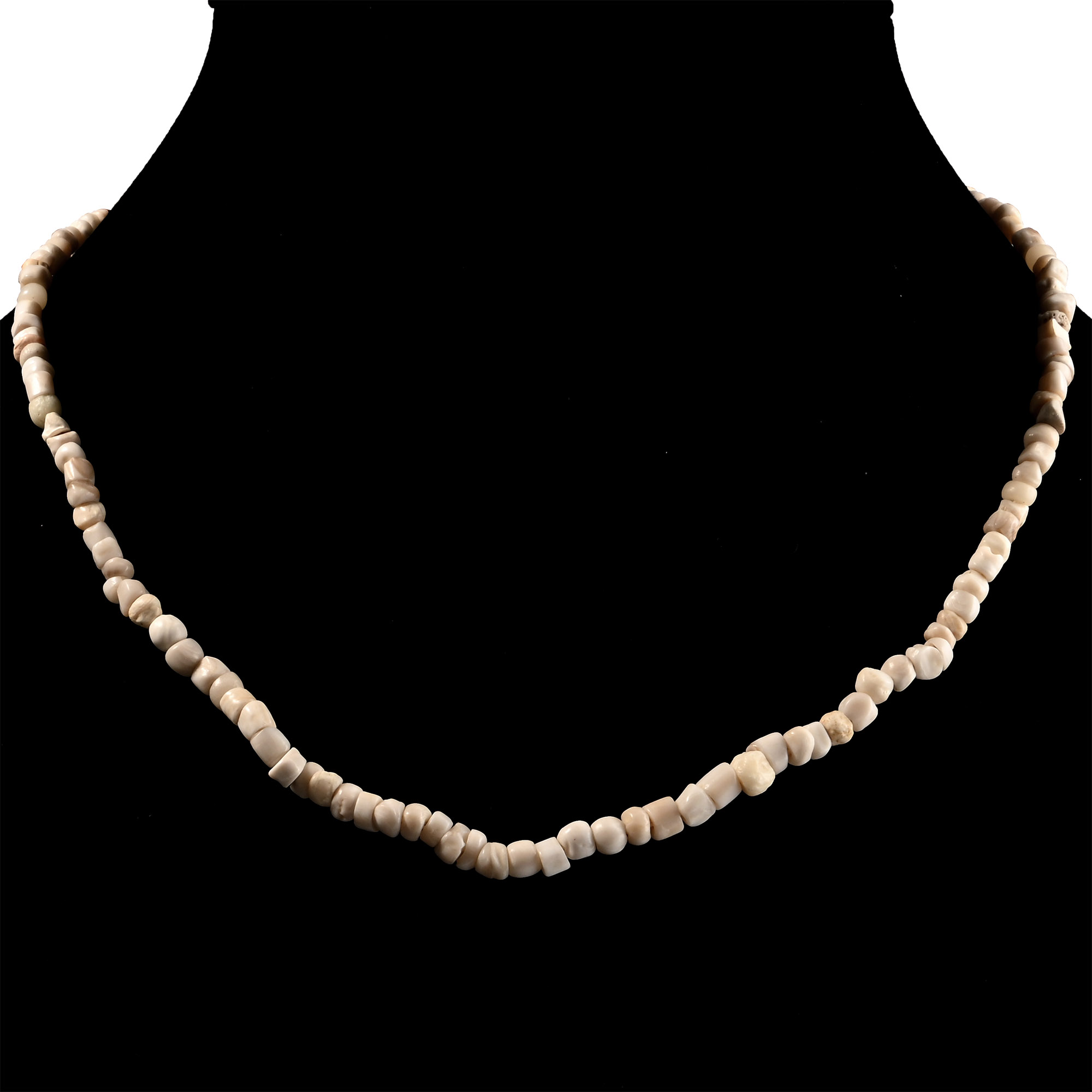
Western Asiatic Cream Stone Bead Necklace String
1ST MILLENNIUM B.C. AND LATER
15 in. (11.8 grams, 38 cm).
Composed mainly of oblate beads; restrung. [No Reserve]
ProvenanceAcquired in the 1990s.
Ex London, UK, collection.
TimeLine Auctions follows a vetting process to ensure the authenticity and legality of all items, reinforcing our commitment to integrity and responsible trading. Each antiquity, antique, and coin lot undergoes thorough examination by a vetting committee of at least ten external specialists, professional trade association members, scientists, and archaeologists: Our Vetting Process
AUCTIONS:
TimeLine is a leading auction house specialising in antiquities, ancient art, collectables, natural history, coins, medals, and books. Our auctions offer museums, collectors, historians, and enthusiasts the opportunity to acquire unique and historically significant pieces.
-
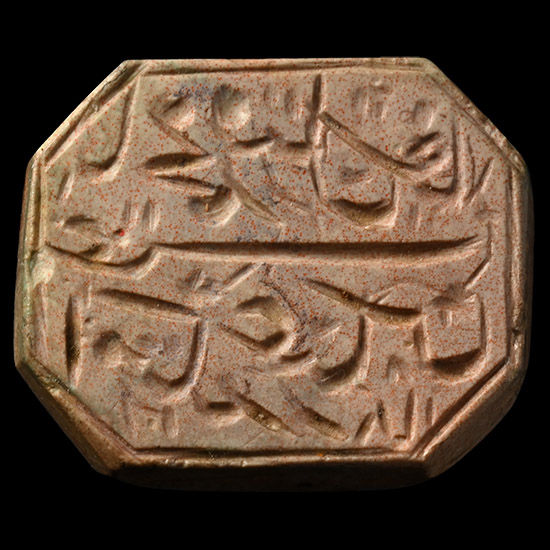
Western Asiatic Agate Bifacial Named Calligraphic Gemstone
Circa 15th century A.D.Sold for (Inc. bp): £598
Octagonal tabular bifacial panel with incised borders; dense nastaliq script to each face; with old collector's note with transliteration and translation 'Constant hearing with the blessing of the name Muhammed / Sakander Abbas'. 1.63 grams, 17 mm
From the private collection of a European gentleman (1942-2024), formed since the 1970s.
The Nastaʿlīq was one of the most important and widespread calligraphic styles used to write Persian. It was developed in Iran in the 8th and 9th centuries. It was also occasionally used to write the original Arabic language, known as taʿliq, for the titles and headings of books or printed publications, but its use was predominant in Persian, Ottoman Turkish, Urdu, and other languages of Perso-Indian influence. Nastaʿlīq is still widespread in Iran, Pakistan, and Afghanistan for written poetry and as a form of artistic expression (arabesque). -
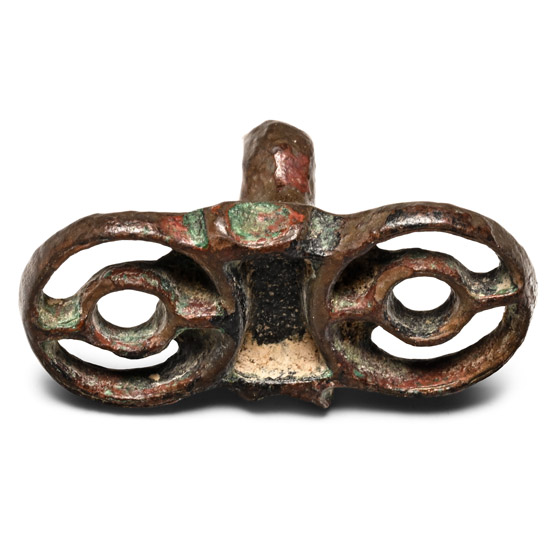
West Central Asian Bronze Seal Matrix with 'Eyes'
Circa 2000-1500 B.C.Sold for (Inc. bp): £26
Openwork seal with a tall handle, accompanied by an old scholarly note, typed and signed by W.G. Lambert, late Professor of Assyriology, University of Birmingham, 1970-1993, which states: 'Stamp Seal of Bronze, 26 x 26 x 17 mm. This has a round flat engraved face, and the back rises steeply to the pierced loop handle. The design appears as abstract, that is it does nor depict anything from nature.This comes from west central Asia and dates to c. 2000-1500 B.C. It is in very good condition.' 12.8 grams, 36 mm
Acquired in the late 1980s-early 1990s. Ex property of a West London businessman. Academically researched and catalogued by the late Professor Lambert in the early 1990s. Accompanied by a copy of a scholarly report, numbered D-5, typed and signed by Professor Wilfrid George Lambert. -
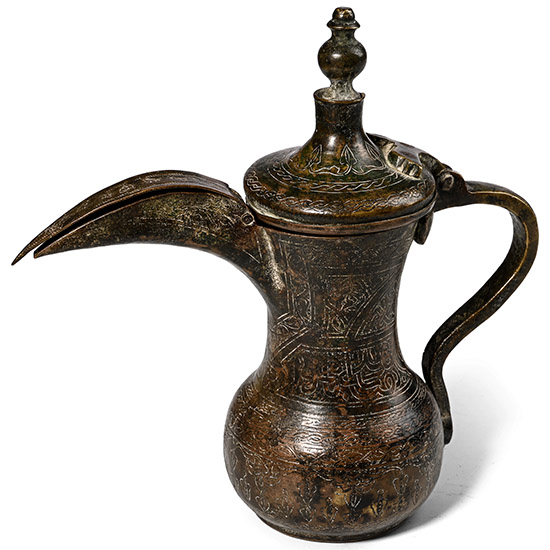
Syrian or Turkish Copper Ewer with Calligraphic Inscription
17th-18th century A.D.Sold for (Inc. bp): £338
Comprising a bulbous body with basal ring, tubular body with flared upper end, deeply curved spout with hinged cover, strap handle attached at the shoulder, hinged lid with knop handle; stamped and incised bands of guilloche, ropework, tendrils and other motifs. 621 grams, 21 cm
with Roseberys, 22 October 2020, no.204. Private collection, London, UK.
