
Loading, please wait...


LOT 1197
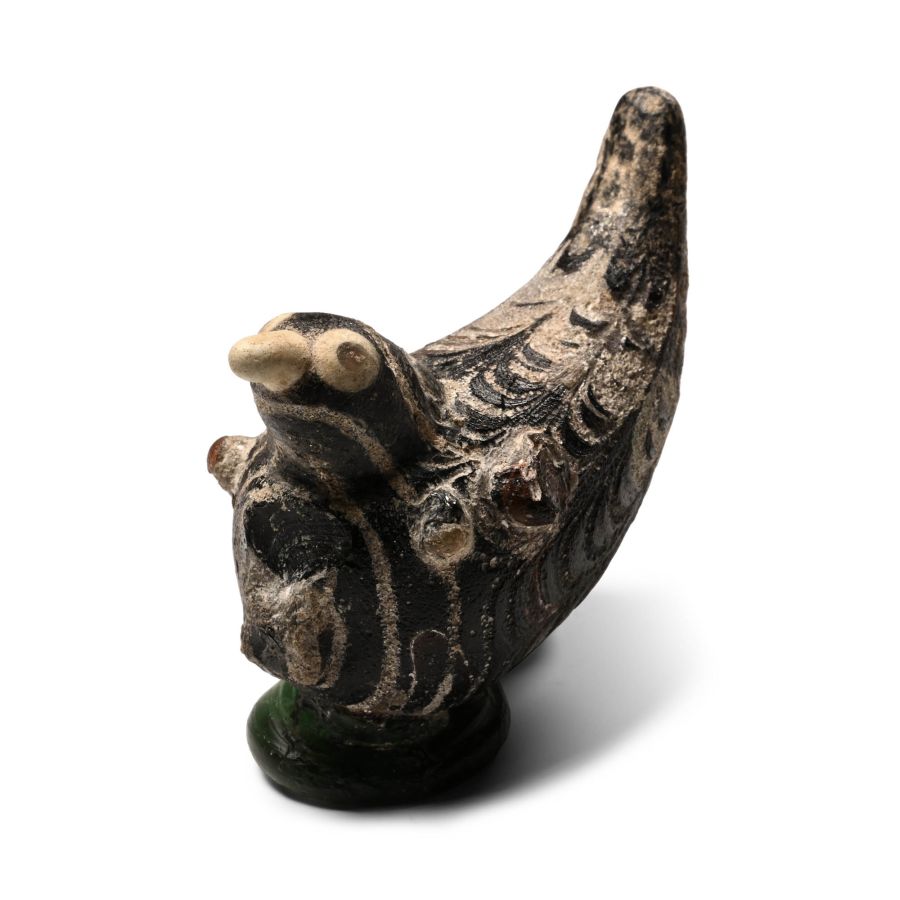
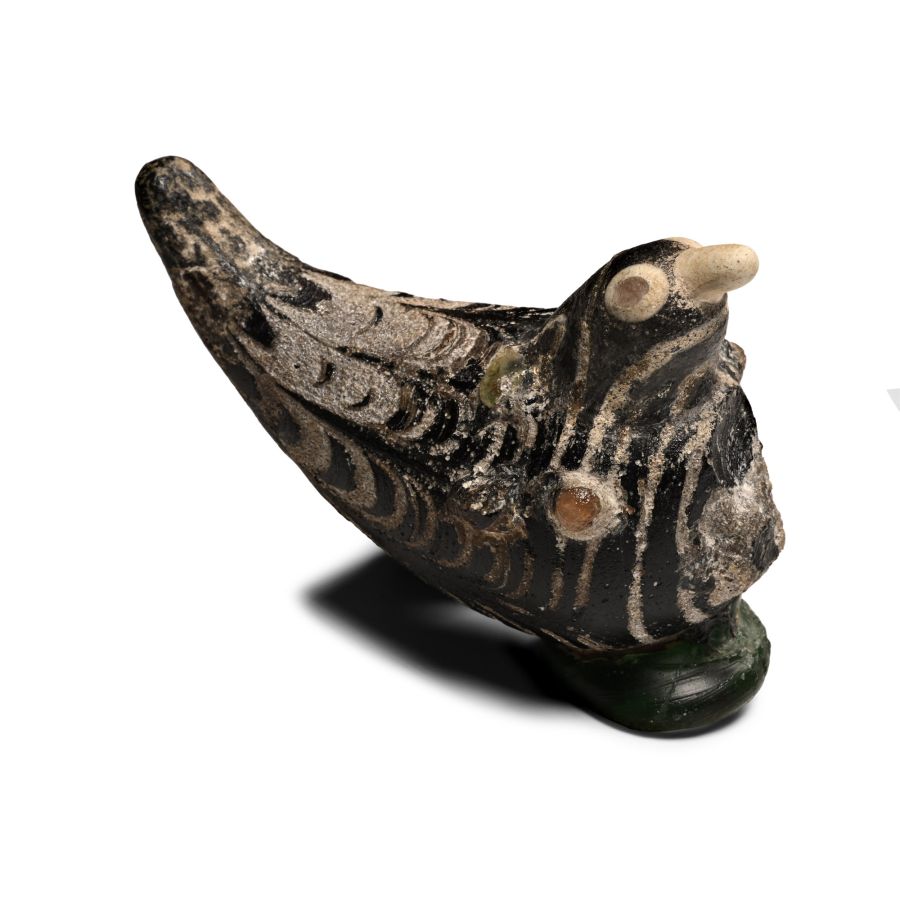
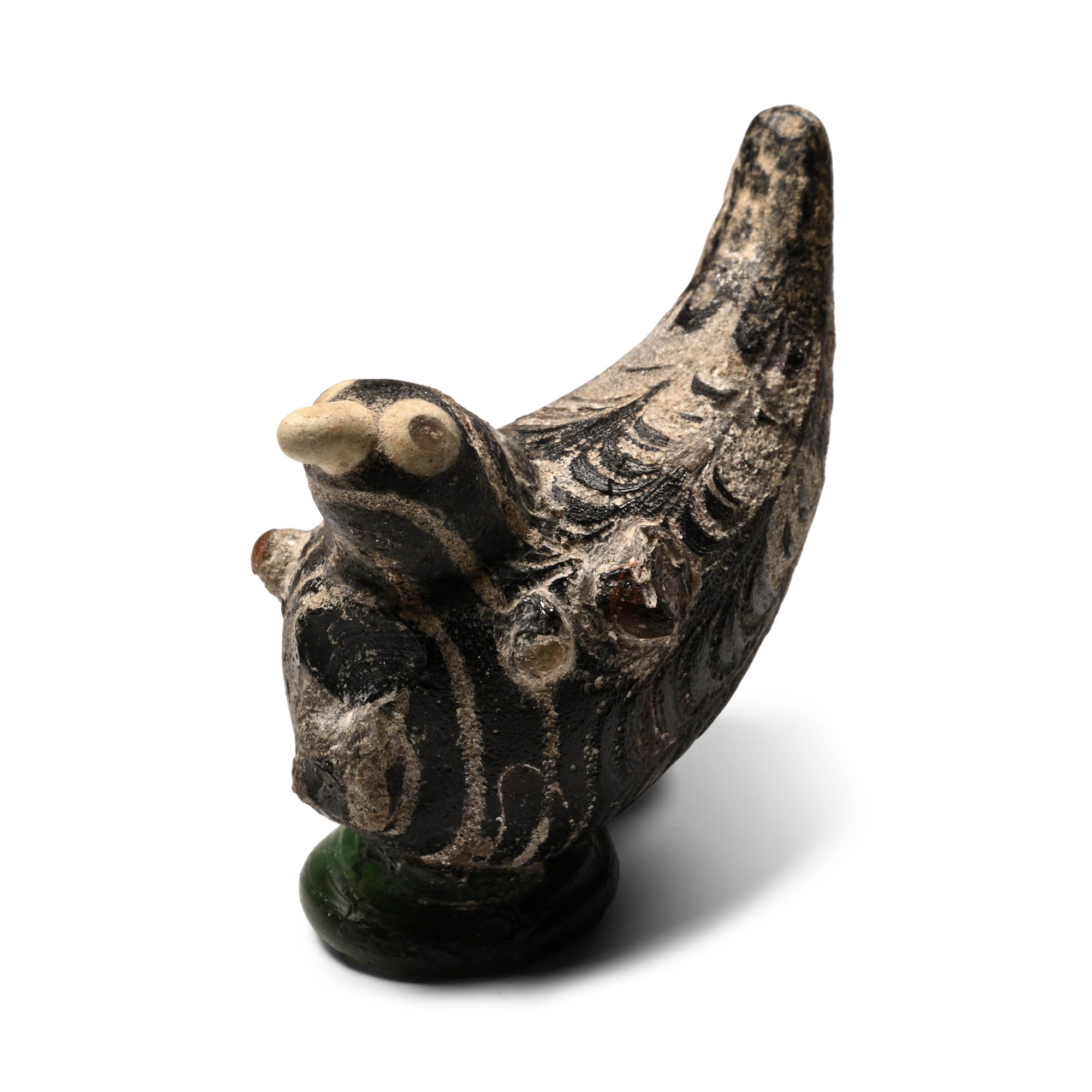
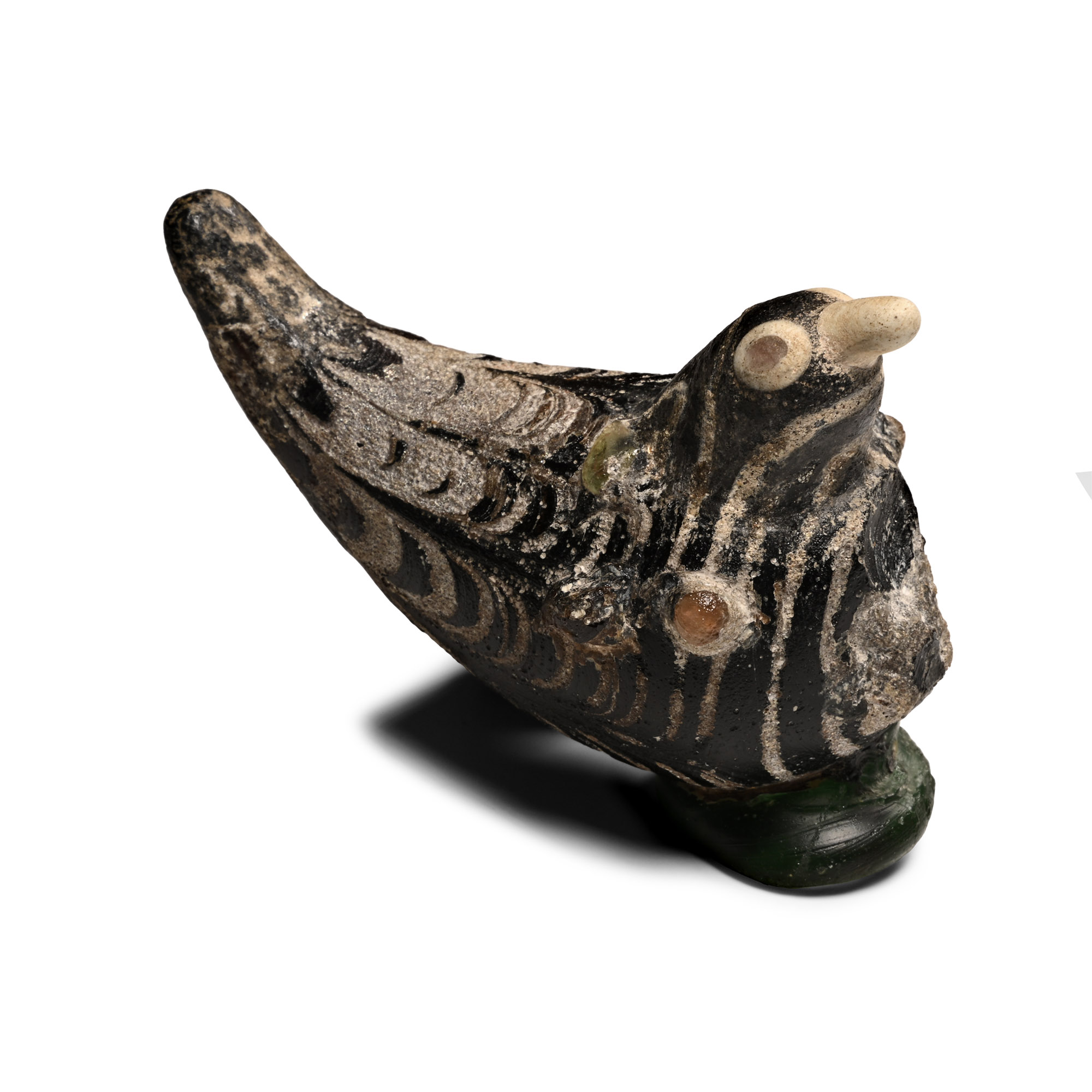
Western Asiatic Core Formed Glass Bird
12TH CENTURY A.D. OR LATER
2 7/8 in. (118 grams, 72 mm).
With curved and tapering body decorated with dragged and marvered trails, applied lugs for the wings, eyes and beak, domed green glass foot.
ProvenanceAcquired in London, 1992.
Private collection, London.
TimeLine Auctions follows a vetting process to ensure the authenticity and legality of all items, reinforcing our commitment to integrity and responsible trading. Each antiquity, antique, and coin lot undergoes thorough examination by a vetting committee of at least ten external specialists, professional trade association members, scientists, and archaeologists: Our Vetting Process
AUCTIONS:
TimeLine is a leading auction house specialising in antiquities, ancient art, collectables, natural history, coins, medals, and books. Our auctions offer museums, collectors, historians, and enthusiasts the opportunity to acquire unique and historically significant pieces.
LOT 1197
Western Asiatic Core Formed Glass Bird
Estimate £400 - 600€460 - 700 (for guidance only)$540 - 810 (for guidance only)
-
.jpg)
Eastern Levant Zoomorphic AE Shekel Weight
Bronze to Iron II Age, circa 12th-6th centuries B.C.Sold for (Inc. bp): £2,600
In the form of a horse reclining; inscription in Paleo-Hebrew or Phoenician engraved on base: ŠQL QRQR ('Shekel of Karkor?). 18.53 grams, 39 x 19 x 11mm
Condition as seen.
From the collection of a gentleman, acquired on the London art market in the 1990s. Ex Classical Numismatic Group, E Sale 564, lot 1302. This lot has been checked against the Interpol Database of stolen works of art and is accompanied by a search certificate number no.12428-226549. -
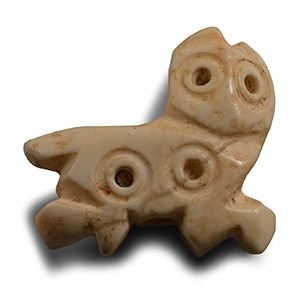
Jemdet Nasr Type White Stone Reclining Animal Amulet
3rd millennium B.C.Sold for (Inc. bp): £247
Carved with the head facing and the body in profile; the, eyes indicated by drilled dots within circles, two similar dots on body; pierced vertically. 4.3 grams, 24 mm
From the collection of Mr S.M., London, UK, formed from 1979-1999.
The eyes and spots were intended to be inlaid with a material in a contrasting colour. -
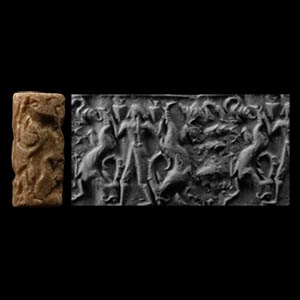
Large Sumerian Alabaster Cylinder Seal with Hero Holding Ibexes
Early Dynastic, 3rd millennium B.C.Sold for (Inc. bp): £416
Featuring a single horizontal register comprising a central human figure holding two ibexes by their hindlegs, several zoomorphic figures to the sides, possibly depicting vultures and fish. 30.8 grams, 52 mm
Ex Cotswold, UK, collection, 1980. A large part of the collection was sold by a Cirencester auction house in November 2018. Accompanied by a previous typed cataloguing card.
