
Loading, please wait...
LOT 0965
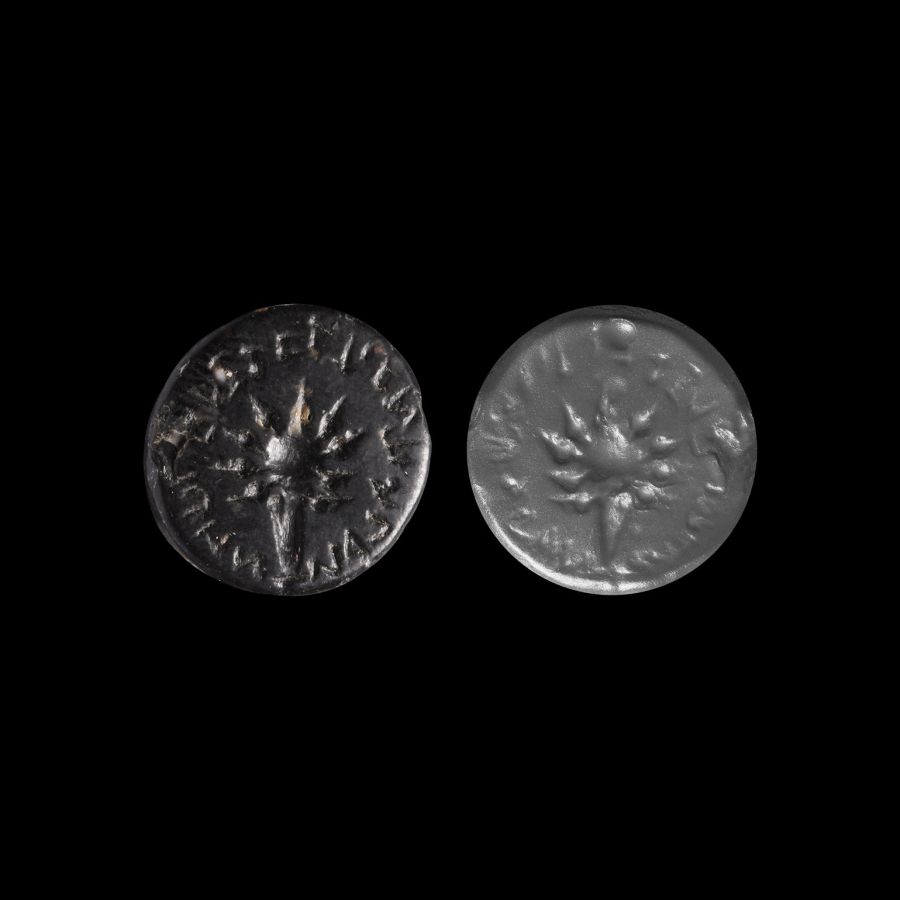
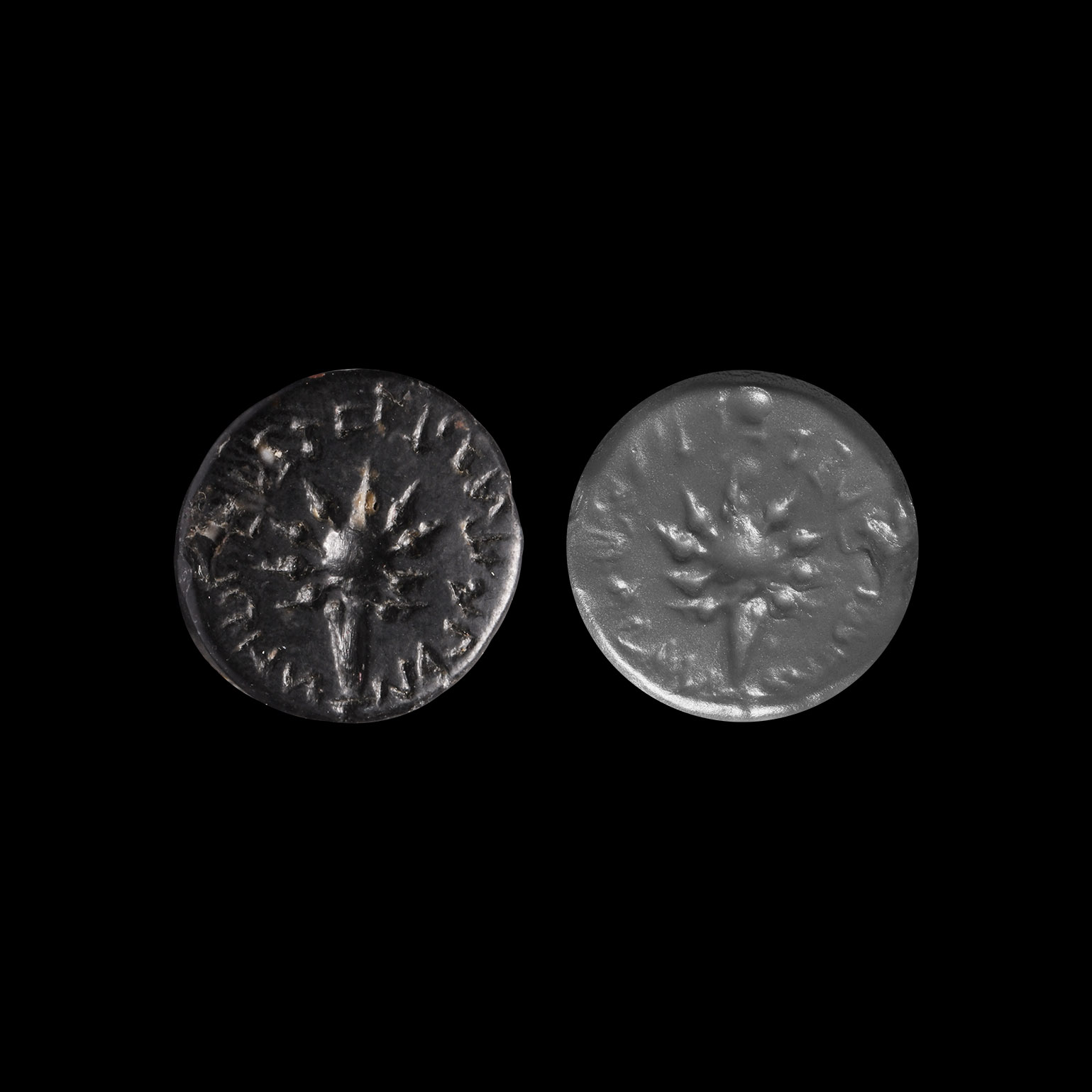
Western Asiatic Conical Seal with Symbol and Inscription
MID 1ST MILLENNIUM B.C.
1 in. (9.58 grams, 27 mm).
A conoid black limestone stamp seal bearing enigmatic symbol with surrounding inscription to base, possibly a sun or floral motif; old collector's label to one face; accompanied by a museum-quality impression.
ProvenanceAcquired 1969-1999.
London collection of the late Mr S.M., thence by descent.
TimeLine Auctions follows a vetting process to ensure the authenticity and legality of all items, reinforcing our commitment to integrity and responsible trading. Each antiquity, antique, and coin lot undergoes thorough examination by a vetting committee of at least ten external specialists, professional trade association members, scientists, and archaeologists: Our Vetting Process
AUCTIONS:
TimeLine is a leading auction house specialising in antiquities, ancient art, collectables, natural history, coins, medals, and books. Our auctions offer museums, collectors, historians, and enthusiasts the opportunity to acquire unique and historically significant pieces.
LOT 0965
Western Asiatic Conical Seal with Symbol and Inscription
Estimate £450 - 650€520 - 750 (for guidance only)$610 - 880 (for guidance only)
-
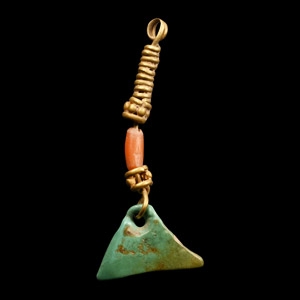
Western Asiatic Gold Pendant with Turquoise
Late 1st millennium B.C.Sold for (Inc. bp): £156
A gold pendant composed of a central gold stem with loop finial and coiled sleeves, a coral bead between two filigree beads with granules between plain bands, triangular turquoise pendant. 1.54 grams, 33 mm
Acquired 1980-2015. Ex Abelita family collection. -
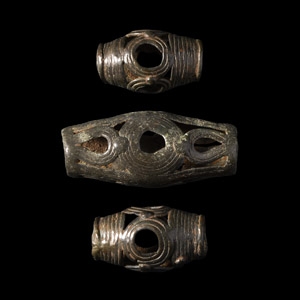
Amlash Cage Bead Collection
2nd-1st millennium B.C.Estimate: £120 - 170 (+bp*)
Opening Bid: £67
A group of three bronze cage beads, each composed of a biconical body featuring openwork geometric motifs and pellets. 68 grams total, 38-63 mm
Fine condition.
Acquired before 1983. Ex London gallery, 1990s. -
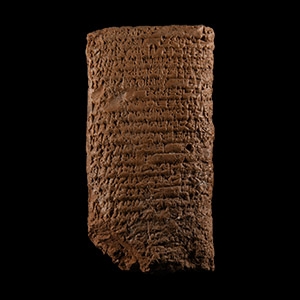
Old Babylonian Cuneiform Tablet, a Letter from Šamaš-nasir to Iluni King of Ešnunna Concerning the People of Zibbatum
Circa 1730-1720 B.C.Sold for (Inc. bp): £1,690
A clay tablet of broadly rectangular form, a letter from Šamaš-naṣir (a provincial governor) to his lord, Iluni king of Ešnunna (Tell Asmar), the king passed orders to mobilise the men of Ida-Maraṣ, the name of the country of Ešnunna, to provide grain transport, but the men of the city Zibbatum did not respond to the call despite the governor's request to generals, the people of Zibbatum became apiru, that is, wandering groups; this is a social category well known from the second millennium (notably in the Canaanite texts of El-Amarna) which has sometimes been compared to the Hebrews of the Bible; the tablet reading: 'According to the mission of my Lord, I said to Arahum thus: 'Are not the people of Zibbatum the soldiers of your lord? Why did you make them Apirum?' This is what I said to him and Arahum blamed me, since that time Ibnatum does not cease to be insolent before me and does not cease to hide his troop from me. Yesterday, when I came to my lord, I wanted to inspect him but his troop was not present. I sent one of my servants to the city of Urula, one of my servants to the interior of the country and one of my servants to the city of Labi, his city, in order to (re)lead his troop and himself and until now they have not brought me any news. As soon as they have brought them back to me my lord will hear the punishment I intend to inflict on him. In such a large country as the one my lord has entrusted to me, I...' 183 grams, 10.2 cm wide
Specialised collection of cuneiform texts, the property of a London gentleman and housed in London before 1992. Thence by descent to family members. Examined by Professor Wilfrid George Lambert FBA (1926-2011), historian, archaeologist, and specialist in Assyriology and Near Eastern archaeology, in the late 1980s and early 1990s. The collection is exceptional for the variety of types, including some very rare and well preserved examples.
