
Loading, please wait...

LOT 1298
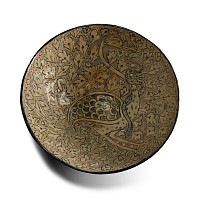
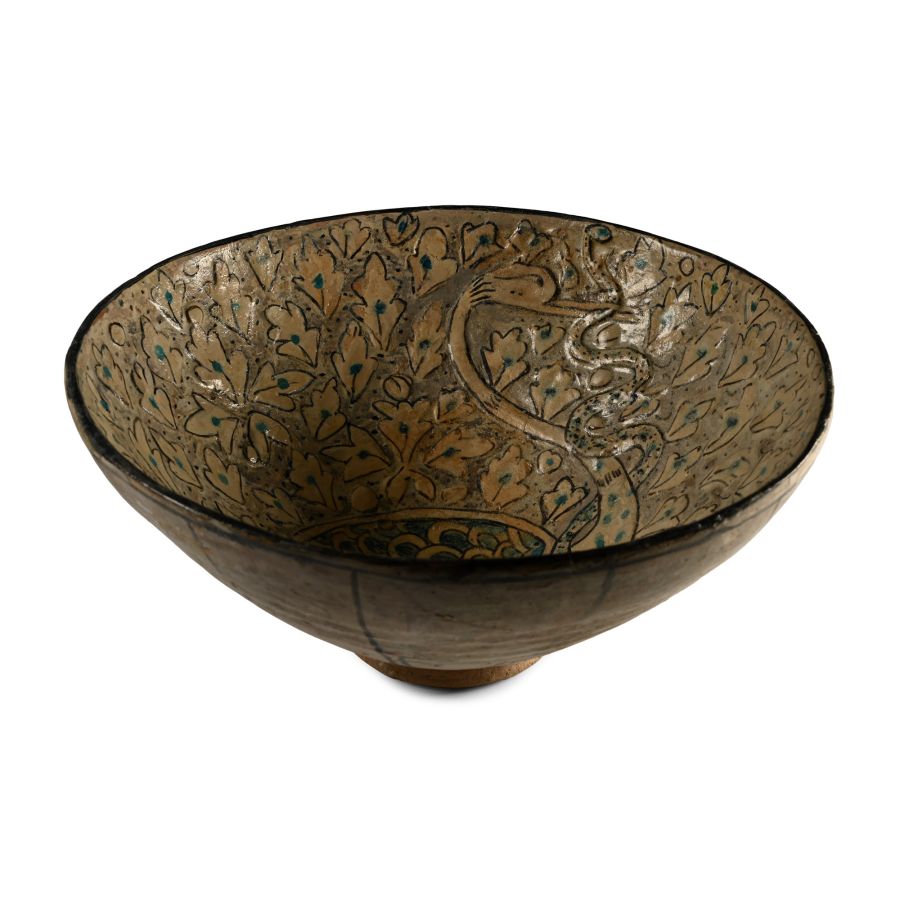
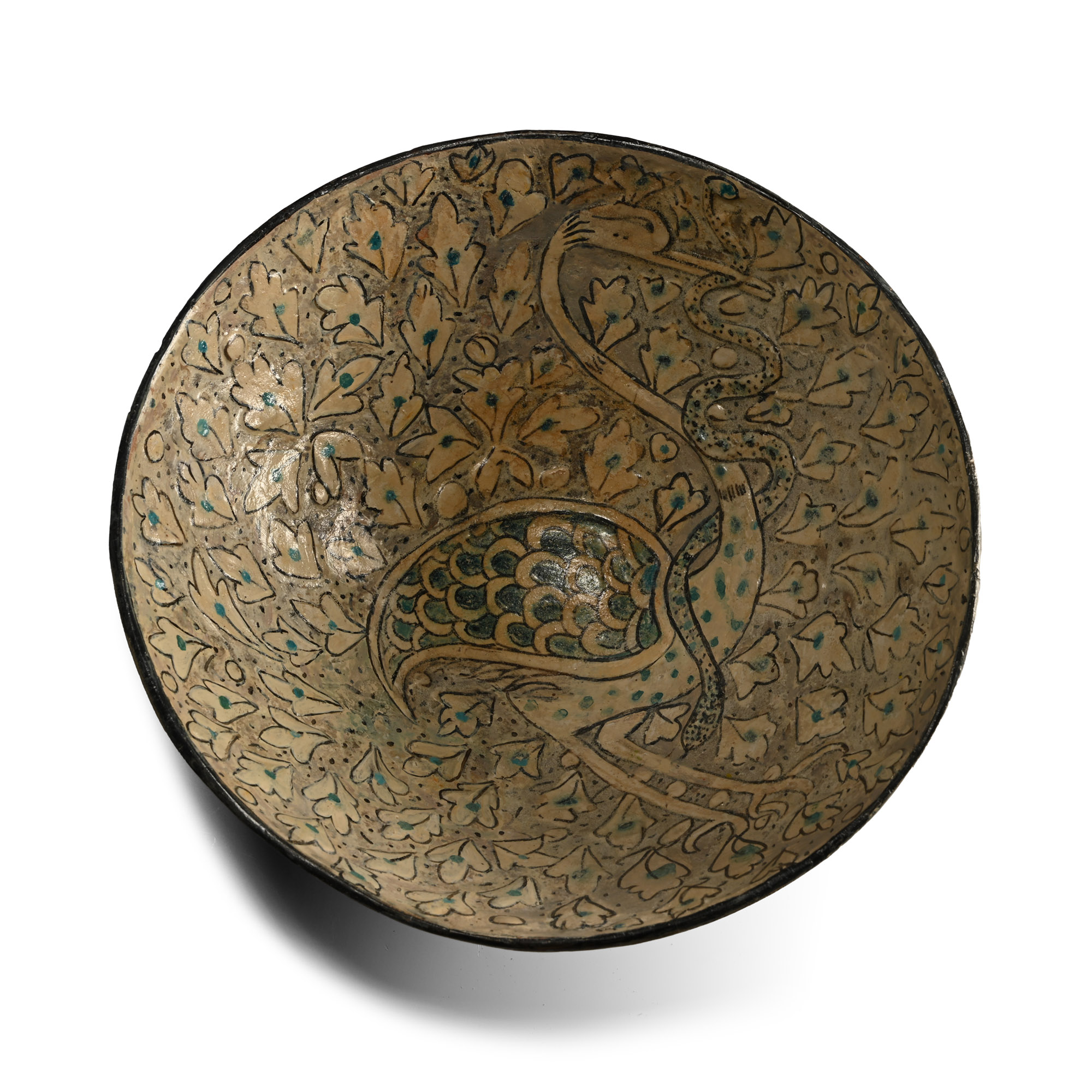
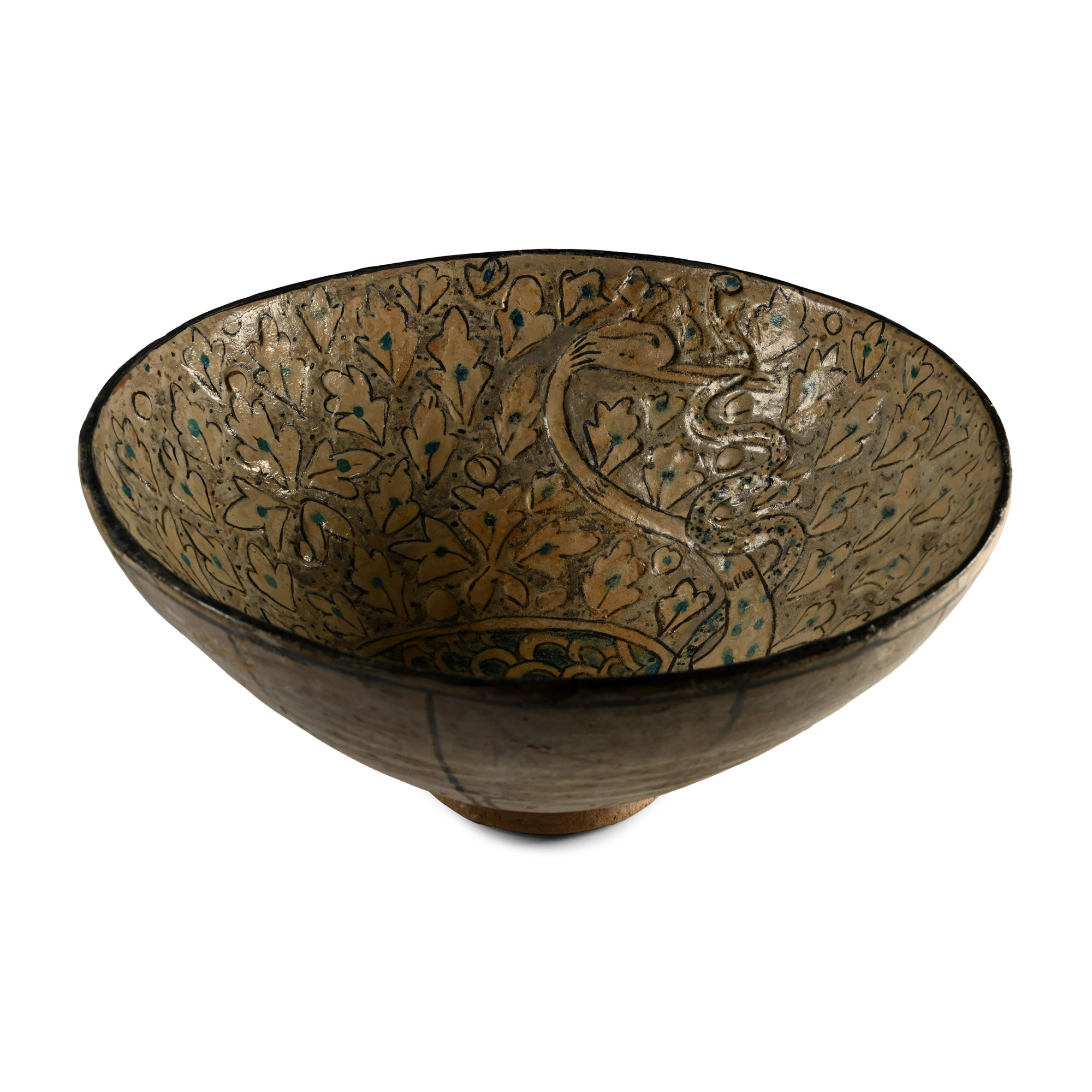
Western Asiatic Ceramic Bowl Depicting a Bird with Inscription
10TH-12TH CENTURY A.D.
8 1/8 in. (569 grams, 20.5 cm).
With detailed depiction of a bird of elongated form on a dense field of flowing, intricate vegetal motifs with turquoise-coloured detailing; exterior ringed with a Kufic inscription, probably a blessing or prayer for the owner, written in a stylised script; heavily restored with overpainting. [No Reserve]
ProvenanceAcquired prior to 1998.
Private collection, London.
This lot has been cleared against the Art Loss Register database, and is accompanied by an illustrated lot declaration signed by the Head of the Antiquities Department, Dr Raffaele D'Amato.
The Sultanabad region was renowned for its high-quality ceramics during the Seljuk period. While the precise translation of the legend is uncertain, such inscriptions were commonly used to invoke protection or good fortune, making the object not only a functional piece but also a meaningful, personal artifact.
CONDITIONTimeLine Auctions follows a vetting process to ensure the authenticity and legality of all items, reinforcing our commitment to integrity and responsible trading. Each antiquity, antique, and coin lot undergoes thorough examination by a vetting committee of at least ten external specialists, professional trade association members, scientists, and archaeologists: Our Vetting Process
AUCTIONS:
TimeLine is a leading auction house specialising in antiquities, ancient art, collectables, natural history, coins, medals, and books. Our auctions offer museums, collectors, historians, and enthusiasts the opportunity to acquire unique and historically significant pieces.
LOT 1298
Western Asiatic Ceramic Bowl Depicting a Bird with Inscription
Sold for (Inc. bp): £208
-
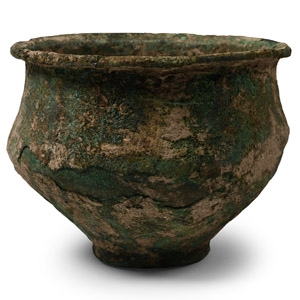
Western Asiatic Bronze Footed Cup
1st millennium B.C.Sold for (Inc. bp): £117
Biconvex in profile with basal ring, carination, rolled rim. 275 grams, 11.5 cm
Acquired 1980-2015. Ex Abelita family collection. This lot has been cleared against the Art Loss Register database, and is accompanied by an illustrated lot declaration signed by the Head of the Antiquities Department, Dr Raffaele D'Amato. -
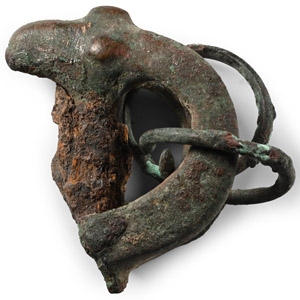
Luristan Bronze Mouflon Head with Rings
13th-7th century B.C.Sold for (Inc. bp): £59
Formed with curved horns meeting the shoulder, two bronze rings attached. 35.6 grams, 40 mm
Acquired 1980-2015. Ex Abelita family collection. This lot has been cleared against the Art Loss Register database, and is accompanied by an illustrated lot declaration signed by the Head of the Antiquities Department, Dr Raffaele D'Amato. -
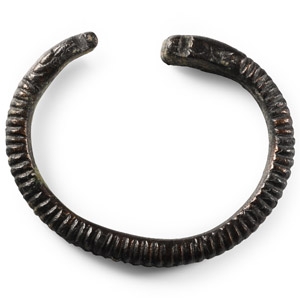
Western Asiatic Bronze Decorated Bracelet
1st millennium B.C.Sold for (Inc. bp): £65
Penannular in form with ribbed body and opposed beast-head finials. 50 grams, 66 mm
UK private collection before 2000. Acquired on the UK art market. Property of a London, UK, gentleman. This lot has been cleared against the Art Loss Register database, and is accompanied by an illustrated lot declaration signed by the Head of the Antiquities Department, Dr Raffaele D'Amato.
