
Loading, please wait...


LOT 1433
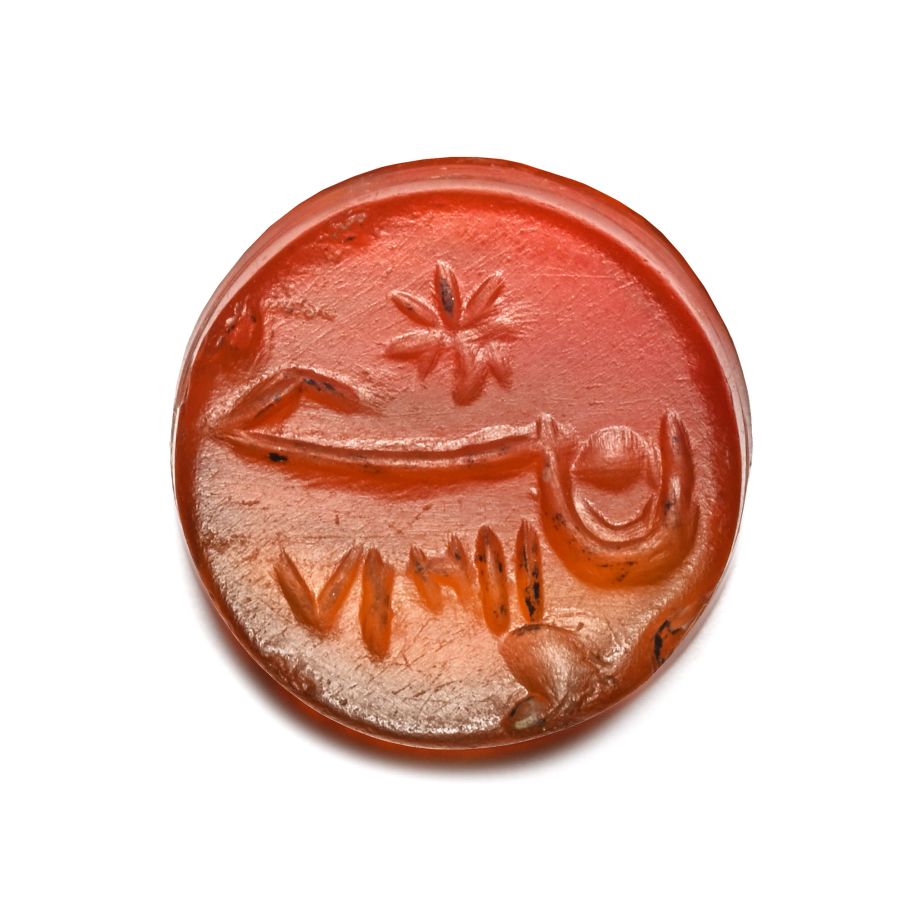
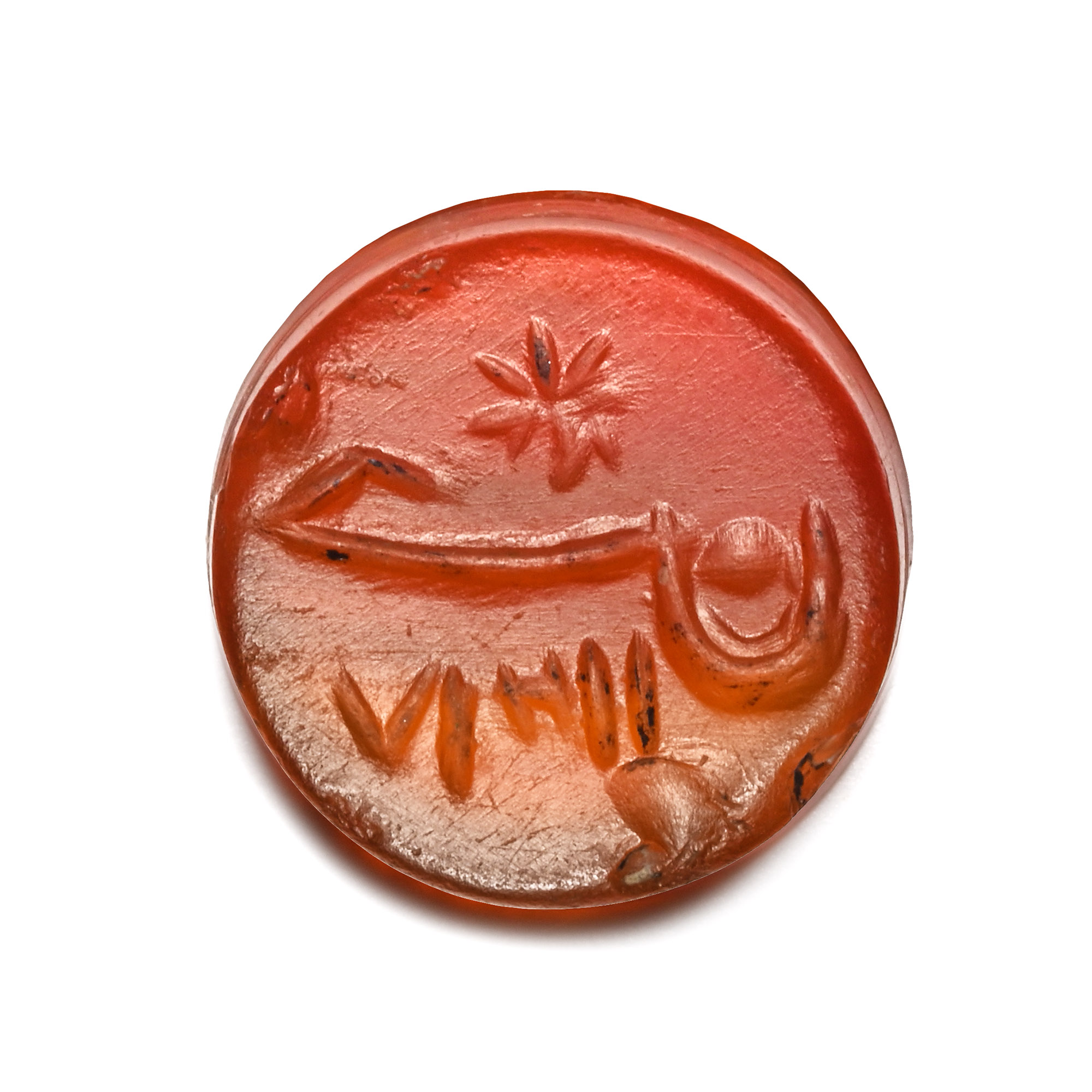
Western Asiatic Carnelian Gemstone with Calligraphic Text
CIRCA 18TH-19TH CENTURY A.D.
5/8 in. (2.13 grams, 15 mm).
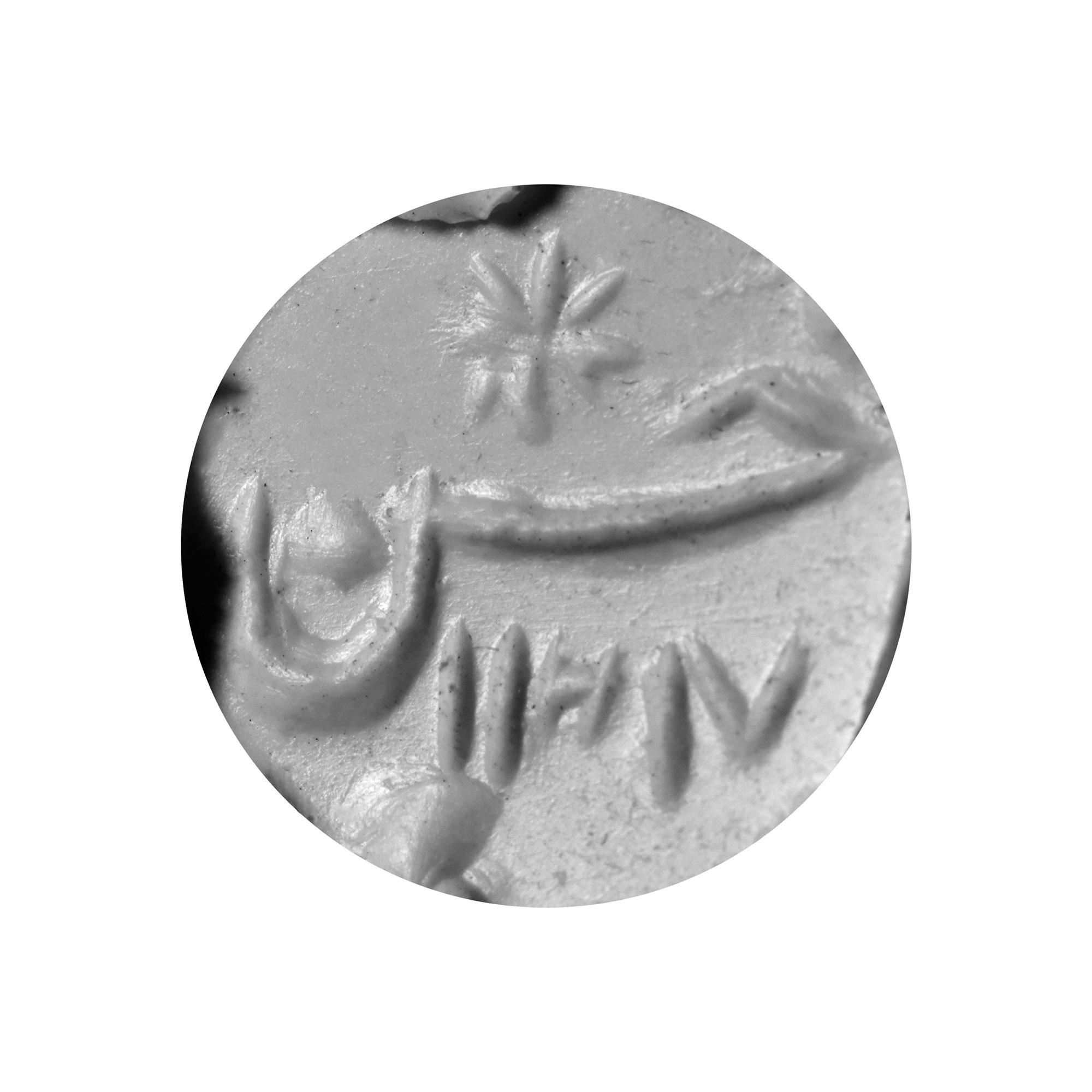
Tabular type with calligraphic Naskh script legend; supplied with a museum-quality impression. [No Reserve]
ProvenanceFrom the private collection of a European gentleman (1942-2024), formed since the 1970s.
CONDITIONTimeLine Auctions follows a vetting process to ensure the authenticity and legality of all items, reinforcing our commitment to integrity and responsible trading. Each antiquity, antique, and coin lot undergoes thorough examination by a vetting committee of at least ten external specialists, professional trade association members, scientists, and archaeologists: Our Vetting Process
AUCTIONS:
TimeLine is a leading auction house specialising in antiquities, ancient art, collectables, natural history, coins, medals, and books. Our auctions offer museums, collectors, historians, and enthusiasts the opportunity to acquire unique and historically significant pieces.
LOT 1433
Western Asiatic Carnelian Gemstone with Calligraphic Text
Sold for (Inc. bp): £65
-
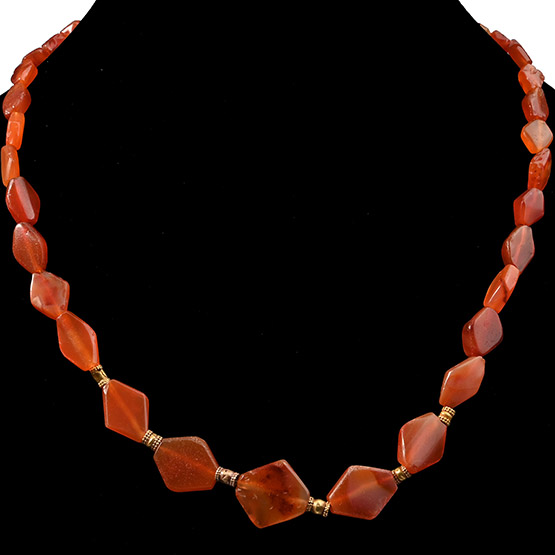
Western Asiatic Carnelian and Gold Bead Necklace
Late 1st millennium B.C. and laterEstimate: £500 - 700 (+bp*)
Current Winning Bid: £355
Restrung group of tabular, fusiform and other carnelian beads, including some glass beads, with granulated tubular gold collar spacers between. 45.5 grams, 55 cm
From the collection of a late Japanese gentleman, 1970s onwards. -
.jpg)
Very Large Bactrian Copper Armband with Animal-Headed Terminals
2nd millennium B.C.Estimate: £2,000 - 3,000 (+bp*)
Opening Bid: £1,111
Penannular armband with shallow D-section hoop and terminals formed as stylised ram-heads, each with exaggerated coiled horns, circular eyes set with cream-coloured beads and shallow semi-circular muzzles; transverse bands of geometric motifs along the neck. 616 grams, 10.4 cm
with a London, UK gallery 1971-early 2000s. Private collection, London, UK.
The bracelet is a product of the Bactria-Margiana Archaeological Complex ('BMAC', also developed from the 'Oxus Civilisation'), which was the dominant culture in the 3rd and 2nd millennium (often dated to c. 2250-1700 B.C.) in that area, corresponding roughly to modern Tajikistan and Afghanistan. The members of the group practised animal husbandry and a limited form of agriculture, with wheeled carts from the 4th millennium B.C. Its craftsmen were proficient at working metals and alloys, including bronze, copper, silver, and gold. Fortified sites with multiple walls are another notable BMAC development. -
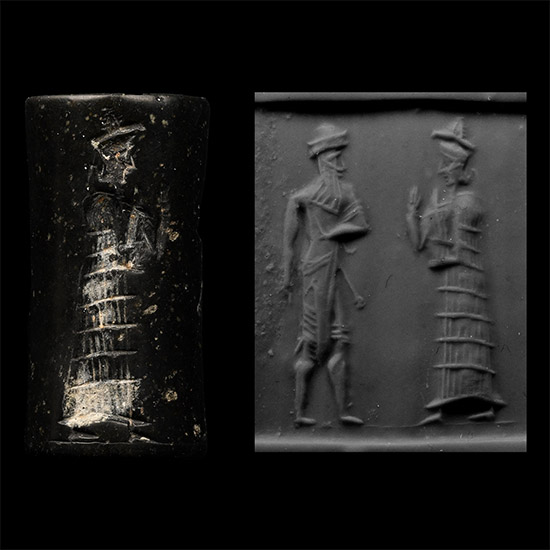
Old Babylonian Cylinder Seal with Two Standing Figures
2nd millennium B.C.Estimate: £1,200 - 1,700 (‡+bp*)
Opening Bid: £600
Representing a god in short mantle and round cap with upturned brim, holding a mace in his left hand, before him a goddess standing in a horned crown and kaunakes, her hands raised in supplication; accompanied by a museum-quality impression. 8.96 grams, 27 mm
Ex Mr J.K. collection, USA. Acquired from the above, 1997. This lot has been checked against the Interpol Database of stolen works of art and is accompanied by a search certificate number no.12581-232131.
The seals of the First Isin Dynasty were much more varied than those just preceding the Third Dynasty of Ur. Often the chief god - probably Shamash - is standing, and the 'introducing' goddess is facing him, while the worshipper is not pictured. The seals are a mine for the understanding of the old Babylonian costume. The tunic of the female goddess here is made of tufted material that the Greeks called kaunakes, the weave of which imitated the effect of the earlier sheepskin costumes.
