
Loading, please wait...
LOT 1590
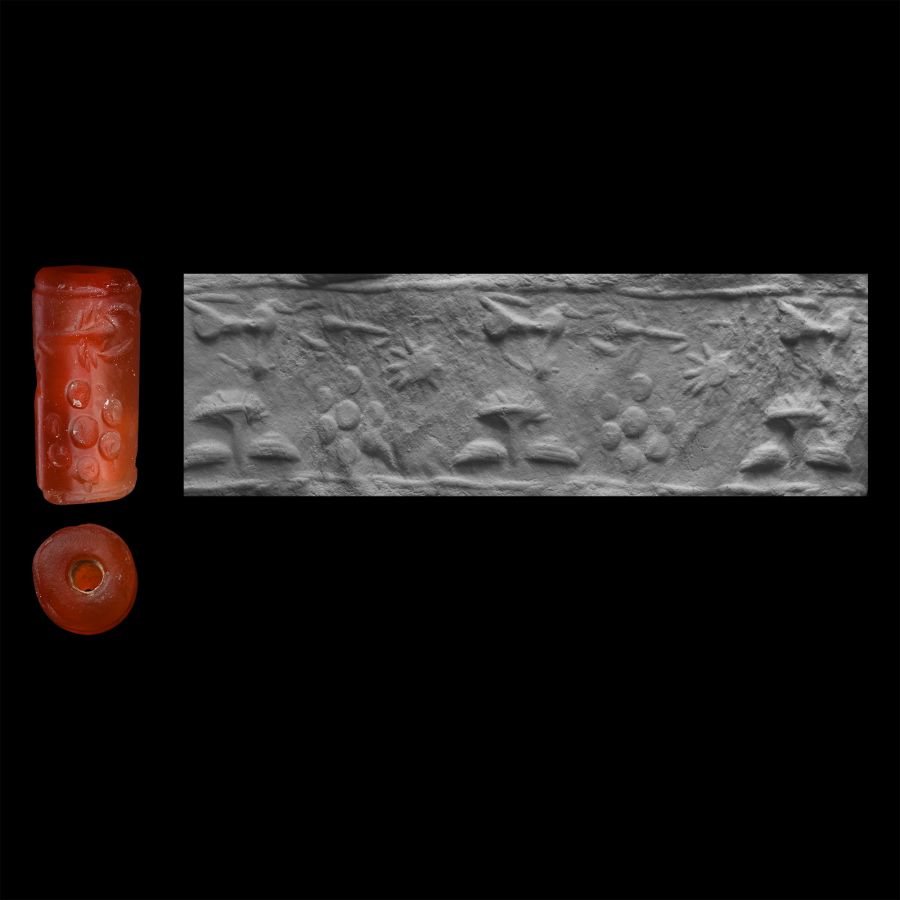
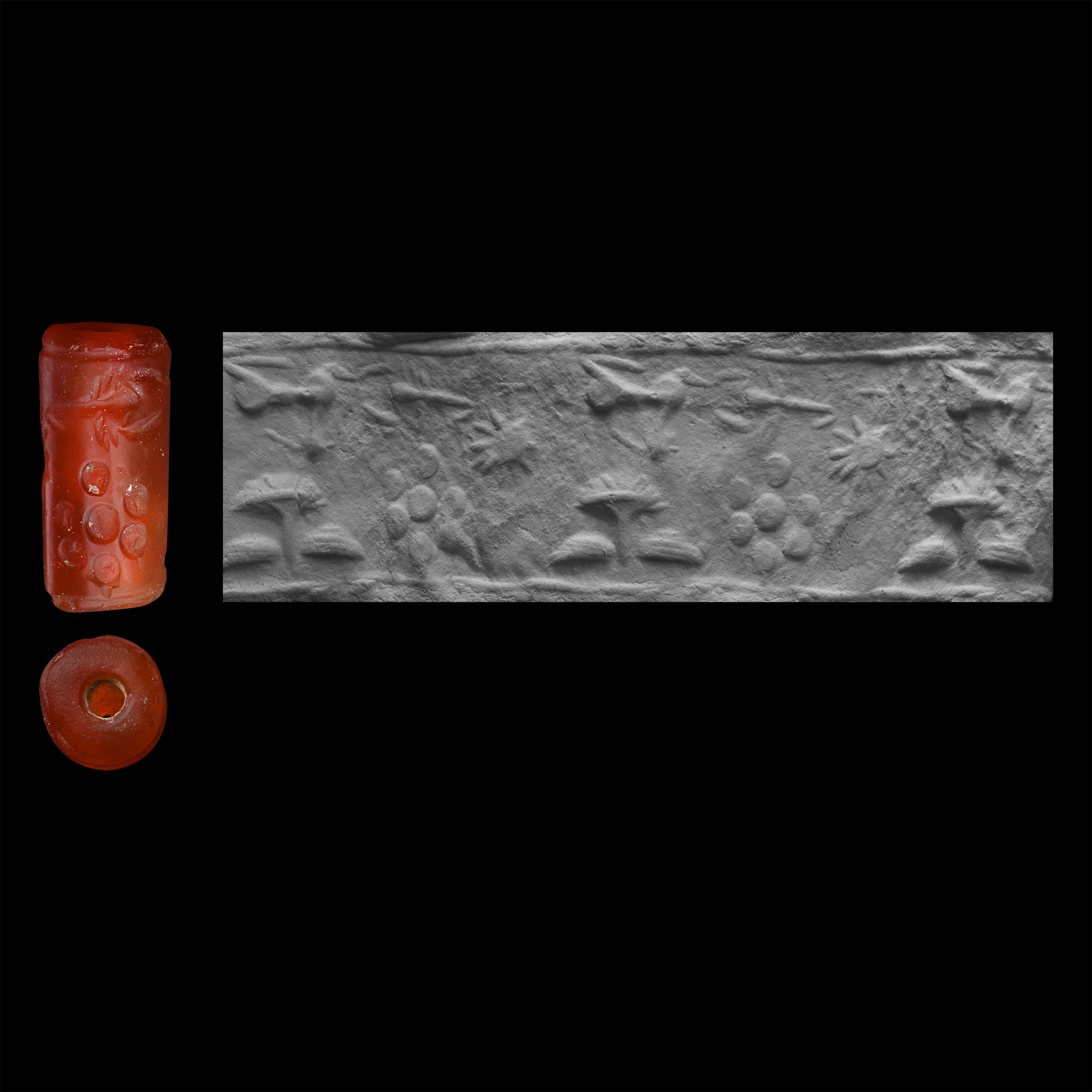
Western Asiatic Carnelian Cylinder Seal with Bird and Ibex
2ND-1ST MILLENNIUM B.C.
5/8 in. (1.71 grams, 16.91 mm).
Frieze of a rosette of pellets beside a bird with outstretched wings, starburst and crouching ibex beneath; supplied with a museum-quality impression. [No Reserve]
ProvenanceFrom the private collection of a European gentleman (1942-2024), formed since the 1970s.
CONDITIONTimeLine Auctions follows a vetting process to ensure the authenticity and legality of all items, reinforcing our commitment to integrity and responsible trading. Each antiquity, antique, and coin lot undergoes thorough examination by a vetting committee of at least ten external specialists, professional trade association members, scientists, and archaeologists: Our Vetting Process
AUCTIONS:
TimeLine is a leading auction house specialising in antiquities, ancient art, collectables, natural history, coins, medals, and books. Our auctions offer museums, collectors, historians, and enthusiasts the opportunity to acquire unique and historically significant pieces.
LOT 1590
Western Asiatic Carnelian Cylinder Seal with Bird and Ibex
Sold for (Inc. bp): £91
-
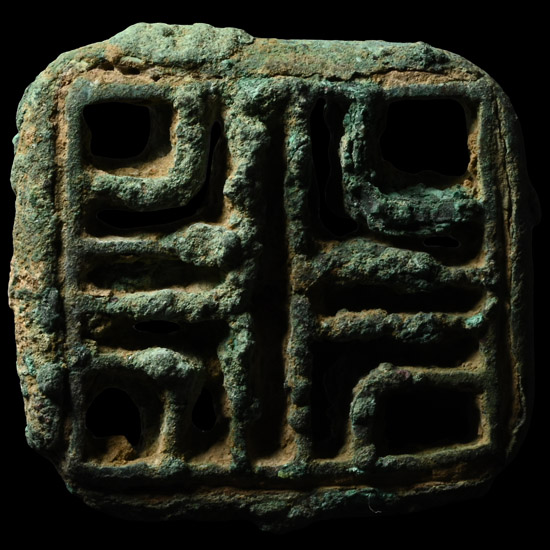
West Central Asian Bronze Stamp Seal with Cross
Circa 2300-2000 B.C.Sold for (Inc. bp): £46
Square stamp seal with segmented face; accompanied by an old scholarly note, typed and signed by W.G. Lambert, late Professor of Assyriology, University of Birmingham, 1970-1993, which states: 'Stamp Seal of Bronze 37 x 35 x 19 mm. This is a roughly square with flat face and flat back, on which a handle of inverted U-shape is mounted. The design is compartmented and open-work. It consists of an outer band within which a simple cross divided the area into quarters, though only one bar of this cross reaches both ends, the transverse bar is divided into two parts. Each quarter thus created is filled with an L-shape, creating a small square at each outer corner. This comes from west central Asia and dates to c. 2300-2000 B.C. The outer edges are dented and the corners worn, but while there is incrustations on most of the surface, this could be removed.' 26 grams, 37.6 mm
Ex London, UK, collection, 1990s. Accompanied by an old scholarly note, typed and signed by Professor W.G. Lambert with reference no.R-499. -
.jpg)
Western Asiatic Lapis Lazuli Throne Fitting with Lion
1st millennium B.C.Estimate: £6,000 - 8,000 (+bp*)
Opening Bid: £3,000
From the arm of a throne with a D-shaped socket to the rear; formed as the foreparts of a lion with abundant mane covering two lion-cub heads with bearded human faces. 404 grams, 85 mm
Ex London gallery, 1990s. Private collection, London, UK. This lot has been checked against the Interpol Database of stolen works of art and is accompanied by search certificate number no.13288-253395. -
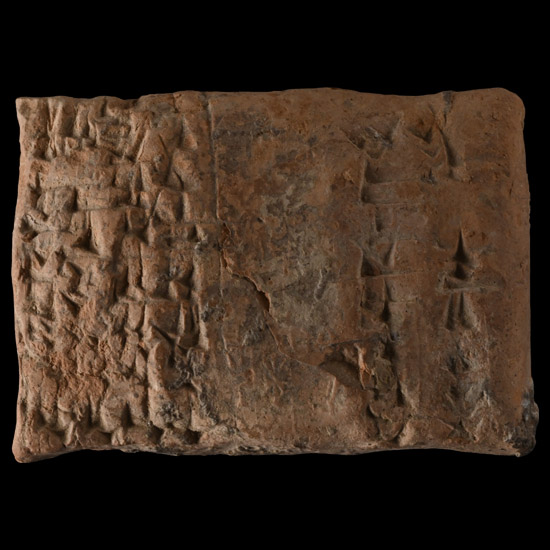
Old Babylonian Terracotta Cuneiform Tablet
2nd millennium B.C.Sold for (Inc. bp): £416
Pillow-shaped tablet with rows of cuneiform text on one side. 74.4 grams, 57.5 mm
From the private collection of a European gentleman (1942-2024), formed since the 1970s.
