
Loading, please wait...
LOT 0981
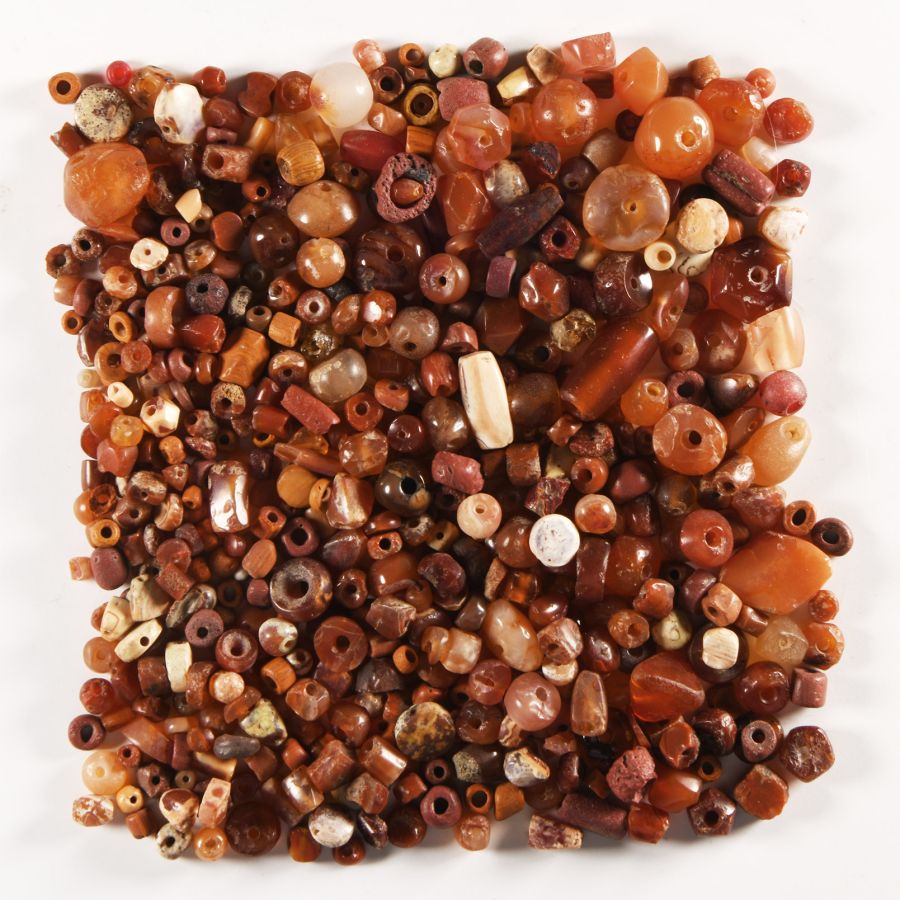
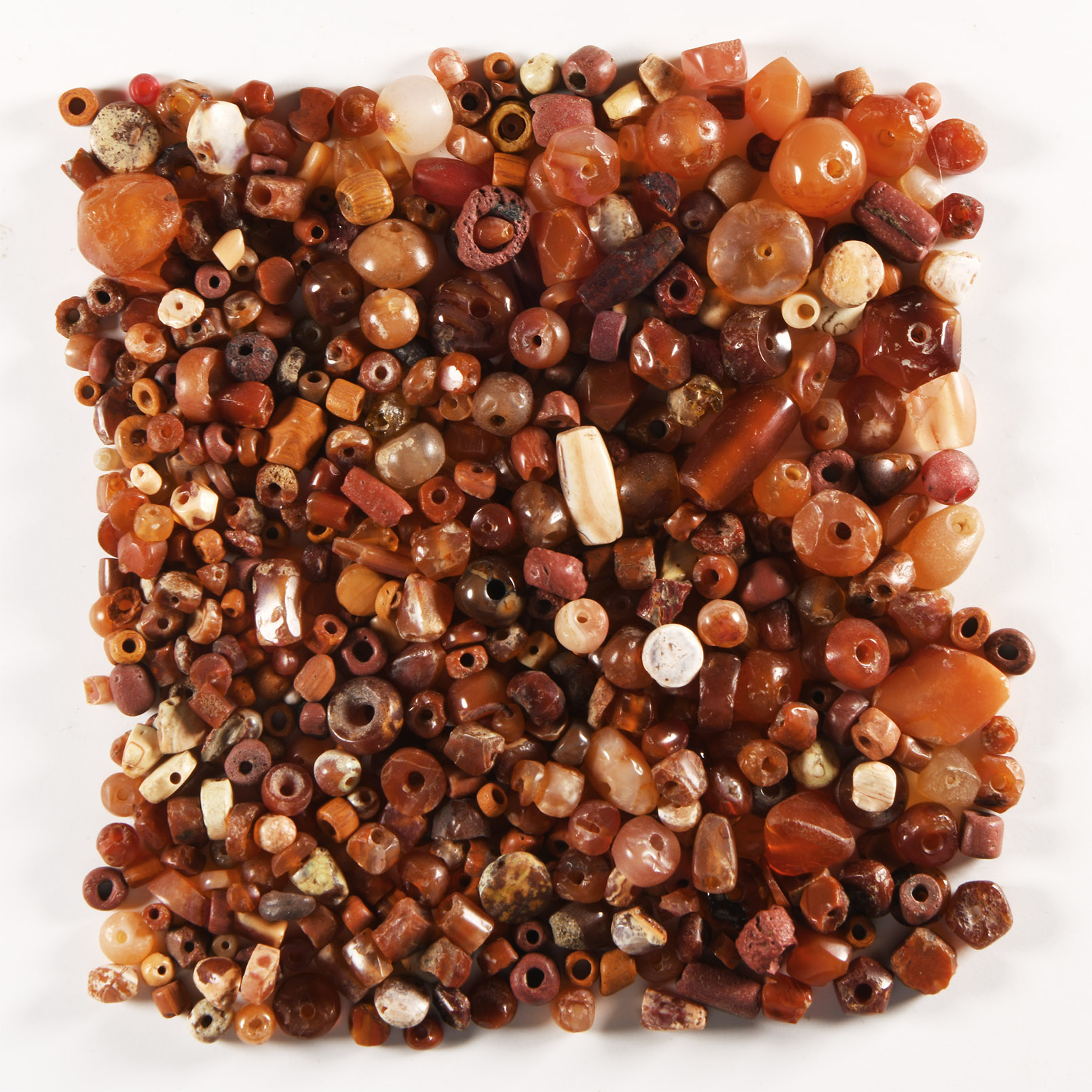
Western Asiatic Carnelian Bead Collection
1ST MILLENNIUM B.C. AND LATER
1/8 - 5/8 in. (92 grams total, 2-15 mm).
Comprising a quantity of variously shaped beads in mainly orange and red carnelian, including some in glass, jasper and other materials.
ProvenanceUK gallery, early 2000s.
CONDITIONTimeLine Auctions follows a vetting process to ensure the authenticity and legality of all items, reinforcing our commitment to integrity and responsible trading. Each antiquity, antique, and coin lot undergoes thorough examination by a vetting committee of at least ten external specialists, professional trade association members, scientists, and archaeologists: Our Vetting Process
AUCTIONS:
TimeLine is a leading auction house specialising in antiquities, ancient art, collectables, natural history, coins, medals, and books. Our auctions offer museums, collectors, historians, and enthusiasts the opportunity to acquire unique and historically significant pieces.
-
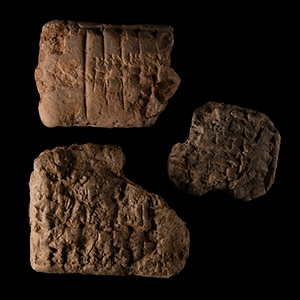
Mesopotamian Cuneiform Tablet Fragment Group
Early 2nd millennium B.C.Sold for (Inc. bp): £442
Group of three fragments of pillow-shaped tablets with impressed cuneiform text. 154 grams total, 43-60 mm
Specialised collection of cuneiform texts, the property of a London gentleman and housed in London before 1992. Thence by descent to family members. Examined by Professor Wilfrid George Lambert FBA (1926-2011), historian, archaeologist, and specialist in Assyriology and Near Eastern archaeology, in the late 1980s and early 1990s. This small collection is exceptional for the variety of types, including some very rare and well preserved examples. -
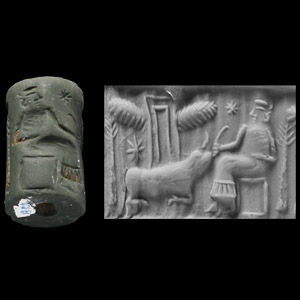
Western Asiatic Schist Cylinder Seal with Presentation Scene
2nd-1st millennium B.C.Sold for (Inc. bp): £286
With frieze depicting a seated figure in fringed robe facing a recumbent bull beside an altar, frond and star in the field. 11.9 grams, 27 mm
Acquired 1970s-1996. Property of a North American collector; collection no.062. London collection, 2016. -
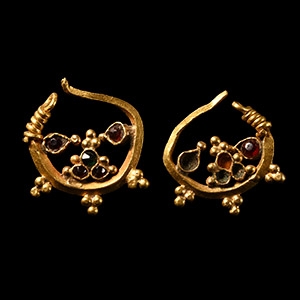
Western Asiatic Gold Gem-Set Earrings
2nd-4th century A.D.Estimate: £600 - 800 (+bp*)
Opening Bid: £333
Comprising two diamond-section penannular hoops with loops; each with three granulated pyramids to the lower edge; the centre of the hoop with a triple-cell set with one green and two red glass (?) gems with granulated outer edges, flanked by two teardrop-shaped cells set with a red glass (?) gem. 2.76 grams total, 19-21 mm
From a late Japanese specialist collector, 1970-2000s.
